By Sheila Ponnie
JUBA, South Sudan—Along the corridors of South Sudanese politics, tension once again crackles as Riek Machar, the former rebel-turned-First Vice President, finds himself under house arrest. Machar is accused by the government of conspiring with White Army militia – an informal militia made up largely of Nuer youth – in the killing of over 400 soldiers. But far from backing down, Machar has fired a stark warning to the administration of President Salva Kiir: any move to prosecute or remove him from office will be met with resistance.
“This is not just about me,” Machar’s office said in a statement issued by Nathaniel Oyet, acting chairman of the Sudan People’s Liberation Movement-In-Opposition (SPLM-IO). “It’s about the peace deal. It’s about the nation. We will not stand idle while the agreement is dismantled.”
Country born in crisis
South Sudan gained independence from Sudan in 2011 after decades of civil war. It was hailed as a triumph of diplomacy and perseverance. But within two years, political rivalry between Kiir and his then-deputy Machar plunged the country into a brutal civil war, largely fought along ethnic lines. Tens of thousands were killed, and millions displaced.
The conflict formally ended with the signing of a peace agreement in 2018 and the formation of the Revitalized Transitional Government of National Unity (RTGoNU). Kiir remained president, and Machar returned as First Vice President, a fragile partnership meant to usher in national healing.
Yet, peace in South Sudan has always appeared more like a ceasefire than a settlement.
White Army and new accusations
ADVERTISEMENT

The government repeatedly has claimed Machar has been in communication with the White Army, which is allegedly responsible for recent deadly clashes with government forces in Nasir County. Government forces are supported by Uganda’s military.
Machar’s camp denies the connection. “The White Army predates the formation of SPLM-IO,” Oyet explained. “They are independent actors who react to threats in their communities. To tie them to Machar now is politically motivated.”
Adding fuel to the fire, government spokesman and Minister of Information, communication, technology and postal services Michael Makuei stated that if the High-Level Standing Committee finds enough evidence against Machar, Kiir would be asked to relieve him of his duties so he can stand trial. “He cannot be tried as First Vice President,” said Makuei. “He must be removed from office first.”
Machar’s allies see the move as a thinly veiled political purge. They’ve issued a strongly worded rebuttal, warning that altering the structure of the unity government or dragging Machar into court would violate the 2018 peace agreement – and will be “resisted by all means.”
Ethnic profiling allegations
In a troubling turn, the government last week declared seven of the 16 Nuer subgroups – Machar’s ethnic base – as “hostile.” The SPLM-IO immediately decried the announcement as dangerous ethnic profiling.
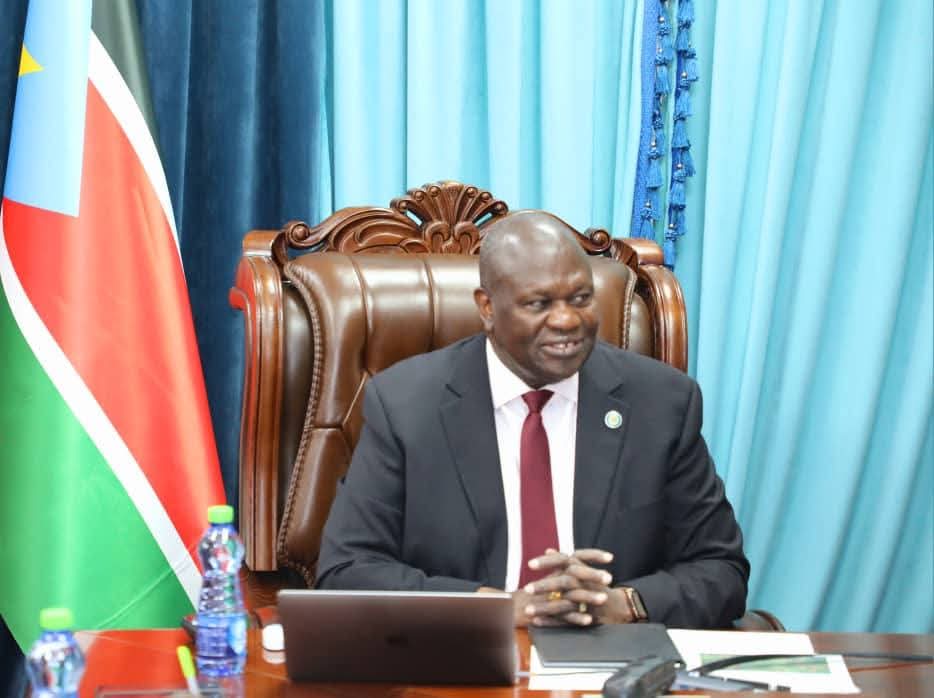
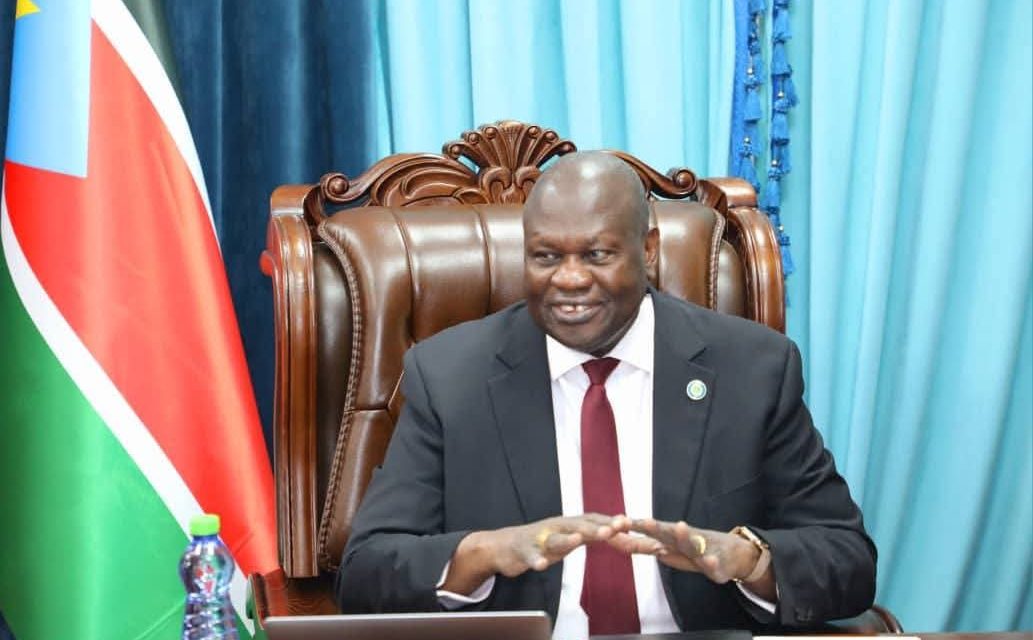
Riek Machar, the former rebel-turned-First Vice President
The accusations are not unfounded. The 2015 report of the African Union Commission of Inquiry on South Sudan documented horrific acts of ethnic violence during the 2013 conflict. Civilians were reportedly abducted, tortured, and killed based on their ethnicity, often by state security forces.
International eyes on Juba
With tensions escalating, Machar’s faction has hinted at taking the government to the International Criminal Court (ICC). “We are exploring legal action for crimes against humanity, war crimes, and even genocide,” said Oyet. “This is no longer an internal matter. The world must pay attention.”
Human rights organizations and regional blocs are now watching closely. Any political upheaval in South Sudan could destabilize the wider East African region, already grappling with unrest in Sudan, Ethiopia, and the Democratic Republic of the Congo.
Peace on the brink
The current standoff between Kiir and Machar threatens to unravel the 2018 peace deal that many South Sudanese hoped would mark a permanent end to war. But trust between the two camps is threadbare.
As the transitional period nears its end, the scheduled 2025 elections look increasingly unlikely. Without full implementation of the peace accord – including security sector reforms, a new constitution, and credible elections – experts warn the country could slide back into full-scale conflict.
Cost of political gamesmanship
South Sudan’s people continue to pay the highest price. Over 9 million people – three-quarters of the population – require humanitarian assistance. Persistent violence, famine conditions, and the climate crisis have driven one of the world’s worst humanitarian catastrophes.
For Machar, the stakes are existential – not just for his political future, but for the fragile peace his return to government once symbolized.
“This peace was built on compromise,” Oyet said. “If the government tears that apart, then what comes next is chaos.”