On September 1, Zambia became the latest African country to receive lenacapavir, an HIV prevention medication made available by the United States through the President’s Emergency Plan for AIDS Relief (PEPFAR). The shipment was received at the University Teaching Hospital in Lusaka, Zambia’s capital, at an event attended by the U.S. Assistant Secretary of State for African Affairs, Frank Garcia.
“This is a Zambian achievement, led by Zambians, for Zambians, and the United States is proud to stand beside you as a partner in that effort,” Garcia said at the event.
With more than 1.3 million people in the country living with HIV, the medication aims to bolster prevention efforts by reducing new infections. Unlike traditional oral daily pre-exposure prophylaxis (PrEP), injectable lenacapavir, manufactured by U.S. company Gilead Sciences, is administered only twice a year — and is almost 100% effective at preventing HIV infection.
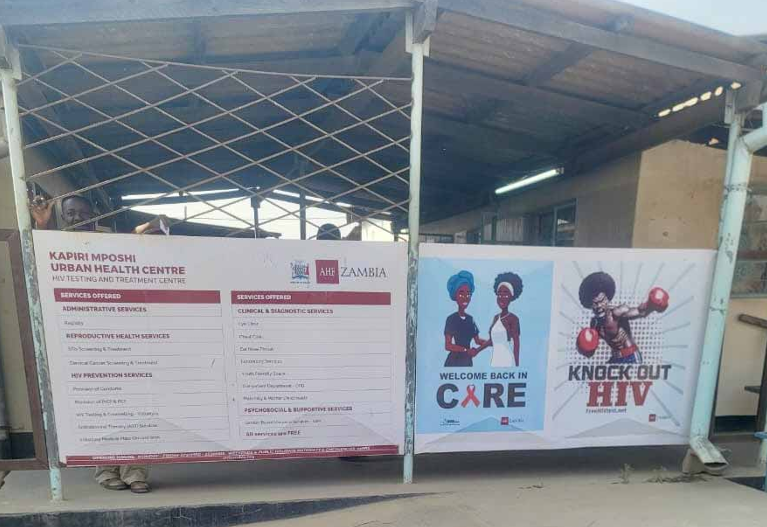
In an interview with Amjambo Africa, Saiton Zulu, a clinical officer and antiretroviral therapy team lead at Circle of Hope Zambia, believes the injectable will be particularly useful for people who fear the stigma associated with being seen taking HIV-related pills.
“Some people have challenges with taking oral PrEP. Since they will be accessing this injection every six months, that gives them an advantage,” said Zulu, who oversees the faith-based nonprofit’s HIV programs in the Kapiri Mposhi district.
According to the Joint United Nations Program on HIV/AIDS (UNAIDS), about 21,000 pregnant and breastfeeding women are expected to benefit from lenacapavir, as Zambiaseeks to strengthen maternal health and prevent vertical transmission of HIV.
A Long-standing Health Partnership
For decades, the U.S. has been pivotal to Zambia’s health sector, committing $6.7 billion to the country through PEPFAR between 2003 and 2023.
“The United States’ support is not a marginal contribution; it is foundational and has been deeply embedded in the national HIV response,” said Emmanuel Ndonye, a paradiplomacy researcher and expert in African governance.
That support has helped Zambia record notable progress in its HIV response, fully achieving the 95-95-95 targets set by UNAIDS. About 96% of people living with the virus in the country know their status, 99% of them are on treatment, and 97% have their viral load suppressed.
ADVERTISEMENT

But despite that progress, Zulu stated that prevention remains a challenge as Zambia still records an estimated 23,000 new HIV infections each year. This, he said, underscores the gap between successfully treating people already living with the virus and preventing new infections.
While the delivery of lenacapavir adds a new layer to prevention efforts in the country, it also reflects wider U.S.-funded efforts to address HIV across Africa as countries navigate how to expand access to a highly effective, but relatively new, prevention medication.
Countries like Eswatini, Kenya, Nigeria, Zimbabwe, and South Africa have previously received shipments of lenacapavir.
“Another Side To the Success”
Historically, health partnerships between the U.S. and Zambia have largely taken the form of foreign assistance. But under President Trump’s America First policy and the push for mutually beneficial partnerships, health diplomacy between the two countries has recently come under strain.
The Trump administration has shifted U.S. health assistance from aid toward bilateral agreements that seek greater contributions from recipient countries, and access to health data. Zambia rejected a proposed agreement that linked health funding to access to critical minerals, putting billions of dollars in potential U.S. health support at risk.
Ndonye explained that the U.S. decision to continue supporting Zambia, despite the current disagreements, stems from its long-standing commitment to HIV prevention. However, he warned that the continued reliance on external funding exposes a weakness in the country’s approach to health governance.
“There is another side to this success that we have to acknowledge,” he said. “Zambia lacks the capacity to solely finance its health sector, resulting in dependence on the United States government, which in turn is using that as leverage.”
Since Trump began making changes to U.S. foreign aid, including cuts to health programs such as PEPFAR, some African countries have faced difficulties sustaining HIV treatment and prevention without external funding.
For Zambia, Ndonye highlighted that the challenge is not simply maintaining access to donor-funded medicines, but also using external support to strengthen the country’s ability to finance and manage its own health system. He argued that assistance should help countries build the capacity to sustain programs after donor support declines, rather than creating long-term dependence on external funding.
“If America has been supporting Zambia for over 20 years, I think they should have built capacity for themselves to make sure that they can finance and sustain their health systems without requiring any foreign assistance,” he said.
From Rollout To Access
With the first shipment of lenacapavir now in Zambia, Zulu said the focus should be on ensuring that it reaches the people who need it. He advised that the country should use data on HIV prevalence and new infections to determine where the medication is most urgently needed, while integrating lenacapavir into existing services such as family planning and youth-friendly clinics. This, he noted, would help make the new prevention option part of services that people already use, rather than creating a separate pathway for access.
“We have to start with the high-volume facilities or areas, places where HIV is prevalent, and we have to prioritize the people who need the service, especially women, adolescent girls, and youths,” he said.
But reaching those populations will require more than just supplying the drug. He highlighted that health workers need to be trained to administer the twice-yearly injection, while services will eventually need to be decentralized beyond major urban centres.
According to UNAIDS, the rollout aims to reach 82,000 people across 542 selected health facilities in Zambia by the end of 2026. But Zulu said that as the program gradually expands, people in rural areas may face initial difficulties accessing the medication because of the travel distance to facilities currently offering it.
Past experience withHIV interventions, he highlighted, shows that introducing a new prevention tool is only the beginning, as its success will depend on whether Zambia can take lenacapavir into communities and make it accessible to the people who need it most.
“The job is not done. We are heading in the right direction, but the burden is still out, and so prevention and reaching everyone has to be our next big push as a country,” he said.
Editor’s Note: This article originally appeared in the October 2026 print edition of Amjambo Africa.