By Dhananji Rathnayake

“We have a strong presence of Chinese Americans in Maine, dating back to the 1800s. During COVID, we saw how misinformation led to attacks on Asians, which was deeply troubling. However, Maine remains a welcoming place for outsiders, and we all take pride in making it a diverse and inclusive community.”
– Professor Ah-Kau Ng, CAFAM Board Member
On Sunday, February 15, the Westbrook Performing Arts Center was transformed into a lively cultural village, adorned with red lanterns, dragon illustrations, and banners celebrating the Chinese Lunar New Year for the nearly 500 attendees who gathered to immerse themselves in the rich traditions and festivities connected with this special event.
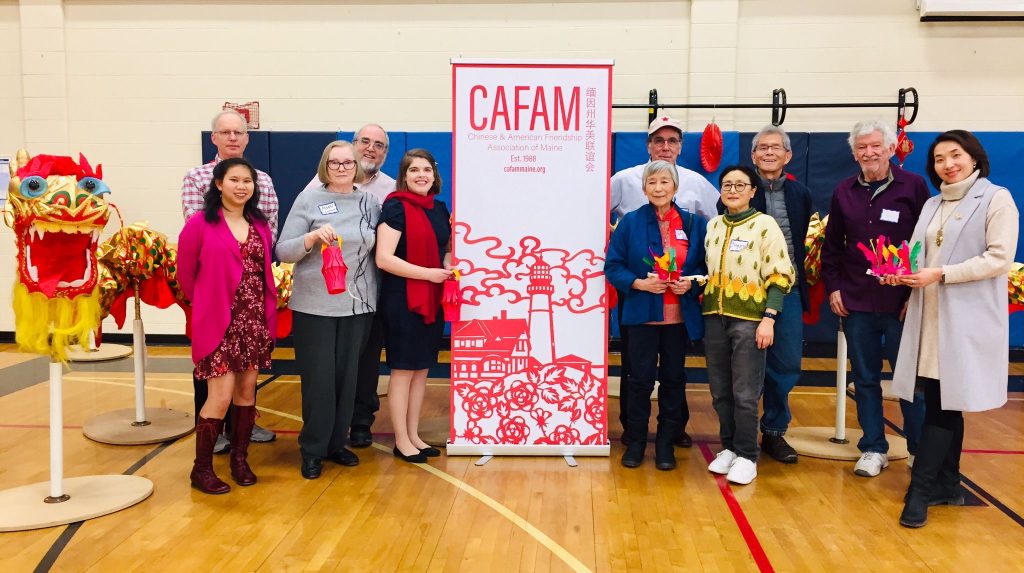
A community coming together
“We’re very happy to be here,” said Jane Costigan, an attendee. “This is our first time attending, and I heard about it from a friend. It’s a great opportunity for us and our kids to learn about Chinese culture and traditions.”
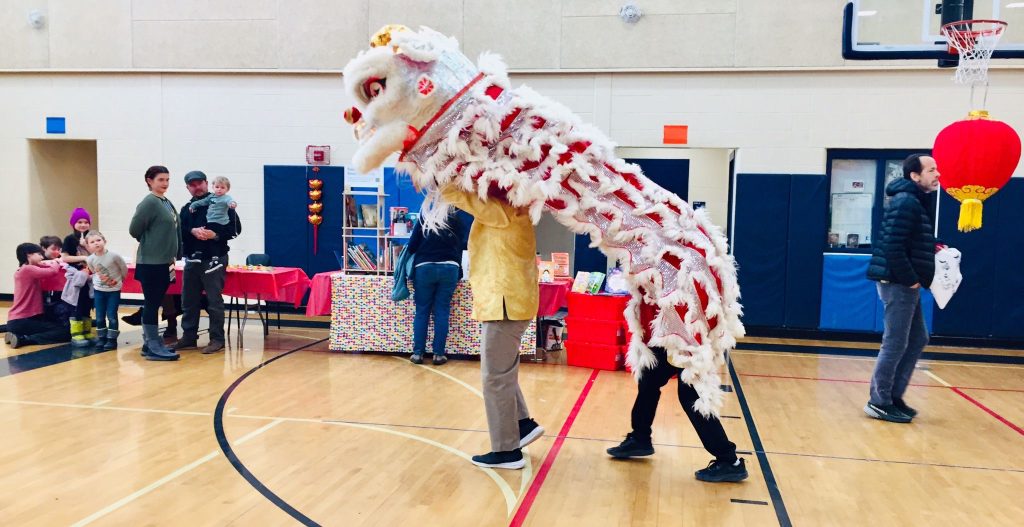
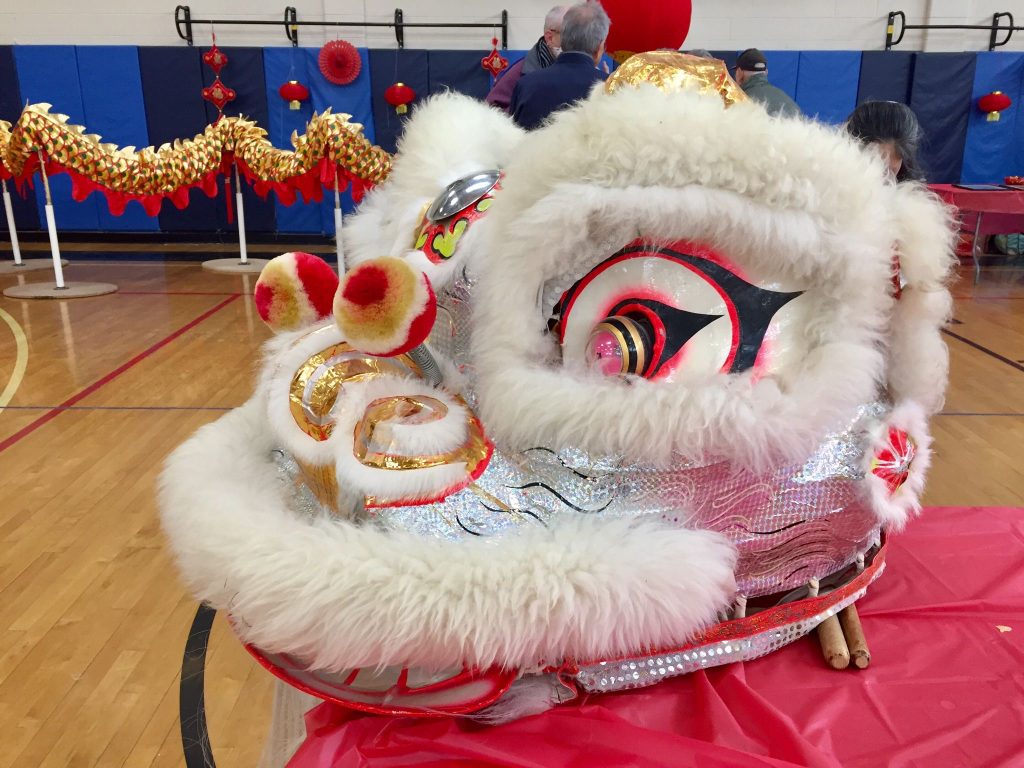
The event featured traditional performances, such as the Chinese dragon dance, and drumming. There was Chinese cuisine, handmade crafts, jewelry, art, and calligraphy.
At the entrance, guests were welcomed with a taste of Chinese tea from Little Red Cup Tea, Co., a family-owned business based in Brunswick.
“China is our second home. We love the people, we love the culture, we love the language, we love the food, and we love the tea!” explained Martin and Michael Connelly, owners of Little Red Cup Tea.
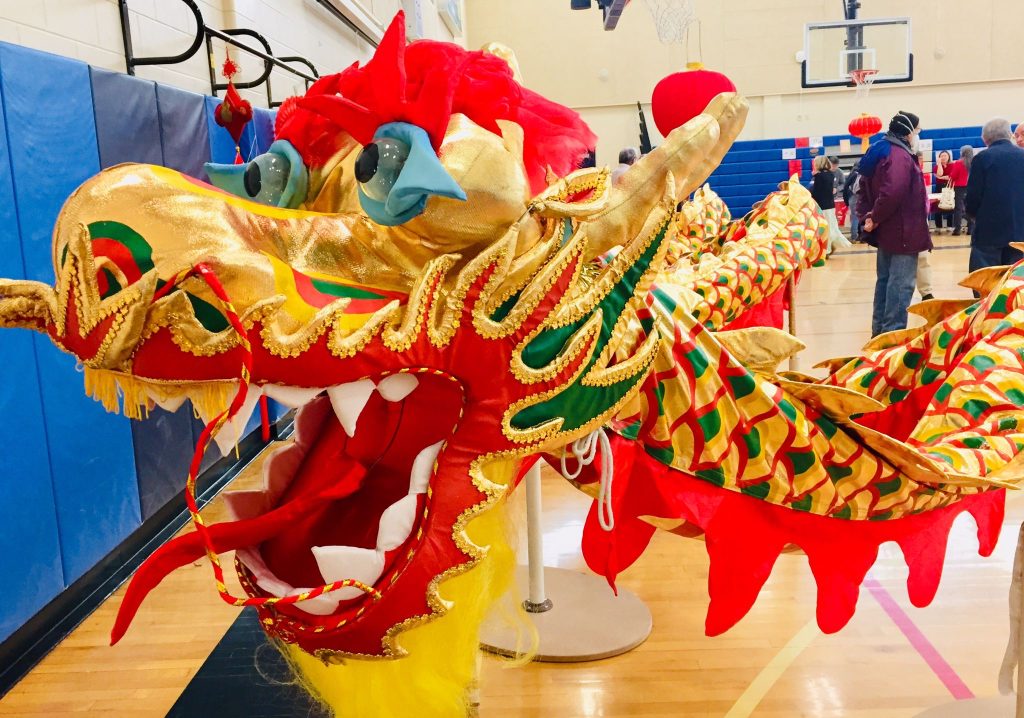
Exploring Chinese Heritage and History
The Chinese and American Friendship Association of Maine (CAFAM) sponsored the event. Gary W. Libby, CAFAM Treasurer, said nearly 5,000 Chinese people live in Maine today. Libby is currently writing a book, History of Chinese in Maine, which is set for publication between March and July 2025.
“There has been a small but vibrant Chinese presence in Maine dating back to before the Civil War,” said Libby. “Before founding CAFAM, we connected with members of Chinese families who had been in Maine since before World War II and began conducting oral history interviews with them while collecting family photographs.”
ADVERTISEMENT

Libby’s book includes a chapter on Toy Len Goon, a Chinese immigrant living in Portland who was named American Mother of the Year in 1952. She was a single mother who raised eight children.
Cultural and educational exchanges
Wherever he goes, the CAFAM President Bob Poole carries a small card collection that resembles a Chinese-English dictionary – he said he enjoys studying and keeping his language skills sharp.
“One interesting thing is that Maine actually has a sister-state relationship with Jilin Province in China,” said Poole. “It’s similar to Maine, with 90 percent of its land covered in forests. However, today, that relationship is inactive. I don’t think most U.S. politicians feel comfortable meeting with Chinese delegations. But we are hopeful that we can revive the sister-state relationship if relations with China improve. The most valuable part of this connection has always been people-to-people interactions – students with students, educators with educators, and artists with artists.”
Cultural demonstrations and learning opportunities
The festival provided a variety of cultural learning opportunities, including a Chinese language lesson conducted by the Bangor Chinese School, which was founded in 2001. The school offers language education, interpretation services, summer camps, trips to China, an annual Chinese conference, and a variety of cultural events.
“Our mission,” said Professor Suzhong Tian, Vice President of Bangor Chinese School, “is to foster understanding and friendship between China and the United States through education and cultural exchange.”
“I love making dumplings,” said Alivia, a young attendee Alivia. “It’s easy and tasty!”
Sally Ng recounted the origins of dumpling making. “According to legend, Zhang Zhongjing, known as the ‘Sage of Medicine’ in China, invented dumplings to help people stay warm during winter. He wrapped mutton, herbs, and chilis in dough and steamed them. The herbs were believed to improve blood circulation and prevent frostbite.”
Nina Rossiter, a CAFAM volunteer from Hong Kong, shared a variety of Chinese New Year customs, including the beloved tradition of giving children red envelopes filled with money as a symbol of good luck.
“In early 20th-century China, elders would give children money wrapped in red paper as a talisman against evil spirits, known as sui (祟). The coins were believed to be immortals protecting children, and when the demon came, the bright light from the coins would scare it away,” Rossiter explained.
A highlight of the celebration was the Spring Festival Gala, featuring performances by international students from Bates College, as well as young guest artists from Boston. There were traditional Chinese lion and dragon dances, fan dances, a shell dance, a martial arts demonstration, the song from the 2022 Chinese Olympics – performed by children – and a fashion show showcasing traditional Chinese attire.
“I was interested in this performance because of my teacher, Veronica Huang.” said Paula Rodriguez, a student of Bates College. “I thought it was a really nice experience. It brought the community together and it brought me closer to learning more about Chinese culture.”
“I love it. I really love it,” said Cathy Shi, another Bates student. “I’m an American-born Chinese, and my friends asked me to help with some translations and other things. I really wanted to join this performance because I saw it as a way to reconnect with a culture I feel I’ve somewhat lost. I don’t speak Chinese every day anymore, now that I’m not at home, so this was a really nice way to reconnect and celebrate the New Year, even though I’m not with my family.”
Celebration of community and unity
Each immigrant story is different, including those that happened in centuries past, as well as contemporary stories. Havui Lin and Sue Lin, an older Chinese couple, took a moment to share a little of their story with Amjambo.
“I came to the U.S. during World War II to help with translation work for refugees,” Sue Lin recalled. “I agreed to assist, thinking I would return to my country. But life had other plans – I ended up settling here.”
Lin’s story eventually led her to move with her husband from Philadelphia to Maine, which the couple now calls home.
“Our son lives in the U.S., and he told us, ‘Maine is a very safe place to live.’ So we moved here, and we’ve found peace in this community,” Lin said.
Mary Tennant, a CAFAM board member, and her daughter Meilin, a social worker, played a key role in coordinating the event and assisting attendees.
“We always welcome people of different ethnic backgrounds into our community,” said Tennant. “I know our immigrant community has been struggling due to unfair government decisions. My daughter always carries her documents with her because you never know what might happen. I truly appreciate Amjambo Africa for raising awareness about protecting immigrants. They are fulfilling an important social responsibility.”
Professor Ah-Kau Ng spoke about the important role events can play in developing cross-cultural understanding.
“Here we only have a very small Asian community. So there’s not much opportunity for the local mainstream people to be exposed to Asian culture. [But] once you have some understanding of a culture … at some point you will say, ‘Well, after all, we are all very similar. We are all about music, we are all about dance, we are all about food, we are all about having fun, and we are all about arts and so on.’ ”
When asked if he had a message for the Maine congressional delegation, Ng said,“We urge our representatives to be aware of the challenges minority groups face, especially due to negative perceptions that create uncertainty. Some community members feel the need to carry ID cards to avoid inconvenience. We hope elected officials will be sensitive to these concerns, avoid making things more difficult, and use their influence to promote social harmony, ensuring Maine remains a safe place for everyone.”