WEMPO has partnered with the City of Portland Office of Economic Opportunity to launch a new workforce development initiative that began June 25, 2026. The four-month program aims to provide professional development, build career pathways, and increase employment access for local immigrant communities.
The monthly workshop series, supported through a City of Portland grant, equips immigrants with practical employment skills while helping them recognize the strengths and experiences they already possess. Designed for both newcomers and long-term immigrant residents, the program focuses on résumé development, interview preparation, professional networking, transferable skills, and self-confidence.
The initiative also brings together community partners and employers, both committed to creating economic opportunities for Maine’s diverse communities.
“These workshops are designed to help participants communicate their strengths, experience, and goals with greater confidence in employment, interview, and professional networking settings,” said Carla Muniz, co-founder and CEO of WEMPO Peru and WEMPO USA.
Recognizing the challenges many immigrant families face, the workshops remove common barriers to participation by offering free childcare for parents attending the sessions and interpretation services for participants who prefer to communicate in their native language.
“I’m so glad to be here,” said a participant from Africa. Sharing names of event participants was not permitted. “I have many things to learn here, and this opportunity is helping me build my confidence and strengthen my skills.”
Building belonging through leadership
For Cinthia Varela, director of WEMPO Peru and co-founder of WEMPO USA, the workshops are about much more than employment.
As an immigrant herself, she understands the emotional and professional challenges that come with rebuilding life in a new country.
“When immigrants leave their home countries, they leave behind their families, careers, and professional identities,” Varela explained. “Our goal is to help them recognize that they still bring valuable knowledge, experience, and transferable skills. Those strengths don’t disappear simply because they crossed a border.”
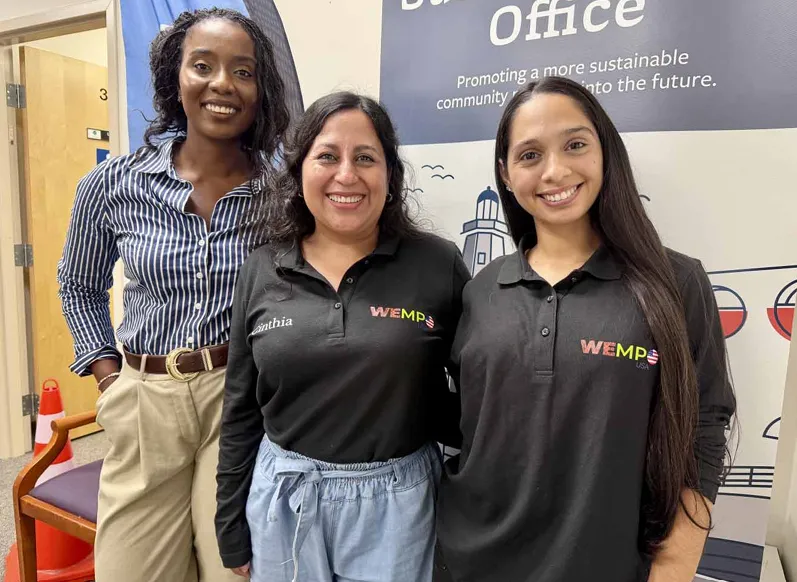
She noted that many immigrants underestimate the value of their previous careers after arriving in the United States. “Someone may no longer be able to work immediately as an accountant, engineer, or teacher because licensing requirements are different,” she said. “But they still possess organization, leadership, problem-solving, responsibility, and many other skills that employers need.”
ADVERTISEMENT

Varela believes those abilities should be viewed as assets rather than barriers. Beyond employment, she says the workshops create something equally important, a sense of belonging.
Participants openly discuss their dreams, fears, life experiences, and future goals in what many describe as a safe and welcoming environment.
“They find a place where they feel comfortable sharing who they are,” she said. “That trust is incredibly valuable.”
One lesson she has learned from participants is that resilience is already one of the immigrant community’s greatest strengths. “They may question whether they are leaders or whether they have a clear purpose,” she said. “But one thing they all have is resilience. Every day they wake up and begin again.”
Language as a bridge, not a barrier
Varela recalled volunteering as an interpreter shortly after moving to the United States, an experience that deeply shaped her understanding of belonging.
She observed that many immigrants become far more comfortable expressing themselves when they can communicate in their own language. “When people hear their own language, they immediately feel they belong,” she said. “Language builds trust. It allows people to express not only information but also their stories.”
That experience inspired the creation of WEMPO’s inclusive approach, where interpreters are available and participants are encouraged to communicate in whichever language allows them to present themselves with confidence.
Addressing the missing piece
According to Melissa Hue, director of the City of Portland’s Office of Economic Opportunity, the workshops were developed after identifying a gap in traditional workforce development programs.
Many job seekers arrived with technical qualifications but struggled to explain their experience, present themselves during interviews, or translate previous careers into opportunities within the U.S. labor market.
“We realized we were missing a step,” Hue said. “People had strong resumes, but when we asked them to tell us about themselves, many couldn’t. The missing piece was soft skills.”
The program combines several components, including professional communication and transferable skills training led by WEMPO, financial literacy workshops provided by JPMorgan Chase, employer networking and interview practice with businesses such as Starbucks, and CareerCenter collaboration connecting participants with employment opportunities. Unlike many workforce programs, these workshops are open to everyone and require no registration.
Hue said interpretation services play a crucial role because they reveal abilities that are often hidden behind language barriers. “When participants speak in their own language, they become confident, expressive, and engaging,” she explained. “It isn’t a lack of ability, it’s a confidence issue and a language barrier. Those skills improve with practice.”
Hue acknowledged that today’s immigration climate has created new challenges. “There are many misconceptions about hiring immigrants,” she said. “Some employers worry about sponsorship or work authorization, even when people are legally authorized to work. Those misunderstandings make it harder for qualified immigrants to find opportunities.”
By helping participants build confidence and connect directly with employers, the program hopes to overcome those barriers while collecting data that can support future investment in immigrant workforce development.
The program is funded through the John T. Gorman Foundation as part of Portland Professional Connections, an initiative designed to strengthen Maine’s workforce while expanding opportunities for immigrant communities.
Latin American leadership creating community impact
Although WEMPO was founded by Latin American immigrant women, its mission extends far beyond one community.
“Our goal is to work with immigrants from every background,” Varela said. “We are Latina women, so naturally we understand the experiences of the Latin community, but what we want is for every immigrant to know they belong, that they have value, and that they can contribute to this country.”
This workforce workshop series continues on the last Thursday of each month through October at Portland City Hall from 4 p.m.-6.30 p.m., welcoming immigrants from all backgrounds. Participation is free, with childcare and interpretation services available.
WEMPO is an immigrant-led organization that strengthens communities through collaborative leadership, workforce development, innovation, and inclusion. According to the organization, the name reflects its mission and work: “WE” represents community and collaboration, while “MPO” symbolizes empowerment, inspired by “empower” or empoderar (Spanish for “to empower”). The organization partners with public agencies, nonprofits, and businesses to expand opportunities and help individuals achieve economic independence and meaningful community participation.
Editor’s Note: This article originally appeared in the early August 2026 print edition of Amjambo Africa.