
By Germain Mucyo
“[Jazz is] one of the great cultural exports of the United States. But in South Africa, jazz became more than music. During apartheid, it was a voice of liberation, a language of resistance.” – Vuyo Sotashe
South African-born jazz vocalist Vuyo Sotashe is set to bring his rich musical storytelling to Maine as part of a two-performance collaboration with the American pianist Chris Pattishall and the Portland-based Palaver Strings. The collaborative project, known as “Songbook,” will be performed with free admission on March 5 at the Gordon Center at Colby College, Waterville, and at a ticketed event on March 6 at Portland House of Music..
Ahead of these performances, Sotashe sat down with Amjambo Africa to talk about his musical journey, the power of jazz, and why these shows are a not-to-be-missed opportunity to experience South African jazz.
Born and raised in Butterworth, a small town in South Africa’s Eastern Cape, Sotashe grew up surrounded by music – not as a career path, but as a communal and cultural expression.
“I was always in a choir – at school, in church, in community spaces where the arts thrived,” he shared. “But music as a profession wasn’t really something we considered.”
Unlike many artists who pinpoint a defining moment when they discovered their art form, Sotashe doesn’t recall the exact time he started singing.
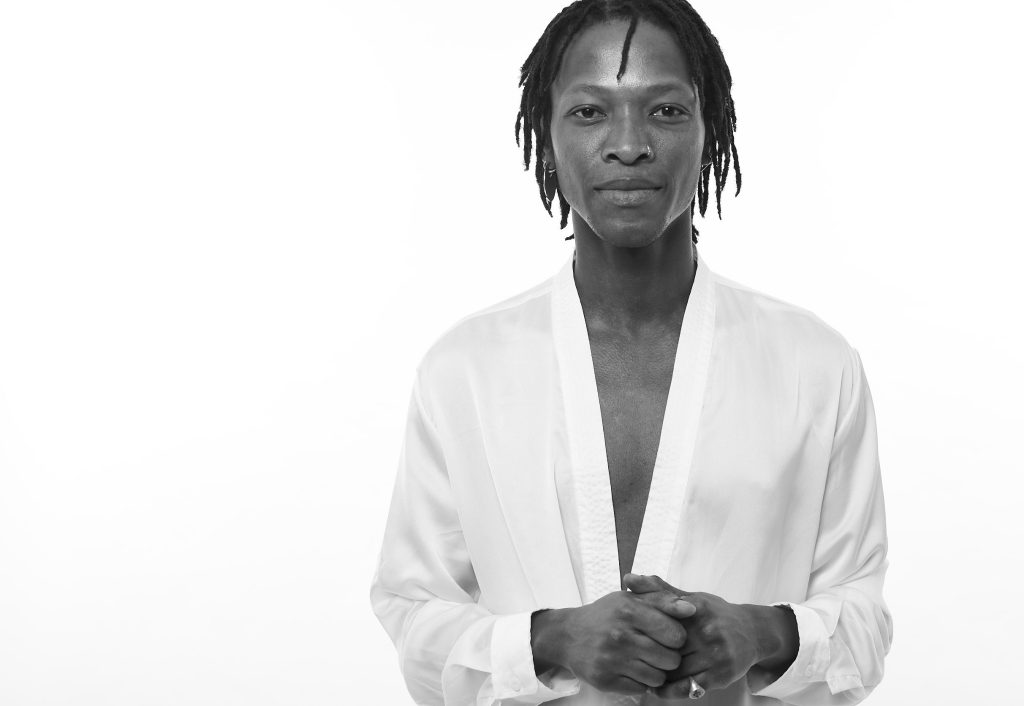
“You know how people say, ‘I started singing when I was 2’? I don’t have that story. Singing was just part of life. But by the time I was in fifth or sixth grade, I started dreaming about being on stage,” he said.
That dream began taking shape when he moved to Cape Town for high school. There, he was introduced to live jazz, attended his first jazz festival, and got a glimpse into the university music scene through his brother, who was attending the University of Cape Town.
“Seeing jazz festivals, live performances, and musicians in my brother’s university circle opened my eyes to the possibilities,” he said. “But my parents weren’t entirely convinced.”
Instead of diving straight into music, he initially pursued business science at the University of Cape Town. After a few years, however, he took a gap year, reevaluated his path, and – with his older brother’s encouragement – applied to the College of Music. “I miraculously got in,” he recalled. “That’s when my relationship with jazz deepened. I started performing more, traveling, and seeing the world through music.”
Those experiences ultimately shaped his decision to pursue graduate studies in the United States. “My teacher told me about the Fulbright Scholarship,” he recalled. “I applied in 2011, was selected in 2012, and awarded the scholarship from 2013 to 2015.”
That opportunity brought him to the William Paterson University, in New Jersey, where he deepened his studies in jazz. Alongside his coursework, he landed an internship at Jazz At Lincoln Center, in the Concerts and Touring Department. “That experience gave me a whole new perspective,” he said. “I learned what performing arts venues look for in young artists, how concerts come together, and how the industry operates behind the scenes.”
Before moving to the U.S., Sotashe had already begun performing internationally, thanks to cultural exchange programs at the University of Cape Town’s South African College of Music.
ADVERTISEMENT

“I got to spend a month in Italy for the Arcevia Jazz Festival and performed at the Stockholm Jazz Festival,” he said. “Our school had strong ties with European jazz programs, so there were many opportunities for exchanges. That exposure was invaluable.”
Among his most memorable early experiences was performing as a background vocalist for George Benson at the Cape Town International Jazz Festival. “Artists often pick up local ensembles when they come to town, and they needed background singers for a Nat King Cole tribute with an orchestra,” he said. “There were five of us, singing alongside George Benson – it was surreal.”
That moment carried extra weight for Sotashe. “I had first attended the festival as a fan, dreaming of being on that stage. Then, years later, I found myself performing there with a jazz legend. That was a full-circle moment.”
Though trained in jazz, Sotashe has been influenced by a variety of musical traditions. “My background is a mix – choral choirs, gospel at church, and later, jazz,” he explained. “I love jazz, but the music I create crosses genres. It’s interdisciplinary, fluid, and deeply personal.”
A new chapter in the U.S.
Leaving Cape Town for the U.S. was a big shift for Sotashe, not just geographically but culturally and musically.
“So much changed,” he said. “The Fulbright Program can place you anywhere in the country, so I was lucky to end up on the East Coast, near New York City. I could have been in Texas or anywhere else but landing here meant I was close to the heart of jazz.”
New York had always held a certain mystique for him. “I had all these perceptions and dreams about the city, especially its connection to jazz history, the Harlem Renaissance, and everything I had studied. So while I was based in New Jersey, I made an effort to spend as much time as possible in New York.”
Being in New York was like walking into a film he had watched a hundred times.
“Central Park, Columbus Circle, the Upper West Side, Times Square – all these places I had only seen on screen were now real,” he recalled. “But the most exciting part was experiencing the jazz community. At first, I was just an observer, showing up at jam sessions, and quietly watching. But over time, I started plugging in, attending performances, and becoming part of the scene.”
It was an electrifying period. “So many incredible artists emerged during that time, and I got to witness and be part of it,” he said.
Adjusting to life in the U.S. was both thrilling and isolating.
“There were people from all over the world, but at the same time, you feel the distance from home,” he said. “My roommates were from Brazil, Mexico, and the U.S., and they’re still close friends today. But being far from anything familiar is hard.”
Still, New York had a way of making him feel at home.
“The city is this melting pot, a kinetic space where people from everywhere come to plug into something bigger than themselves,” he explained. “In a way, it reminded me of Cape Town – a port city with layers of history, migration, and cultural fusion. Both places carry that energy, that mix of traditions and transience. I think growing up in Cape Town prepared me for New York in ways I didn’t realize at the time.”
Finding harmony in collective performance
For Sotashe, collaboration isn’t just a method – it’s his artistic home.
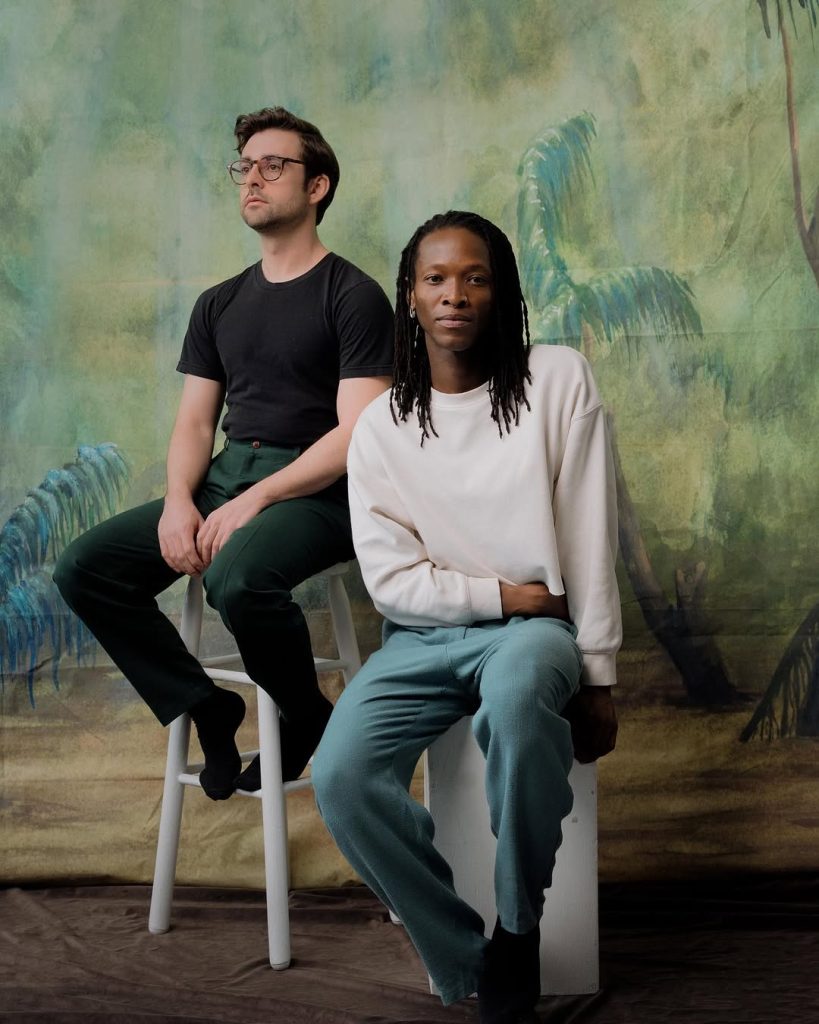
“Performing with groups is one of my favorite things. Most of the groups I tour with are large ensembles, like Michael Mwenso and the Shakes, or projects under Electric Root. I’ve also worked with IMG, led by the incredible trumpeter Riley Mulherkar. Those spaces of collaboration are where I thrive most.”
“I’ve grown less interested in defining myself as a singular entity – like, ‘What is the Vuyo thing that I can brand and sell?’ Instead, I’ve become more drawn to the community that emerges through collaboration. It’s about creating spaces where we’re in the right relationship with one another, where we can make art without the fear of being extracted from or exploited.”
Sotashe sees this approach as a way to move beyond the hyper-individualism often glorified in the music industry.
“There’s a kind of decolonization in this,” he reflected. “A divestment from the ‘attention Olympics’ – the race to be at the top. I’ve realized I don’t need to be the project. I thrive in being part of a project.” It’s a philosophy he carries into every performance. “I actively seek out spaces of co-creation, places where collaboration is the foundation. Even with this upcoming performance in Maine, I’m drawn to settings that encourage shared creativity.”
Despite his deep love for collaboration, there’s still something uniquely his own in every project.
“All the things I’m involved in feel like my thing,” he said. “They aren’t separate from me. My upbringing, taste, training, and interests all influence what I bring to the table.”
One of his most personal projects stems from his first musical love – choral music. “I grew up singing in choirs, and that foundation has shaped so much of my work. My collaborator, Chris Pattishall, and I reimagine those choral pieces, reducing them to just piano and voice. It’s an intimate way of creating, and we’ve been playing together for years.”
The upcoming performance at the Portland House of Music will be an intimate yet expansive showcase of heritage and innovation. At its core is the collaboration between Sotashe and pianist Paterchall, a Grammy-nominated musician and film composer who has worked on scores for projects like “Everything Everywhere All at Once.” Their musical connection dates back to their time at William Paterson University and the vibrant jazz community in New York, where they first crossed paths.
For their Maine performances, the two musicians have taken traditional choral songs and reimagined them for piano and voice, now further enriched by the addition of the Palaver Strings Orchestra.

The program weaves together compositions from legendary South African figures like Michael Moerane and Bheki Mseleku, alongside rare folk songs dating back to the 1800s, including works by Zulu Princess Magogo. The result is a musical conversation between past and present, where jazz, African choral traditions, and classical string arrangements intersect.
Just after February’s Black History Month, “Songbook” naturally resonates with themes of heritage and identity. Of course, Black culture permeates global history well beyond a single month, but occasions like these performances create space for deeper engagement with stories from the African continent.
“[Jazz is] one of the great cultural exports of the United States. But in South Africa, jazz became more than music. During apartheid, it was a voice of liberation, a language of resistance,” Sotashe said.
Among the standout pieces in the program is “Through the Years,” co-written by South African pianist Bheki Mseleku and American jazz great Abbey Lincoln. The song reflects the enduring relationship between South African and American musicians, a cross-Atlantic dialogue that continues to shape jazz. Another highlight is “Sylvia,” a Xhosa choral piece by Michael Moerane.
For more information about the performances, see events.colby.edu/ and portlandhouseofmusic.com/calendar.








