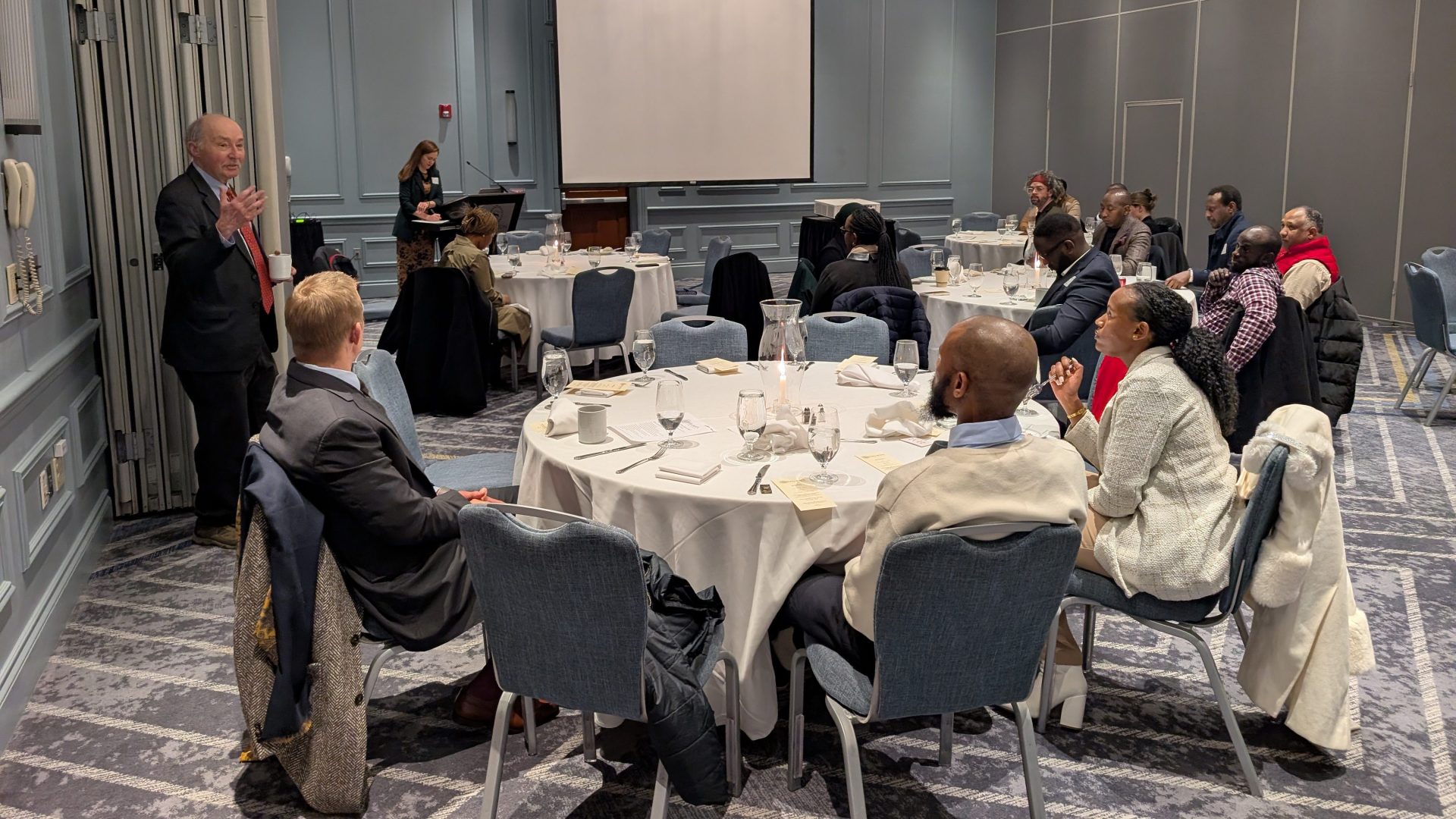
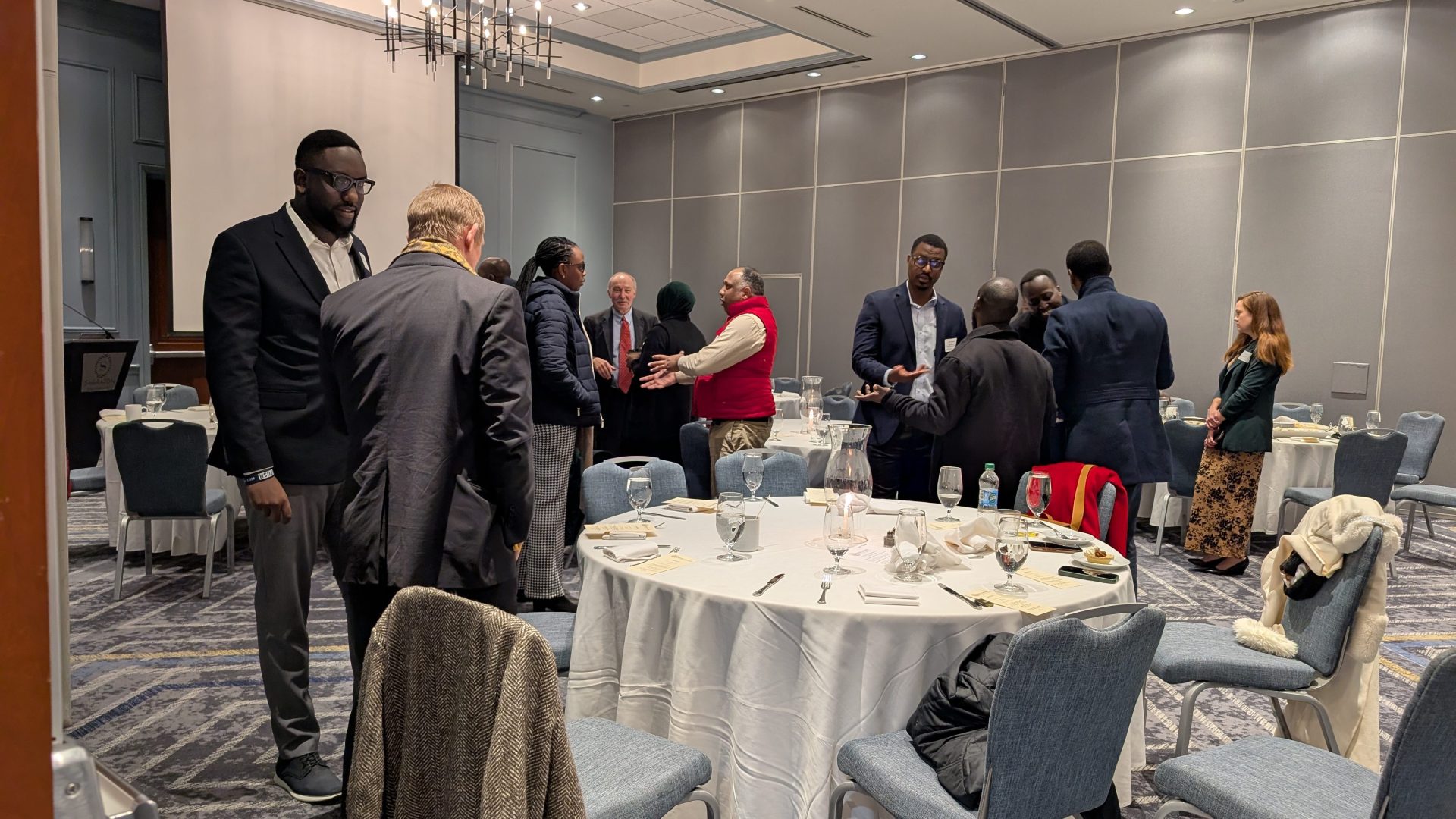
At the Portland Sheraton at Sable Oaks on December 12, 2025, the room buzzed with conversation, ambition, and a shared sense of purpose as entrepreneurs, community leaders, lawyers, and advocates gathered for the 2025 New Mainer-Owned Business Night, organized by Ladder to the Moon Network. Amjambo Africa is a project of Ladder to the Moon Network, which works to amplify immigrant voices and build pathways to economic and civic inclusion.
The evening brought together business owners, policymakers, and immigrant leaders for more than networking; it was a call to action, reflecting on how immigrants are shaping Maine’s economy and how Maine must address structural barriers to allow immigrants to thrive fully.
A growing force in Maine’s economy
Jeff Thaler, attorney at Preti Flaherty and Vice President of Ladder to the Moon Network, closed the discussion by emphasizing the demographic shifts shaping Maine’s workforce. “Maine is one of the oldest states in the country. Our workforce is shrinking, and our future depends on immigration,” Thaler said.
“There’s more diversity now in Portland than when I arrived here in 1979 — and that change is a strength.”
Thaler stressed that immigrants are not just workers; they are business owners, innovators, and community anchors.
Yet, he warned, systems designed to support them have lagged behind: “We have a lot of good ideas in Maine, but too often they die because there’s no structure to carry them forward. We need action, not just conversation.” He highlighted challenges such as limited access to capital and the absence of platforms connecting immigrant entrepreneurs with decision makers.
ADVERTISEMENT

Jean Rutonesha, CEO of Standard Care LLC, presented data illustrating the economic impact of immigrants in Maine. “Immigrants make up only about 4% of Maine’s population, yet they contribute more than $1.5 billion to the state’s GDP [Gross Domestic Product] every year,” Rutonesha said. “In cities like Lewiston, immigrants account for more than half of population growth.”
Rutonesha emphasized that immigrants are solutions to labor shortages in healthcare, construction, manufacturing, and hospitality: “We are not just workers. We are entrepreneurs. We create businesses. We employ people. We pay taxes. Maine’s economy depends on us.” He also pointed to barriers facing immigrant entrepreneurs, including limited financial literacy support and exclusion from mainstream economic networks: “Too many of us work far below our skill level. That is not a failure of talent — it is a failure of systems.”
Building economic power through collaboration
Kerem Durdag, Founder and Managing Partner of the Indus Fund, spoke passionately about access to capital and financial inclusion. “Immigrants are among the most reliable borrowers,” Durdag said. “Our communities have some of the highest repayment rates, yet banks still treat us as risky.” He explained how the Indus Fund provides microloans to immigrant entrepreneurs, bridging gaps between community businesses and traditional financial institutions. He urged policymakers to ensure public funding reflects Maine’s changing demographics.
Legal guidance and practical support
Andrew Wells, Partner at Preti Flaherty, offered practical legal guidance for small business owners. “Many of the people I work with don’t get in trouble because they do something wrong intentionally. They get in trouble because they don’t have access to the right information,” Wells said. He highlighted employment tax obligations as a key risk area: “Payroll taxes are trust-fund taxes. If they’re not paid, the IRS can come after you personally — even if you have an LLC.”
Leah Hargrove, Executive Director of Ladder to the Moon Network/Amjambo Africa, emphasized actionable knowledge and community connections throughout the evening.

“The purpose of our organization is to connect people with each other and with knowledge and information so they can thrive. When people have access to accurate information, strong networks, and resources, they can go as high as they want — like a ladder all the way to the moon,”
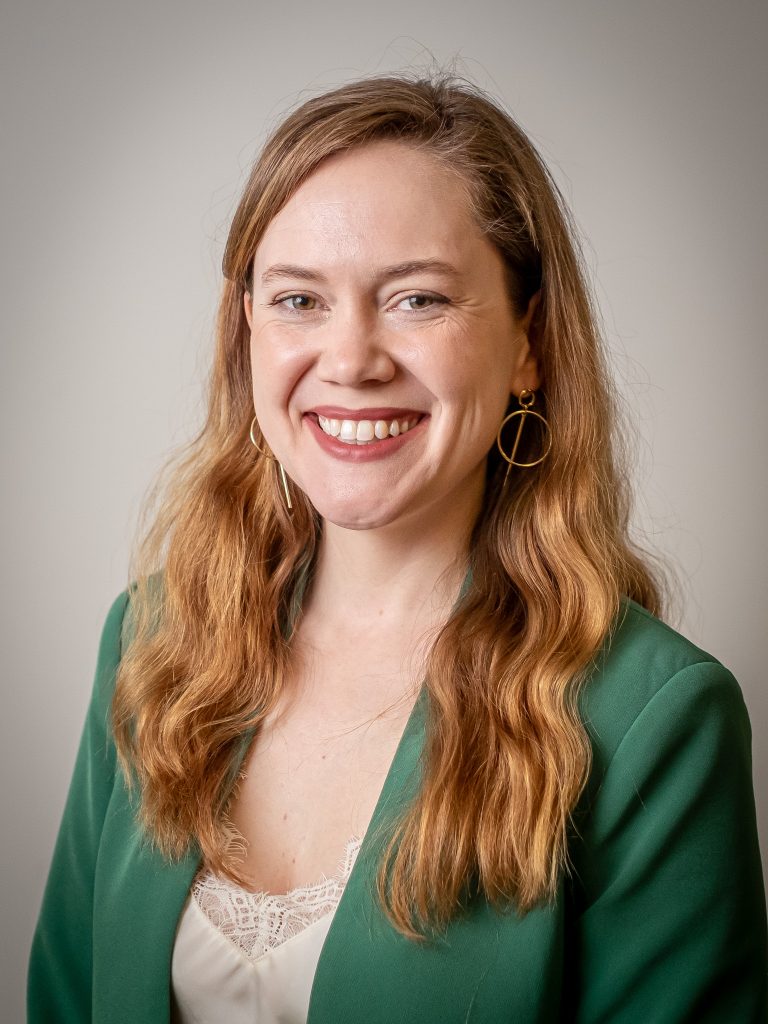
Hargrove said. She encouraged participants to actively engage: “If you’ve got something that would benefit the group or prompt the group to think differently, please stand up and share it, because it’s good for all of us to hear.” And she reminded attendees of the practical support available: “If you have specific tax or legal questions, now is the time to ask Andrew and Jeff, while our brains are fresh. We want to be helpful and see everybody in the room succeed.”
From conversation to action
A recurring theme of the evening was the need for coordination and sustained action. Speakers and participants noted the lack of centralized platforms connecting immigrant entrepreneurs with funding, mentors, and policymakers. “We need a place where information lives,” Rutonesha said. “Where people can find opportunities, grants, mentors, and connections.” Thaler stressed the importance of long-term planning: “This can’t be a one-night conversation. We need a roadmap — five concrete things we commit to achieving in the next six months.”
A vision for the future
The closing message reinforced that Ladder to the Moon’s mission is empowerment, not charity. “People don’t need handouts. They need access — to information, networks, and opportunity,” Hargrove said. Participants mingled over coffee and dessert, exchanging ideas and contacts. The event ended with a clear challenge: turn conversation into action, build together, and make Maine a place where everyone can rise.