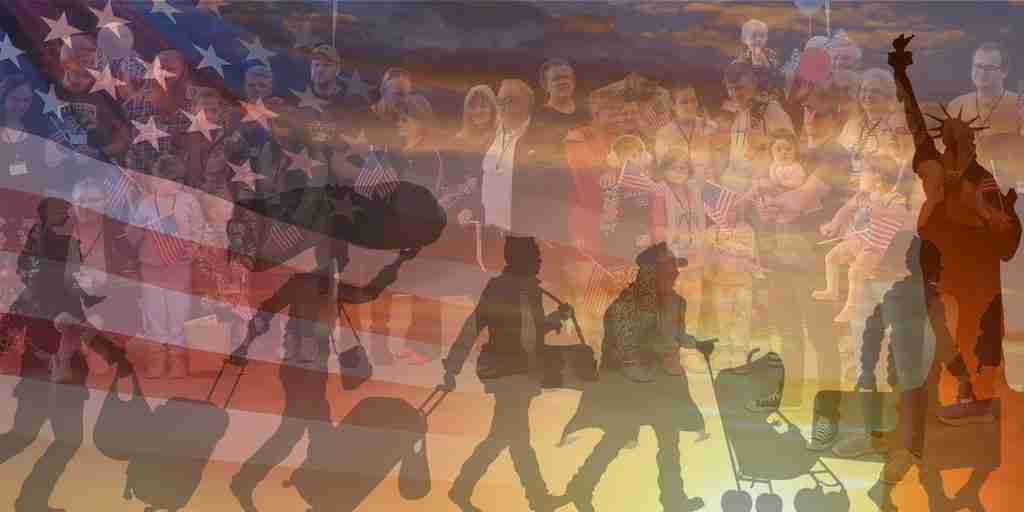
Up to 17,500 people, primarily white South Africans, will be resettled in the United States in Fiscal Year (FY) 2027, according to an October 2 Presidential Determination on refugee admissions.
Since January 2025, President Donald Trump has suspended the long-standing U.S. Refugee Admissions Program, which, historically, has largely resettled people forced to flee conflicts and persecution.
“The United States lacks the ability to absorb large numbers of migrants, and in particular, refugees, into its communities in a manner that does not compromise the availability of resources for Americans,” an executive order announcing the suspension stated.
Yet in February 2025, the U.S. government created a separate pathway to admit white South Africans, known as Afrikaners. The decision, Trump said, was due to a “white genocide” in South Africa. Trump claimed Afrikaners were being killed and their agricultural land confiscated.
“Land appropriation in South Africa to resolve high concentration in a few white hands versus huge numbers of landless Black persons is conducted under law, through negotiation with owners, and provides for fair compensation based on declared or market valuation,” Patrick Taran, president of Global Migration Policy Associates, told Amjambo Africa.
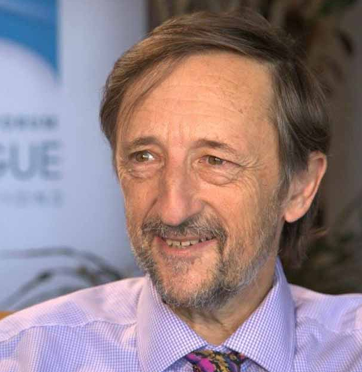
Contrary to Trump’s claims, the South African government and the country’s ambassador to the United States, Roelf Meyer have stated that violent crimes in the country affect everyone, regardless of race. Published evidence reveals that Black people form the majority of murder victims in the country.
Trump’s suspension of the long-standing refugee program has since left thousands of refugees unable to proceed with resettlement despite having received conditional approval to move to the United States.
Declining numbers
In FY 2024, under President Joe Biden, the United States admitted over 100,000 refugees — mostly from Africa — the highest admission level in three decades.
The Biden administration had begun resettling refugees for FY 2025, which started in October 2024. Of the 38,102 refugees admitted that year, more than 98% arrived between October 2024 and January 2025, mainly under Biden, according to U.S. government data.
ADVERTISEMENT

“The U.S. has a long history of ample refugee admissions annually,” Taran said. “The Trump administration’s policy, however, represents a significant departure from that, both in significantly lowering annual admissions quota and changing to a highly restrictive approach overall to migration as a main feature of a racialized nationalistic social restructuring of the country.”
In FY 2026, which just ended, the United States resettled over 16,000 people, mostly Afrikaners. In Maine, where more than 400 refugees were admitted in FY 2024, only 35 people, primarily South Africans, were resettled between October 2025 and May 2026.
Despite the decision to prioritize Afrikaners, multiple media reports say some resettled people have returned to South Africa in recent months.
Applications for the program have also reportedly been lower than expected. The Guardian recently reported that the Trump administration was considering spending $335,000 on research and an advertising campaign in South Africa to understand the low level of applications and promote the resettlement pathway.
Who qualifies as a refugee?
The 1951 Refugee Convention and its 1967 Protocol define a refugee as a person who is outside their country and cannot or will not seek its protection because they fear persecution.
Under established resettlement arrangements, the United Nations Refugee Agency (UNHCR) refers some of the world’s most vulnerable refugees to countries such as the United States. These may include people with particular protection needs, survivors of violence, or people seeking to reunite with family members.
“The [Afrikaner] program operates outside the traditional UNHCR referral pathways, as the agency has not designated Afrikaners as a group meeting international refugee status thresholds,” said Cristiano d’Orsi, a visiting professor in refugee and migration law at the University of Venda in South Africa,.
He noted that the U.S. approach raises questions about how refugee status is determined and whether the same standards apply to different groups.
“This preferential racial treatment and carrying out a priority quota exclusively for a specific racial minority violates the principle of non-discrimination [of the Refugee Convention],” d’Orsi said.
The expert explained that when objective circumstances demonstrate that a particular group faces widespread persecution, governments can use an approach called prima facie recognition. However, he said the U.S. approach was unusual because the government was identifying Afrikaners in South Africa as potential victims of persecution before they left the country.
“Refugee advocates, in fact, argue that utilizing U.S. refugee resettlement as a domestic political or ideological statement weakens the integrity of the global asylum system, making refugee admission subject to shifting political whims rather than humanitarian need,” d’Orsi said.
Refugee rights organizations such as the International Refugee Assistance Project have challenged the administration’s suspension of the wider program and its selective admissions policy through legal action, describing the selective resettlement of Afrikaners as “illegal” and “discriminatory.”
“Anti-diversity”
According to Taran, the continued suspension of the wider resettlement program is part of a bigger strategy of dismissing the United States’ responsibility to take even a small share of people for resettlement. The suspension is also a reflection of the changing sense of what refugee status and protection are about.
Taran argued that the selective resettlement policy runs counter to the principles of diversity, equality, and inclusion. “These anti-diversity, anti-equality, and anti-inclusion approaches in the country will have an impact even on the people who are resettled from South Africa as well as far more broadly across the population,” he said.
Resettlement accounts for only a small proportion of the world’s displaced population. However, Taran said countries with the capacity to receive refugees still have a responsibility to help protect people who cannot safely return to their home countries and who otherwise are obliged to stay in refugee camps or insecure situations forever.
With the United States continuing to prioritize Afrikaners while keeping its historical refugee admissions program suspended, questions remain about how the country is redefining its responsibilities to refugees and deciding who deserves protection.