
By Eloge Kaneza
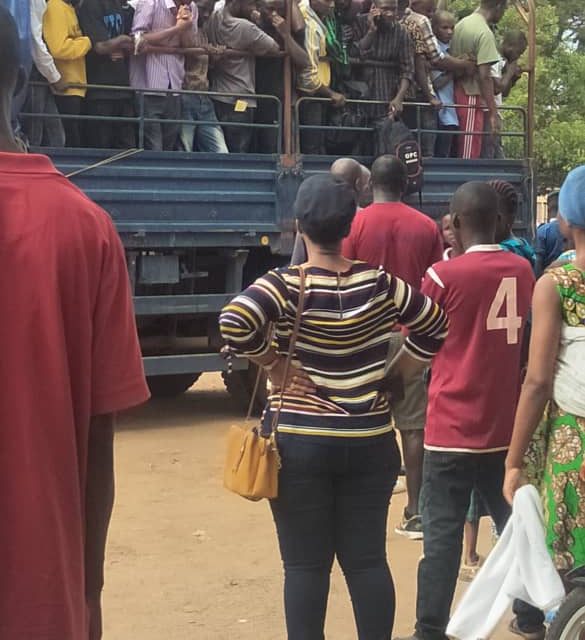
At least 150 Congolese people – most of them students and members of the Banyamulenge refugee community – were arrested during searches by Burundian police in Burundi’s economic capital, Bujumbura, on Feb. 15. Arrests also occurred in the provinces on the same day, and these continued into the following week. Many of those detained have now been released, but some remain in custody.
In Ruyigi Province, in eastern Burundi, at least 62 more Congolese refugees – all members of the Banyamulenge community – were detained. They were kept in the dungeons of the local provincial police station after being arrested on Feb. 15 outside the camps, and accused of “holding expired exit tickets from the camps or not having them,” according to a few detainees who have since been released. Ruyigi Province and the neighboring province of Cankuzo host three refugee camps, primarily home to people originally from the Democratic Republic of the Congo.
Gabriel, a refugee in Kinama camp, said, “I was arrested last week … just because I was outside the camp after 6 p.m. It’s absurd! I’m just a refugee trying to survive. I’m scared.”
Congolese refugees from the Banyamulenge community say they have become a target of the Burundian authorities in recent days as the powerful armed group M23 continues to expand its zone of control, and a resulting influx of refugees into Burundi grows. The Office of the United Nations High Commissioner for Refugees (UNHCR), the U.N. agency in charge of refugees, reports that Burundi has received 40,000 new Congolese refugees in February alone, many of them children.
Burundian Interior, Community Development, and Public Security Minister Martin Niteretse denies that the arrests made in recent days are meant to target the Banyamulenge.
Niteretse said, “It is an operation to control the residence permits of foreigners present in Burundi that has been underway for several days. This initiative concerns all foreign nationals on Burundian soil and has no connection with the current tensions in the east of the DRC.”
ADVERTISEMENT

However, Jean, a Munyamulenge who is based in Burundi, believes the arrests are aimed at Banyamulenge. He told Amjambo Africa, “We are accused of being Tutsis, like the M23 rebels, and we are suspected of being spies for Rwanda because of our Rwandan ancestry. It’s unfair. How can we be judged as a source of insecurity? We are first and foremost human beings who want to live in peace. These arrests remind us of the darkest hours of our history.”
The Banyamulenge, an ethnic minority group originally from Burundi, Rwanda, Tanzania, and Uganda, have lived in DR Congo for hundreds of years – longer than the U.S. has been a country.
The Mahoro Peace Association, a U.S.- based Banyamulenge activist group, agrees that Burundi is targeting Banyamulenge. Mahoro wrote on X: “We are deeply concerned about the alarming human rights violations against Banyamulenge refugees in Burundi. Given the tragic history of the 2004 Gatumba massacre [in Burundi], urgent intervention is needed to prevent further atrocities.” Mahoro tagged President Evariste Ndayishimiye of Burundi as well as U.N. Secretary General António Guterres on the post.
A few days before the Feb. 15 arrests, Burundian authorities drove Banyamulenge refugees from the capitals of the provinces of Ngozi and Muyinga in the northeast area of the country, where they were living, back to the refugee camps of Musasa and Gasorwe. Many residents of these camps, as well as those living in Nyankanda, Bwagiriza, and Kinama in Ruyigi and Cankuzo, believe that their rights are violated in these camps.
The M23, which is widely believed to be supported by Rwanda, now controls three borders with three different countries – in June 2022, they set up headquarters in Bunagana, a city on the border of Uganda, which they have occupied ever since. On January 27, after taking control of Goma, the main city in eastern DR Congo, as well as Bukavu, the capital of South Kivu on Feb. 14, the M23 rebels seized Kamanyola, a city on the border between Burundi and Rwanda, during the week of Feb. 17.
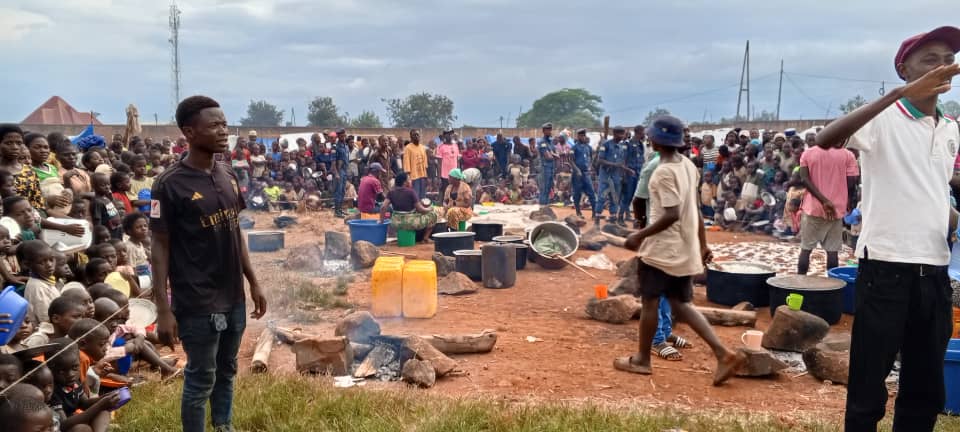
Photo: Congolese refugees in Burundi
As M23 rebels advance towards the town of Uvira, a few kilometers from Bujumbura, the U.S. has sanctioned James Kabarebe, Rwanda’s Minister of State for Regional Integration, and Lawrence Kanyuka, the spokesperson of M23. The U.S. accused Kabarebe of playing a central role in Rwanda’s support for the March 23.
“Today’s action underscores our intent to hold accountable key officials and leaders like Kabarebe and Kanyuka, who are enabling RDF (Rwandan army) and M23’s destabilizing activities in the eastern Congo,” said Acting Under Secretary of the Treasury for Terrorism and Financial Intelligence Bradley T. Smith. “The United States remains committed to ensuring a peaceful resolution to this conflict.”
However, the Rwandan government spoke against the sanctions, saying in a statement from the Rwandan Ministry of Foreign Affairs and International Cooperation, “Today’s designation of Minister of State James Kabarebe is unjustified and unfounded. If sanctions could resolve conflict in eastern Democratic Republic of Congo (DRC), we would have had peace in the region decades ago.
“Punitive measures, including sanctions, make no contribution toward long-term security, peace and stability for all the countries of the Great Lakes region. Such measures can only be construed as unwarranted external interference in the African-led process, which risks prolonging the resolution of the conflict.”
On August 13, 2004, a group called the National Forces of Liberation (FNL), mostly consisting of Hutu rebels from Burundi, targeted the Banyamulenge Congolese refugees from the eastern province of South Kivu in a massacre known as the Gabumba Massacre. The attack was based on the ethnicity of the victims, and resulted in the murder of 166 civilians, with 106 civilians wounded.








