
By Ignatius Ssuuna
Kampala, Uganda — With less than a week to Uganda’s 2026 presidential election, concerns are mounting over shrinking civic space and renewed restrictions on access to information, following the shutdown of Starlink’s satellite internet service in the country.
Ugandans go to the polls on January 15, in an election widely expected to return President Yoweri Museveni, who has ruled since 1986, to power for another term — extending his leadership to nearly four decades.
President Museveni, now 81, is seeking to prolong his rule amid a deeply polarized political environment. Several opinion polls published in recent weeks give him a significant lead, with some placing his support at around 64 percent, followed by opposition challenger and pop star-turned-politician Robert Kyagulanyi, popularly known as Bobi Wine, at approximately 24 percent.
Starlink shutdown raises alarm
Against this backdrop, satellite internet provider Starlink last week disabled access to its global network in Uganda, following a directive from the Uganda Communications Commission (UCC). The regulator cited the operation of unlicensed satellite internet services within the country.
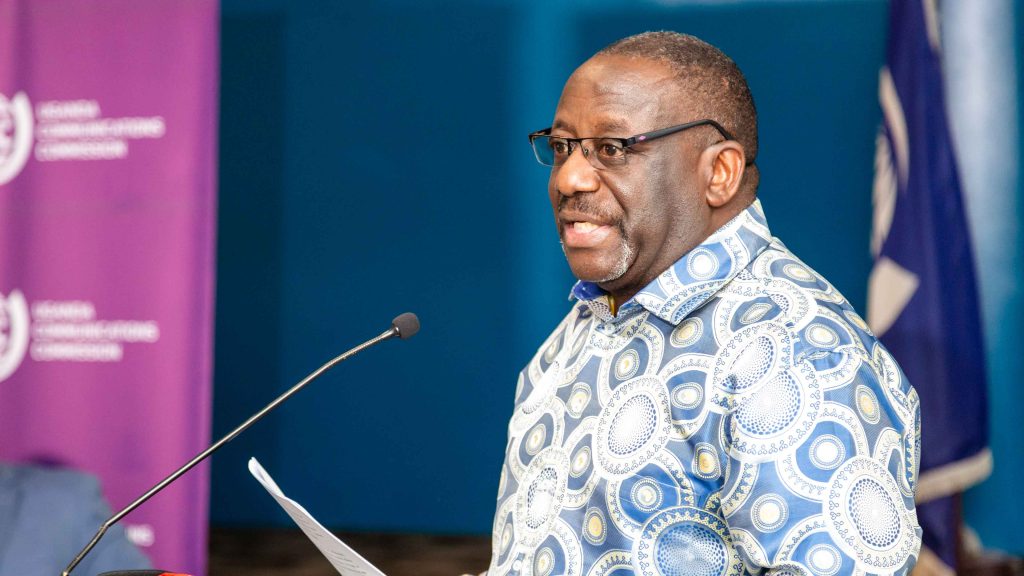
The UCC’s executive director, Nyombi Thembo, denied that the government was planning a nationwide internet shutdown, insisting that the action was limited to Starlink terminals that had been “informally imported” into Uganda without authorization.
However, opposition leaders, activists, and civil society groups argue that the move fits a familiar pattern of election-period internet restrictions aimed at limiting communication, mobilization, and independent verification of election results.
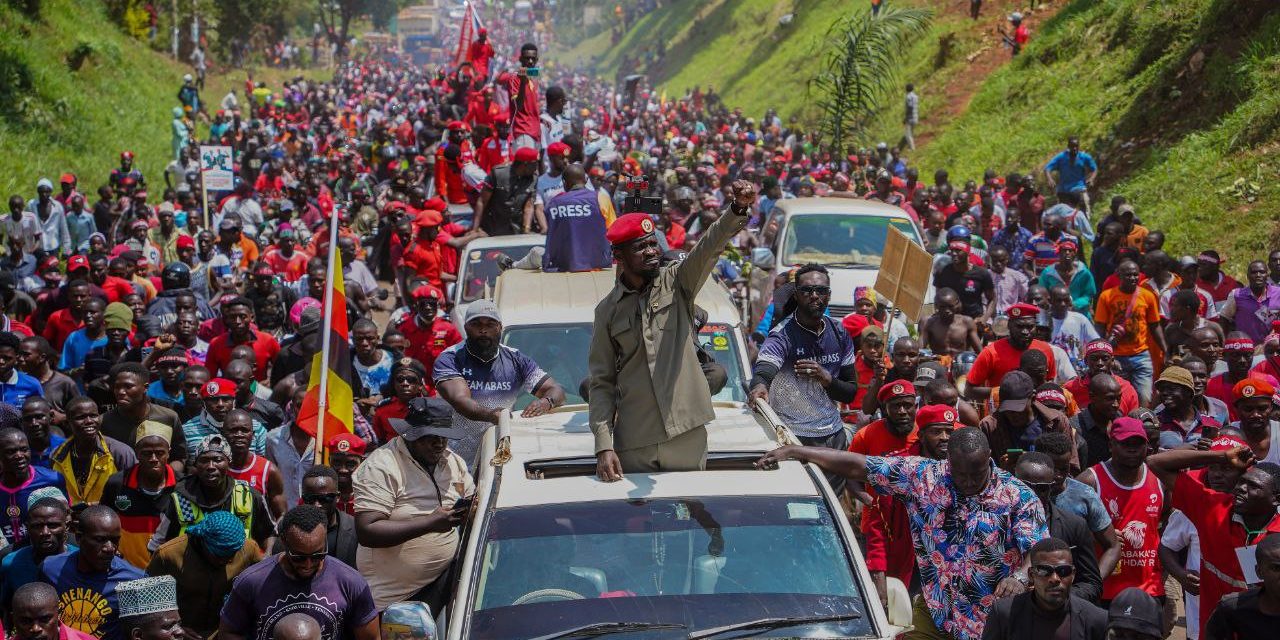
“As we all know, the regime is plotting an internet shutdown, as they have done in past elections, to block communication and prevent citizens from organizing, verifying results, and demanding accountability,” Bobi Wine, leader of the National Unity Platform (NUP), said.
Restrictions on media and public assembly
The Starlink shutdown comes amid a series of restrictive measures announced by the government ahead of the vote. Authorities have banned live broadcasts of riots, “unlawful processions,” and violent incidents. Voters have also been instructed to leave polling stations immediately after casting their ballots — a directive the opposition says limits transparency.
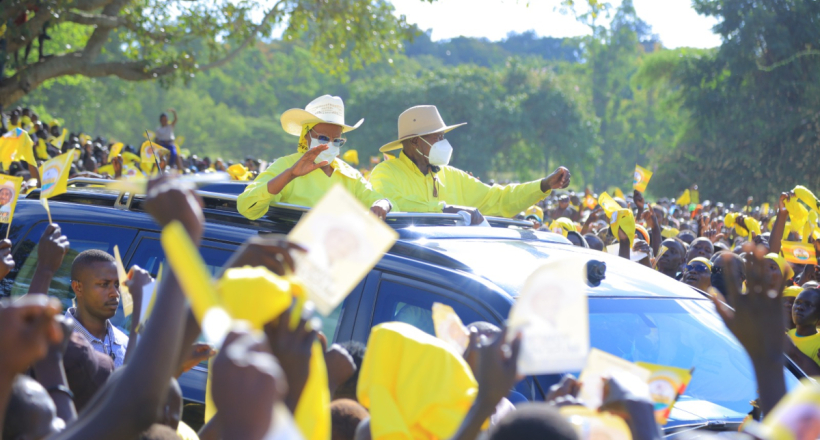
Photo: President Yoweri Museveni and First Lady Janet Kataaha Museveni at a National Resistance Movement (NRM) party rally. Photo credit: NRM Party
Sarah Bireete, a prominent human rights activist and executive director of the Center for Constitutional Governance, said efforts to restrict access to information had already begun.
“Measures to block internet access ahead of elections have started with the Uganda Revenue Authority blocking Starlink technology gadgets,” Bireete said.
ADVERTISEMENT

Her comments followed a government decision to place a hold on the importation of Starlink internet kits. Importers were told such devices could only be released from customs with authorization from the chief of defence forces, Gen. Muhoozi Kainerugaba, President Museveni’s son.
“This is political interference in access to information,” Bireete said.
She was arrested on December 30 and later charged with accessing and sharing national voters’ information without consent from the Electoral Commission — charges her supporters describe as politically motivated.
A familiar pattern
Uganda has a history of restricting internet access during elections. In January 2021, the government imposed a nationwide internet shutdown on the eve of polling day. While access to most social media platforms was later restored, Facebook remains largely blocked, accessible only through virtual private networks (VPNs).
Government officials have consistently justified such measures on grounds of national security and the need to combat misinformation. The military has defended previous shutdowns as necessary to maintain public order.
Critics, however, argue that the real target is Uganda’s youth — who make up more than 70 percent of the population, according to recent government demographic data — and who rely heavily on social media for political engagement.
Security forces and rising tensions
As election day approaches, the role of the military has come increasingly into focus. Senior army officials have urged citizens to trust the armed forces, which they credit with maintaining peace under President Museveni’s leadership. The government says election observers and the media will also help safeguard the vote.
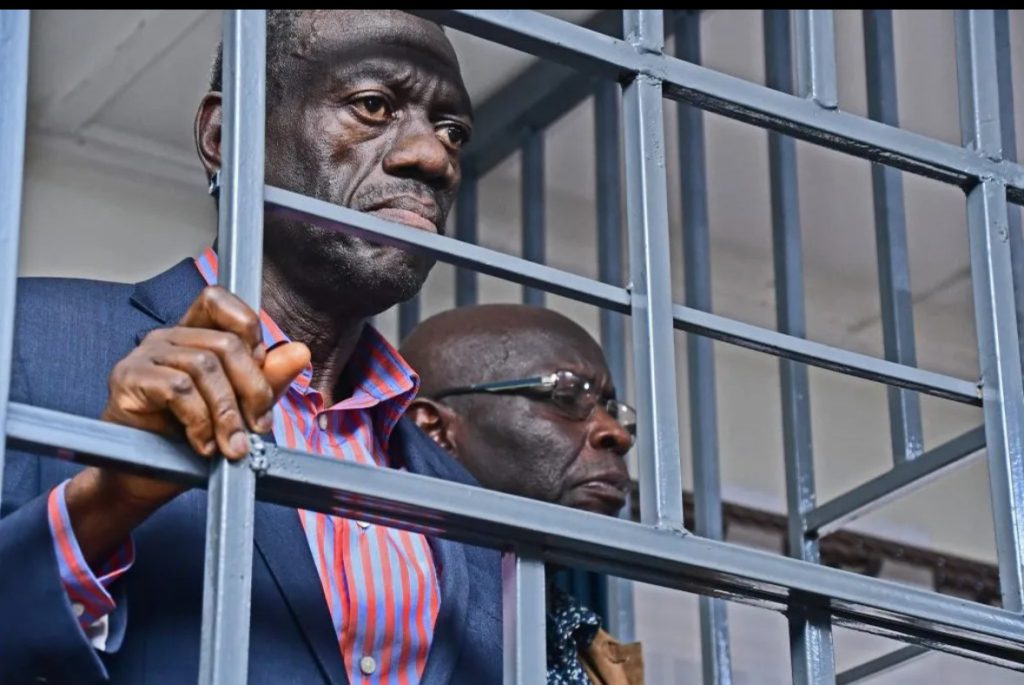
Photo: Ugandan opposition figure Kizza Besigye (left) and co-accused Hajj Obeid Lutale Kamulegeya (right) in custody at Luzira Maximum Security Prison. They were arrested in November 2024. Photo credit: Ignatius Ssuuna
At the same time, military leaders have issued stern warnings to opposition supporters. The deputy director of defence information, Col. Chris Magezi, warned that the Uganda People’s Defence Forces (UPDF) is “lethal” and would respond forcefully to any violations of the law.
These statements have heightened anxiety, particularly among supporters of Bobi Wine’s NUP, whose campaign rallies have drawn large crowds and whose members have borne the brunt of security crackdowns.
The party says more than 500 of its members — mostly young grassroots mobilizers known as “foot soldiers” — have been detained in recent months. NUP leaders say these arrests are aimed at weakening their ability to mobilize voters and protect the vote.
Fears of succession politics
Beyond the immediate election, analysts point to broader concerns about political succession in Uganda — an issue rarely addressed publicly but increasingly evident in state actions.
Observers note that Gen. Muhoozi Kainerugaba, widely viewed as President Museveni’s preferred successor, has played an increasingly prominent role in security and political affairs. Commentators argue that the government’s focus has shifted from winning votes to managing crowds and preventing mass protests, particularly in central Uganda, where support for the ruling party has declined.
Col. Magezi recently claimed the opposition was planning to use its numerical strength to overwhelm security forces and march on Kampala — assertions opposition leaders dismiss as justification for repression.
Talk of system change
Adding to the uncertainty are renewed discussions around constitutional reforms. Justice and Constitutional Affairs Minister Norbert Mao has previously hinted at possible changes, including reducing the size of Parliament and shifting from a presidential to a parliamentary system.
While the government has described such remarks as personal opinions, critics point out that past constitutional changes — including the removal of presidential term and age limits — began with similar informal discussions.
Opposition figures argue that a parliamentary system would be easier to control and could pave the way for a managed transition of power within the ruling establishment.
Such a system, they say, would also reduce the pressure on an aging president to campaign directly, while enabling continuity of power amid growing public frustration over governance, service delivery, and political freedoms.
A climate of uncertainty
As Uganda heads into another tightly controlled election, opposition leaders, civil society groups, religious leaders, and the influential Buganda Kingdom have all raised questions about the government’s intentions.
“If there is no mischief planned, why are authorities moving to restrict the internet and tighten civic space yet again?” one opposition figure asked.
With memories of the 2021 shutdown still fresh, many Ugandans fear a repeat — and worry that access to information, transparency, and accountability may once again be casualties of the electoral process.
………………
Photo: Robert Kyagulanyi, popularly known as Bobi Wine, during a rally of the National Unity Platform. He is seen as a challenger to President Museveni. Photo credit: NUP







