
Violet Ikong
JUBA, South Sudan – The United States has imposed visa restrictions on citizens of South Sudan, citing national security concerns after a diplomatic row over the deportation from the U.S. of an individual the Donald Trump administration claims is South Sudanese.
On February 5, U.S. Secretary of State Marco Rubio announced that Washington had revoked existing visas and suspended new ones for South Sudanese nationals following what he described as “non-cooperation” from Juba. The move, he added, comes after South Sudan allegedly refused to accept a deportee believed to be one of its citizens.
“Enforcing our nation’s immigration laws is critically important to the national security and public safety of the United States,” said Rubio in a statement released by the U.S. Department of State. “Every country must accept the return of its citizens in a timely manner when another country, including the United States, seeks to remove them.”
But within hours of the announcement, South Sudanese authorities pushed back, claiming the individual in question – identified by the U.S. as Nimeri Garang – is not a South Sudanese national.
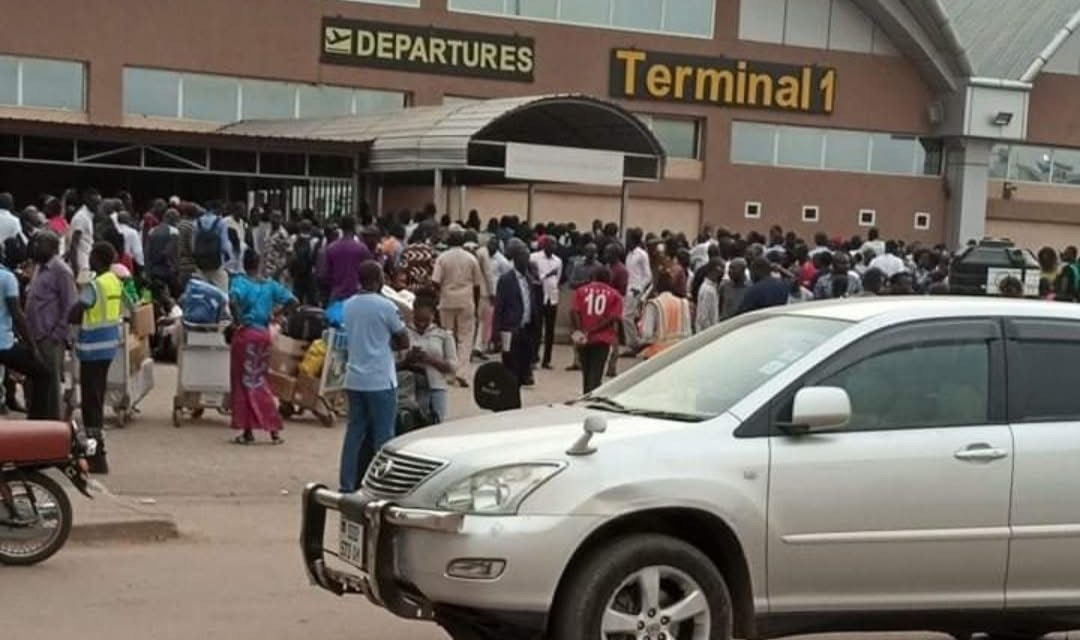
In an official statement on April 7, South Sudan’s Ministry of Foreign Affairs and International Cooperation maintained that the deportee, who presented South Sudanese travel documents upon arrival in Juba, was in fact a Congolese national named Makula Kintu. The ministry said immigration officers at Juba International Airport determined his identity through a thorough verification process.
ADVERTISEMENT

“Upon arrival, it was determined that the individual who presented a South Sudanese Travel Document under the name Nimeri Garang is not Nimeri Garang,” the statement read. “Comprehensive verification processes confirmed that this individual is a national of the Democratic Republic of Congo.”
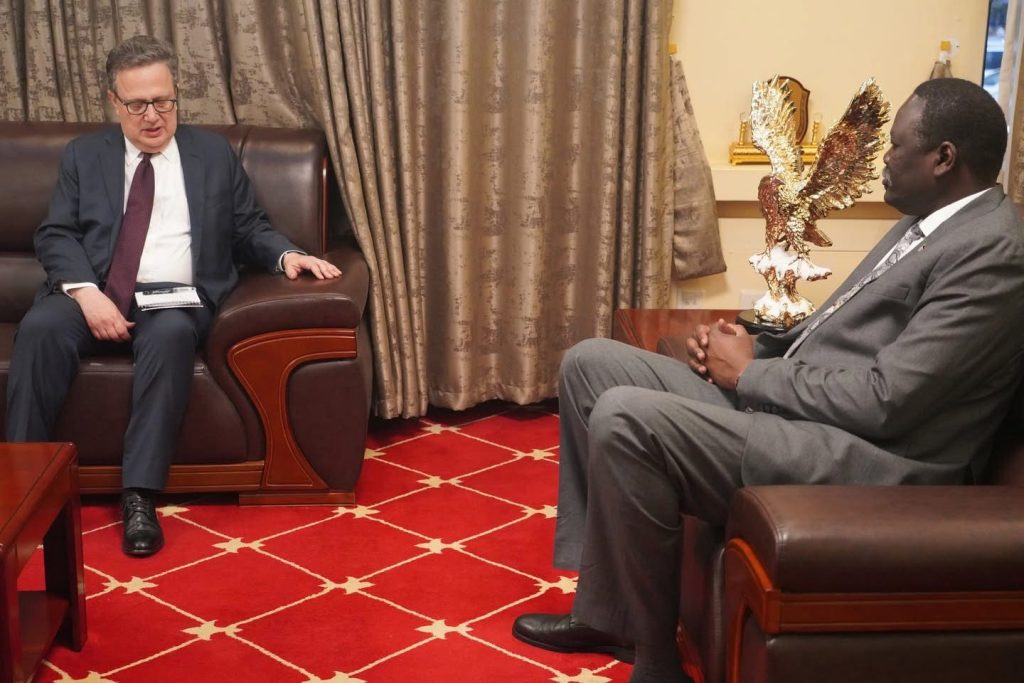
Photo: Foreign Affairs Minister meets with U.S. Ambassador to South Sudan. Photo credit: Ministry of Foreign Affairs and International Cooperation South Sudan/Facebook
U.S. Deputy Secretary of State Christopher Landau insisted that the deportation was legitimate, stating that the South Sudanese Embassy in Washington had issued an emergency travel document for the individual, officially certifying him as South Sudanese.
“Specifically, on February 13, 2025, the South Sudanese Embassy issued the individual an emergency travel letter … giving his date and place of birth in what is now South Sudan,” Landau said.
Diplomatic reversal
Following mounting pressure and a high-level diplomatic meeting between South Sudan’s then-Foreign Minister Ramadan Abdallah and U.S. Ambassador Michael Adler, Juba agreed to admit the deportee.
“The Government of the Republic of South Sudan has decided to allow Mr. Makula Kintu, a deportee from the United States who was previously denied entry, to be admitted into the country,” the ministry said in a social media post.
Wider implications
South Sudan’s compliance may pave the way for a review of the visa restrictions, but the U.S. has signaled that the young East African nation remains on its radar. Last month, Washington listed South Sudan among 10 countries under consideration for further travel restrictions, alongside Belarus, Pakistan, Russia, and others.
The visa ban comes at a time of increasing political instability within South Sudan, where tensions continue to rise between President Salva Kiir and First Vice President Riek Machar. In March, the U.S. evacuated non-essential diplomatic personnel and issued a travel advisory warning American citizens against visiting the country.
For South Sudan, already grappling with internal strife and economic challenges, the visa restrictions represent another layer of diplomatic friction – one with far-reaching consequences for citizens and the fragile peace process alike.








