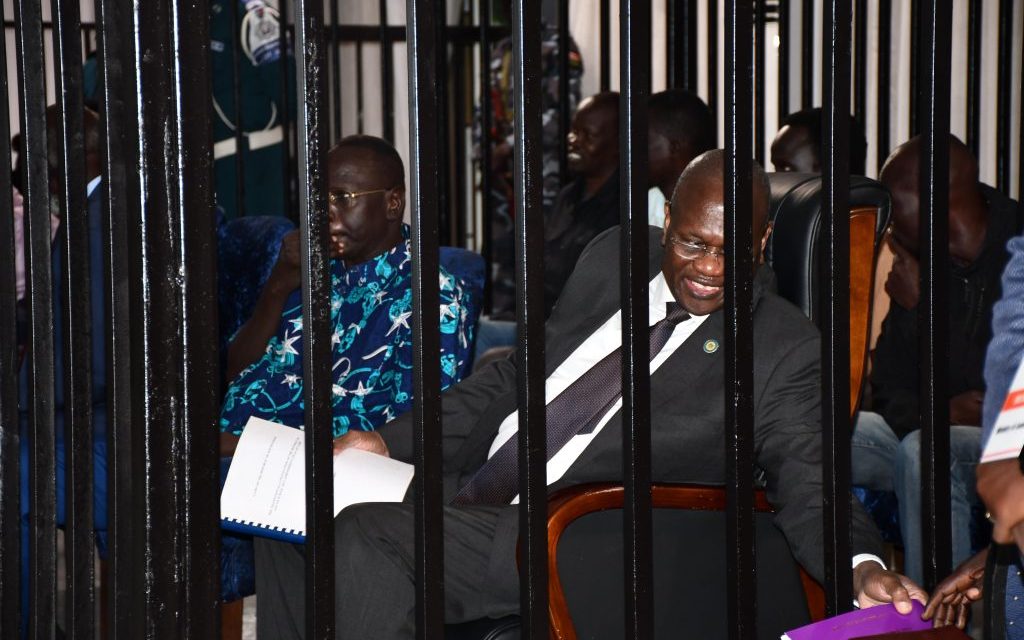
By Sheila Ponnie
The United States government is calling for the immediate release of South Sudan’s detained First Vice President, Riek Machar, warning that meaningful peace dialogue cannot resume while one of the principal signatories to the 2018 Revitalized Peace Agreement remains under house arrest.
“We cannot accept that peace commitments are being implemented when one of the main parties to the agreement is under house arrest,” U.S. Ambassador to South Sudan, Michael J. Adler, said during a press conference in Juba on Thursday, February 26, 2026.
Ambassador Adler reaffirmed Washington’s commitment to supporting South Sudan’s fragile peace process but stressed that progress depends on the full participation of all signatories to the 2018 deal signed between Machar and President Salva Kiir.
“The United States stands for peace. We strongly support those working to implement the peace commitments,” Adler said.
“We call for the release of those under house arrest and for the immediate resumption of dialogue among all recognized leaders of the transitional government to advance peace.”
Machar, leader and Commander-in-Chief of the Sudan People’s Liberation Movement–in Opposition (SPLM-IO), has been under house arrest since March 2025.
State Department issues warning
In a separate statement, the U.S. Department of State – Bureau of African Affairs reiterated the ambassador’s position, urging South Sudan’s transitional government to take urgent steps to prevent a return to civil war.
“President Donald Trump has made clear that the United States will not be taken advantage of,” the statement read. “The transitional government must undertake urgent action to mitigate the risk of civil war through the immediate return to dialogue among the parties to the 2018 peace agreement.”
“It is farcical to claim that such dialogue is taking place while the head of the second-largest party to the agreement, First Vice President Riek Machar, remains under house arrest and on trial.”
Machar is facing charges in connection with a February 2025 attack on an army garrison in Nasir County, where more than 250 government soldiers, including a senior commander, were killed.
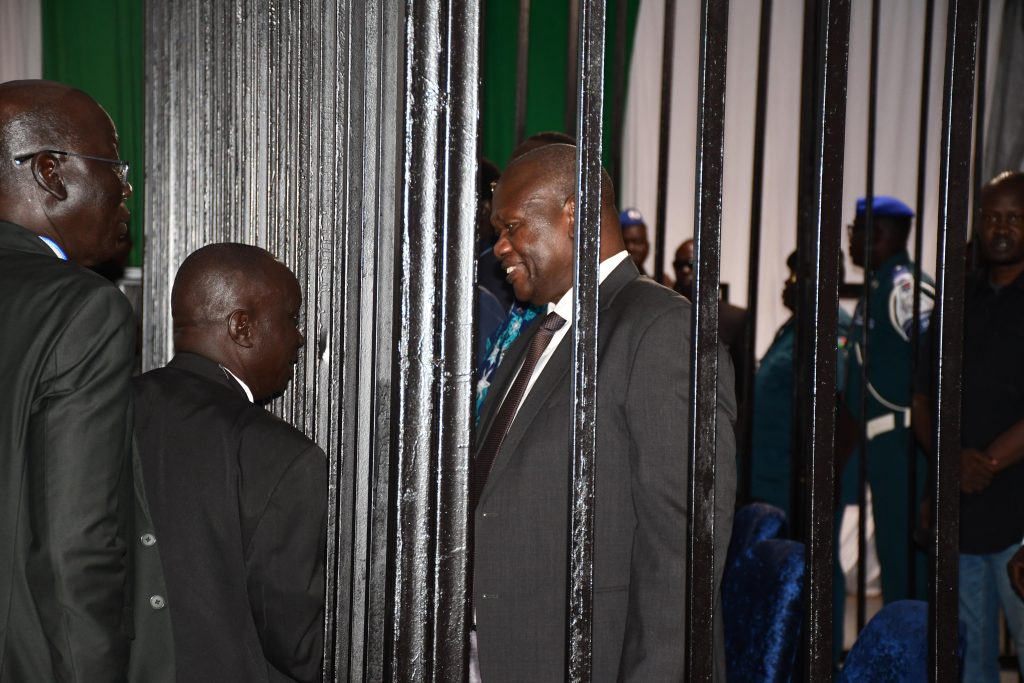
Photo: Riek Machar in Court
ADVERTISEMENT

The White Army, a Nuer youth militia operating in Upper Nile State, claimed responsibility for the assault. The government accuses Machar of supporting the group, which fought alongside his forces during the 2013 and 2016 civil wars. He now faces multiple counts, including genocide and crimes against humanity, before a special court in Juba. His allies have dismissed the charges as politically motivated.
Opposition lays down conditions for peace talks
Earlier this month, Machar’s party declared it would not participate in further negotiations unless he is released.
In a February 10 letter addressed to Kenyan President William Ruto, who is chief mediator in the ongoing Nairobi talks, the SPLM-IO said peace discussions under the Tumaini Initiative cannot proceed without Machar physically present at the negotiating table.
“For SPLM-IO to participate in the Tumaini Initiative, where SPLM-IG (Kiir’s party) is also a participant, we demand the unconditional release of Dr. Riek Machar, and he must be delivered to the venue of the peace talks in Nairobi,” read the letter signed by Nathaniel Oyet, the party’s acting chairman and Deputy Speaker of Parliament.
Oyet said Machar remains under effective confinement, with restrictions on movement both within Juba and outside the country.
“The release of Machar and other political detainees shall only be evident if they are free to travel and participate in peace talks outside South Sudan,” he said.
The opposition further warned that any attempt to discard the 2018 peace agreement — formally known as the Revitalized Agreement on the Resolution of the Conflict in South Sudan (R-ARCSS) — would undermine President Kiir’s legitimacy.
“President Kiir is president on the basis of R-ARCSS. He will cease to be president if R-ARCSS is dead,” Oyet added.
The Kenya-led mediation was launched in May 2024 to bring holdout groups into the peace framework, focusing on security sector reform, drafting a permanent constitution, and addressing the root causes of conflict. However, talks scheduled to resume on February 9 failed to take place.
The regional bloc, Intergovernmental Authority on Development-IGAD, a guarantor of the peace process, described the opposition’s demands as legitimate. Deputy Chief Mediator Dr. Mohammed Ali Guyo said the issue of Machar’s release would be considered by mediators.
Ethnic tensions and fragile peace
South Sudan’s conflict has largely followed ethnic lines, pitting forces loyal to President Kiir, an ethnic Dinka, against those aligned with Machar, a member of the Nuer community. The Dinka dominate key government institutions, while the Nuer are the country’s second-largest ethnic group.
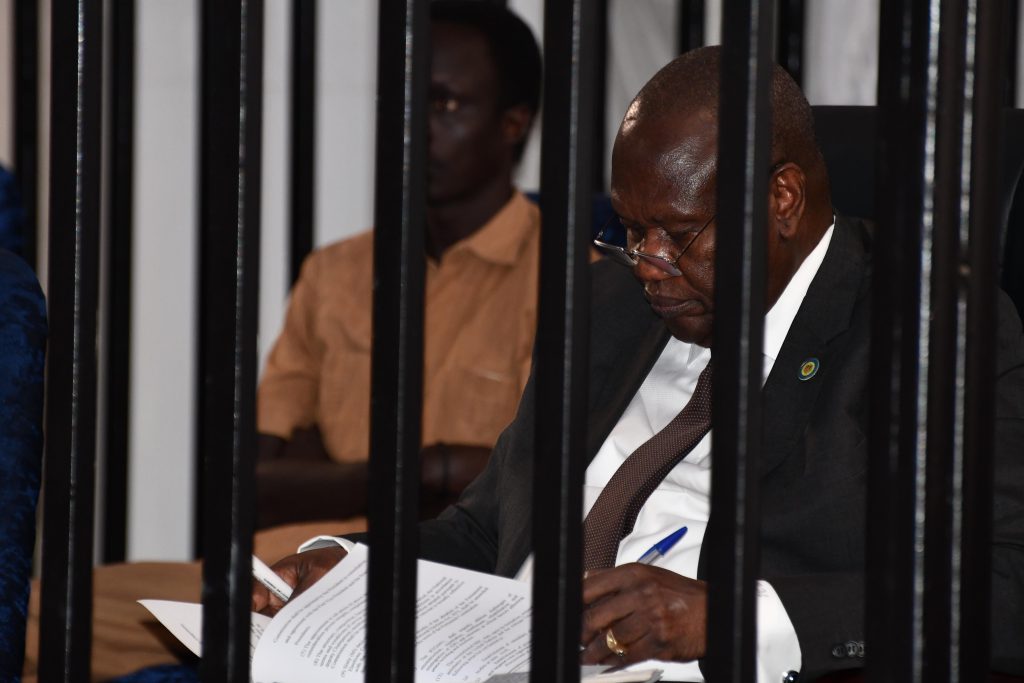
Photo: Riek Machar in Court
The 2018 peace agreement formally ended a five-year civil war that killed more than 400,000 people, according to United Nations data. Although Machar returned from exile in South Africa in 2020 and was reinstated as First Vice President in a transitional unity government, tensions have persisted.
Kiir, 74, recently suspended Machar from his position — a move the opposition says violates the peace agreement.
Ayod killings deepen crisis
As political tensions rise, violence on the ground continues.
Once gathered, 25 civilians — 23 women and two men — were reportedly rounded up and shot dead by individuals suspected to be members of the South Sudan People’s Defence Forces (SSPDF). The killings took place on Saturday morning in the village of Pankor, Ayod County, in the conflict-hit Jonglei State, about 250 miles (400 kilometers) north of the capital, Juba.
According to local media, soldiers allegedly used a public address system to mobilize civilians under the pretense of distributing humanitarian aid before opening fire.
European diplomatic missions — including Germany, France, the Netherlands, Ireland, Norway, the United Kingdom — and other diplomatic missions such as the United States and Japan — condemned the incident and called for accountability.
“Those responsible for such crimes and for fueling escalation must be brought to justice, regardless of status or political connection,” a joint statement read.
No arrests have been made, and the government has yet to publicly comment on the incident.
Growing humanitarian toll
South Sudan continues to experience intermittent fighting between government and opposition forces, despite official commitments to peace. The ongoing conflict has displaced more than 280,000 people, mainly in Jonglei and Upper Nile states.
Analysts warn that without inclusive dialogue — and the participation of Machar — the fragile peace agreement risks unraveling, potentially plunging the country back into full-scale civil war.