
By Ignatius Ssuuna
KIGALI, Rwanda — The U.S. has accused Rwanda of fueling instability in eastern Democratic Republic of Congo (DR Congo) as renewed fighting by the Rwanda-backed March 23 Movement rebels (M23) threatens to derail a peace agreement brokered earlier this month by President Donald Trump.
Speaking before the United Nations Security Council on December 12, U.S. Ambassador to the UN Mike Waltz warned that Rwanda was “leading the region toward increased instability and war” in South Kivu province and along the Burundi border, where violence is escalating. According to the UN refugee agency (UNHCR), the conflict in eastern DR Congo has generated one of the world’s largest humanitarian crises, with more than 7 million people displaced.
M23 advances and regional tensions
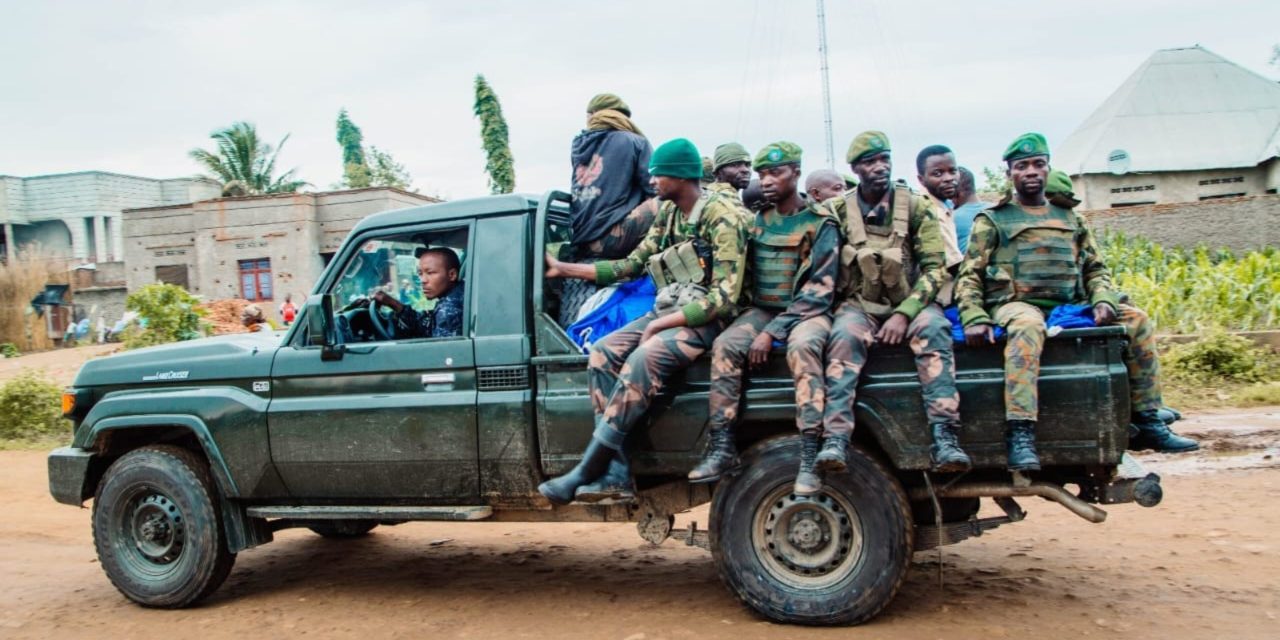
The U.S. warning came days after the M23 rebel group announced it had taken control of Uvira, a strategic city in South Kivu located just a few kilometers from Bujumbura, which is both Burundi’s economic capital, and a hub for UN agencies. Uvira’s capture puts rebel forces within striking distance of Burundi, and is raising alarm in Gitega, Burundi’s political capital.
Since early December, Burundi has received over 70,000 Congolese refugees. Residents along the Burundi-Rwanda border told Amjambo Africa that both countries have now significantly increased troop deployments, heightening fears of a wider regional confrontation.
On December 9, Burundi’s Minister of Foreign Affairs, Édouard Bizimana, accused Rwanda of deploying approximately 8,000 troops in eastern DR Congo to attack Burundian and Congolese positions.
On December 10, President Paul Kagame, addressing newly appointed officials in Kigali, accused Burundi of deploying more than 20,000 troops inside DR Congo and blamed them for using artillery and drones to attack civilians. Kagame described the situation as “chaos.”
Burundi has deployed more than 10,000 soldiers in South Kivu to support the Armed Forces of the Democratic Republic of the Congo (FARDC) and allied Wazalendo militias, according to regional security sources.
M23, the Alliance Fleuve Congo, and strategic maneuvers
The M23 rebel group, which is largely composed of Congolese Tutsi fighters, resurfaced in 2021 after a dormant period. They quickly became the principal player in the Alliance Fleuve Congo (AFC), a political-military coalition led by Corneille Nangaa. Nangaa is the former head of DR Congo’s Independent National Electoral Commission (CENI), Nangaa advocates for a federal system in DR Congo and promotes the AFC/M23 as a political-military alternative in eastern Congo.
The coalition currently controls multiple strategic territories, including mineral-rich areas, and has issued conditions for withdrawal from Uvira. These include demilitarization of the city, civilian protection, and monitoring of the ceasefire by a deployed force.
On the night of December 17, multiple sources reported seeing M23 combatants withdrawing toward Kiliba, in the Ruzizi Plain. Both Nangaa and Bertrand Bisimwa, deputy coordinator of AFC/M23, have framed the redeployment as a “strategic reorientation” rather than a sign of weakness.
ADVERTISEMENT

Humanitarian fallout
The capture of Uvira triggered a significant humanitarian crisis in the region. Human Rights Watch (HRW), in a report shared with Amjambo Africa on December 15, documented widespread abuses by all parties.
Clémentine de Montjoye, senior Great Lakes researcher for HRW, said:
“Rwandan troops and M23 rebels have committed widespread abuses, including the use of drones and artillery against civilians, summary executions, and arbitrary detentions.”
HRW has documented atrocities committed by Congolese forces and allied Wazalendo militias, including sexual violence, looting, and extrajudicial killings during retreats.
“The Washington Accords have not resulted in greater security or access to assistance for civilians near Uvira. The warring parties continue to commit atrocities and hinder humanitarian aid, and they must be held accountable,” de Montjoye said.
HRW called on the U.S., European Union, and other international actors to increase humanitarian assistance, press regional governments to protect civilians, guarantee safe passage for displaced populations, and adopt targeted measures against those responsible for abuses.
Local perceptions of security
Before announcing their withdrawal, some residents of Uvira – after citing improvements in local security since M23 took control – staged demonstrations urging M23 to remain. Many reported reductions in banditry, sexual harassment, and killings under the rule of the M23. These residents accused Congolese army units and local militias of failing to protect civilians in the city.
Diplomatic tensions and the Washington Accords
The December 4 Washington Accords, signed under U.S. mediation with Burundian President Évariste Ndayishimiye in attendance, called for the disarmament of combatants. Among the combatants specifically named in the agreement was the Forces démocratiques de libération du Rwanda (FDLR), a Rwandan Hutu armed group linked to the 1994 Genocide against the Tutsi in Rwanda.
The FDLR is described by President Félix Tshisekedi as “a residual force reduced to banditry.”
U.S. Ambassador Mike Waltz stated on December 12:
“Rwanda has been intimately involved in planning and executing the conflict in eastern Congo, providing military and political direction to M23 and the AFC for years.”
The rapid resumption of fighting following the signing of the Washington accords – including drone and artillery strikes on civilian areas – demonstrates the challenge of implementing such agreements in a region where multiple armed actors operate with impunity.
Waltz warned that Rwanda’s recent actions violate the spirit of the Washington Accords. Following the resumption of hostilities, Waltz reaffirmed DR Congo’s right to seek military assistance, including from Burundi.
Secretary of State Marco Rubio said on December 14:
“Rwanda’s actions in eastern DRC are a clear violation of the Washington Accords signed by President Trump, and the United States will take action to ensure promises made to the President are kept.”
Lucy Tamlyn, U.S. Ambassador to DR Congo, said Washington is reviewing “all tools at its disposal, including sanctions,” to ensure compliance with the Washington Accords.
On December 11, Rwandan President Paul Kagame rejected accusations that his country was violating the Washington Accords. He noted that Burundi, with its military presence in eastern DR Congo, is “a major driver of violence.”
Martin Ngoga, Ambassador and Permanent Representative of the Republic of Rwanda to the United Nations, also accused the Congolese army of repeatedly violating her ceasefire commitments. Ngoga reiterated Rwanda’s “full commitment” to implementing the agreement.
A conflict far from resolved
Regional distrust is running high. Rwanda continues to dismiss UN expert reports as “fabrications.’ DR Congo and her allies demand accountability. Kinshasa accuses Kigali of backing the M23 militarily. Rwanda counters that DR Congo and Burundi support the FDLR.
And so, despite U.S. pressure, Qatari mediation efforts, and shifting dynamics on the ground, eastern Congo remains locked in a volatile and unpredictable conflict.
Reports of a withdrawal by the M23 from Uvira may signal a temporary de-escalation, but regional rivalries, cross-border military interventions, competing armed groups, and civilian vulnerability create a high-risk environment. Analysts caution that without effective enforcement, accountability for abuses, and sustained humanitarian support, the conflict could escalate into a broader regional confrontation.








