“VOA stood for truth. It was one of the few media outlets where journalists could report independently without interference from Washington. Its closure is a tragic loss.” Moses H.
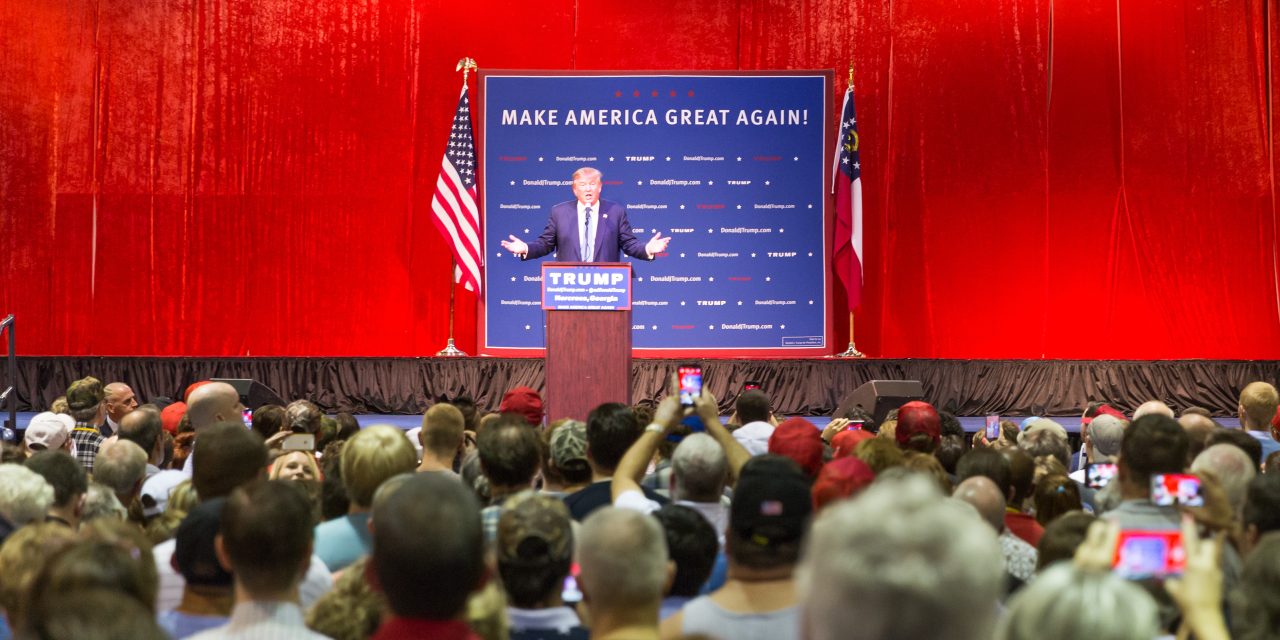
When President Donald Trump speaks, because of the position of the U.S. internationally, the world is forced to listen – whether or not it wants to. And when he signs an executive order, the consequences can be far-reaching. This was the case on March 14, when he signed an executive order that “continues the reduction in the elements of the Federal bureaucracy that the President has determined are unnecessary” – among these the U.S. Agency for Global Media (USAGM), which oversees the Voice of America.
The very next day, all employees of Voice of America (VOA) were placed on forced leave, and funding was cut for Radio Free Europe and Radio Free Asia. The move has sent shockwaves through the media world, and has drawn sharp criticism from press freedom advocates and journalists worldwide.
Blow to press freedom
Reporters Without Borders (RSF) was among the first to condemn the move, calling it a grave attack on global press freedom.
“This measure threatens independent journalism and undermines 80 years of U.S. commitment to the free flow of information. RSF calls on the U.S. government to immediately reverse this decision and respect VOA’s autonomy,” said Thibaut Bruttin, Director-General of RSF.
Stephen Capus, President and CEO of Radio Free Europe/Radio Liberty, echoed these concerns, calling Trump’s decision “a gift to the enemies of the United States.”
ADVERTISEMENT

For journalists around the world, particularly those from regions where press freedom is under siege, the closure of VOA is more than just a budgetary decision – it is a catastrophe.
End of a lifeline for many journalists
Among those affected is Pierre Claver Niyonkuru, a Burundian journalist who has worked with VOA from abroad since 2016, when the media outlet was banned from broadcasting in Burundi.
“The closure of VOA is a disaster, an attack on press freedom and human rights. It was a vital source of verified information, especially in the Great Lakes region, where local media face censorship and self-censorship,” he said in an interview with Amjambo Africa.
P.Claver compared Trump’s decision to the actions of authoritarian regimes, saying, “I never imagined that a country known as a global defender of press freedom would take such a measure. Unfortunately, it seems Trump agrees with those who suppress free speech. It’s a shame.”
His sentiments are echoed by Moses H., another journalist who has worked with VOA since 2015. He warns that Trump’s decision signals the disappearance of press freedom.
“VOA was one of the few media houses that held those in power accountable. It played a critical role in informing Burundians and Africans when local media were under attack. Even after it was banned in Burundi, people still found ways to access its reports online.”
According to Moses, the VOA filled an information gap in regions where independent journalism is nearly nonexistent.
“VOA stood for truth. It was one of the few media outlets where journalists could report independently without interference from Washington. Its closure is a tragic loss.”
U.S. institutions fight back
The Committee to Protect Journalists (CPJ) has urged Congress to intervene, warning that the move could strengthen authoritarian regimes that seek to suppress free media.
“It is outrageous that the White House is gutting a congressionally funded agency that supports independent journalism worldwide,” said Carlos Martínez de la Serna, CPJ’s Program Director.
Meanwhile, several USAGM employees are currently detained abroad for their journalistic work. RSF has expressed concern over how this decision might impact their safety.
Founded in 1942 during World War II, VOA was established to counter Nazi propaganda and bring a free voice to war-torn Europe. Later, during the Cold War, it served as a critical tool in countering Soviet influence.
Today, VOA broadcasts in 47 languages and reaches millions across the globe. But with 1,300 jobs lost and broadcasts abruptly halted, Trump’s decision has deprived international audiences living under authoritarian regimes of their primary source of credible information.
For journalists, activists, and citizens who relied on VOA, the silence is deafening.