By Eloge Willy Kaneza
Rwanda has quietly welcomed its first group of migrants from the U.S. under a controversial new bilateral agreement, underscoring the East African nation’s growing role in global migration management and reviving debates over whether such partnerships protect or endanger vulnerable people.
First arrivals in Kigali
Seven migrants arrived in mid-August and are being housed in Kigali’s Kagugu neighborhood, at a facility once earmarked for the now-defunct U.K.–Rwanda asylum scheme. A Rwandan police official told Amjambo Africa on condition of anonymity that the group is receiving support from the International Organization for Migration (IOM) and local social services.
Many international outlets, including the Associated Press, Agence France-Presse, and Reuters, cited government spokesperson Yolande Makolo on Thursday, confirming the presence of the seven migrants in Rwanda. Of the seven, four have chosen to begin resettling in Rwanda, while three expressed interest in eventually returning to their home countries. Makolo had previously confirmed to Amjambo Africa in July that Rwanda had agreed to accept up to 250 migrants from the United States under the bilateral agreement, noting that all had undergone vetting prior to relocation. “Regardless of their specific needs, all of these individuals will receive appropriate support and protection from the Rwandan government,” she said.
Hope Hostel: from genocide survivors to global migration deals
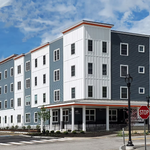
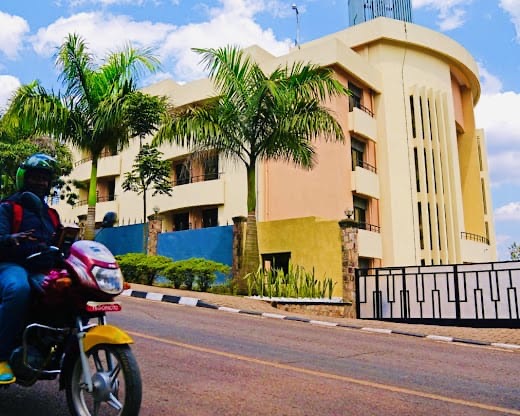
The arrivals were placed at Hope Hostel in Kagugu, a modern, dormitory-style complex in one of Kigali’s more upscale neighborhoods. Originally built to house young survivors of the 1994 Genocide against the Tutsis, the hostel later became the focal point of Rwanda’s 2022 agreement with the United Kingdom to host asylum seekers arriving in Britain.
ADVERTISEMENT

That U.K. plan, worth an estimated £700 million, was cancelled by the incoming Labour Party administration in 2024 after the U.K. Supreme Court ruled the previous year that Rwanda was not a safe third country for migrants. Critics argued the deal violated international law and exposed vulnerable people to additional risks.
Now, Hope Hostel has been repurposed once again — this time for the U.S. resettlement program. For some Kigali residents, its reuse symbolizes both Rwanda’s pragmatic diplomacy and the persistence of unanswered questions about the safety and future of those relocated.
Judicial scrutiny in Uganda
The U.S.–Rwanda agreement comes as a similar arrangement with neighboring Uganda faces legal uncertainty. The Ugandan government announced last week that it had also reached an agreement with Washington to host individuals who might not be granted asylum in the United States.
The decision followed a week of confusion in Kampala, where officials first denied and later confirmed the existence of the deal. Ugandan Foreign Affairs Permanent Secretary Vincent Bagiire had earlier outlined conditions, including the exclusion of individuals with criminal records and unaccompanied minors.
The U.S. court system is grappling with the policy. Earlier this week, a federal judge temporarily blocked the deportation of a Salvadoran man to Uganda. Kilmar Abrego Garcia, who had become a symbol of Donald Trump’s hardline immigration policies, was wrongfully deported to El Salvador in March and later brought back to the United States. On the day of his return, he was arrested by immigration police and placed in detention by U.S. authorities.
Regional and international reactions
Human rights organizations have criticized these so-called “outsourcing” agreements, arguing that they shift the burden of international migration management onto smaller states while undermining asylum protections.
“Deals like these turn vulnerable people into bargaining chips between governments,” said a Nairobi-based human rights lawyer. “The fact that Hope Hostel is being reused shows how transactional these arrangements have become.”
Rwandan analysts, however, frame the deal as consistent with the country’s history of resilience and reintegration. “Nearly every Rwandan family has experienced displacement,” noted political scientist Eric Ndushabandi. “Rwanda is using this painful legacy to anchor its foreign policy on values of hospitality and rehabilitation. But this must be matched with adequate investment in housing, healthcare, and education if integration is to succeed.”
Rwanda’s contested role
According to UNHCR, Rwanda already hosts more than 127,000 refugees, nearly half of them children. Most come from the Democratic Republic of Congo and Burundi. The new arrivals from the U.S. will add to this population, raising questions about capacity and long-term sustainability.
The U.S. has recently deported groups to Eswatini, South Sudan, and other nations, often including people whose home countries refused to take them back. Critics say this approach contravenes international law and puts vulnerable people in danger.
Still, in Kigali, the first seven arrivals are settling into Hope Hostel ,adjusting to new surroundings in a facility that has come to embody Rwanda’s complex role in global migration debates: a role caught between humanitarian commitments, political pragmatism, and the watchful eye of international law.