By Violet Ikong
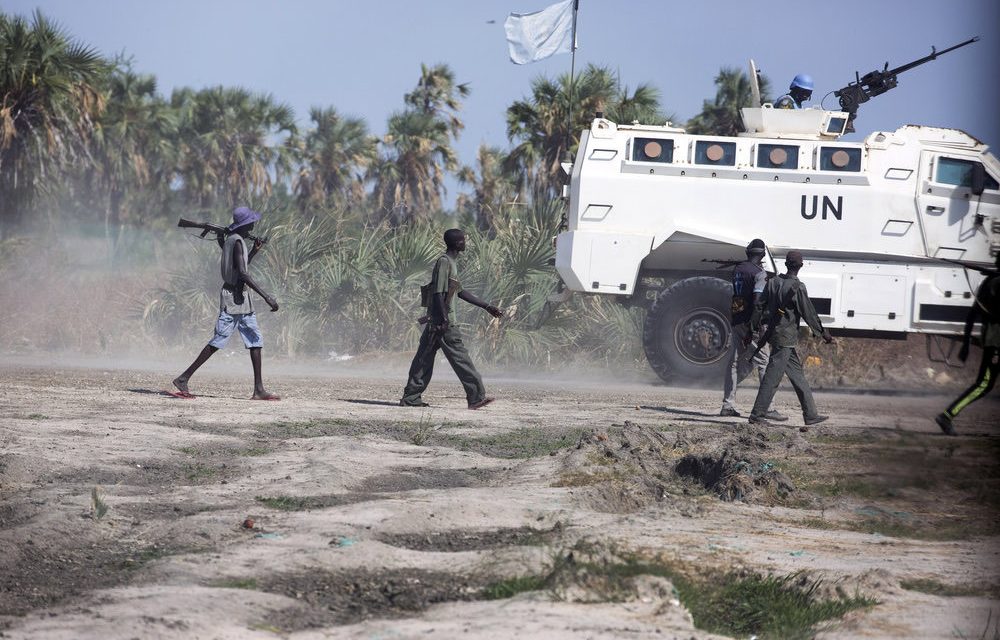
Government forces in South Sudan have been accused of carrying out an airstrike on March 16 in Nasir, Upper Nile state. Residents who witnessed the attack said that with support from Uganda People’s Defence Forces (UPDF), South Sudan People’s Defence Forces (SSPDF) dropped multiple bombs in the town, leading to fires, deaths, injuries, and loss of properties.
“Seventeen people died on the spot after the bombing, and five were injured. However, now only one injured person remains alive, as the rest succumbed to their injuries. I can confirm that 21 people died in the airstrike,” Ter Gatkuoth, a commander of the White Army militant group in Nasir, told reporters a day after the incident.
Since February, South Sudan has witnessed increased armed conflicts and political tensions that threaten the young country’s fragile peace. About seven years after the civil war between government forces led by President Salva Kiir and opposition forces loyal to First Vice President Riek Machar, concerns are mounting that the country could be headed for another war.
Kiir and Machar were key parties to a power-sharing peace agreement in 2018 which ended the civil war and was meant to allow South Sudan to transition to democratic rule. However, elections were shifted from last year to 2026, extending the peace agreement while both men and their allies remain locked in a violent power struggle.
Attack on UNMISS
On different occasions, President Kiir has accused loyalists of the Sudan People’s Liberation Movement in Opposition (SPLM-IO) of being responsible for unrest in the country. The SPLM-IO is a political party led by key opposition figure Riek Machar. Kiir has said the SPLM-IO sponsors the White Army, whose members are Nuers – which is the name of Machar’s ethnic group.
Although Machar denies these claims, Kiir ordered his property surrounded by soldiers in early March. By press time, Machar had not made any public statements, and his whereabouts were unknown.
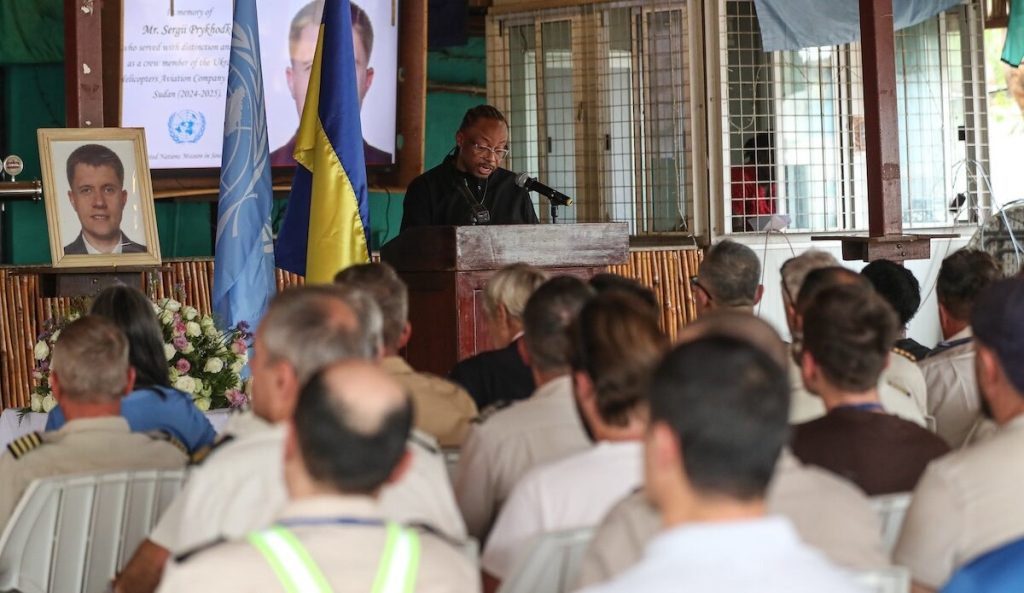
Funeral of UN crew member killed in Nasir. Photo credit: Isaac Billy/UNMISS
Machar’s allies include Minister of Petroleum Puot Kang Chol and Gen. Doup Lam, both of whom were detained by Kiir this month for allegedly working against the government.
Fighting broke out in Nasir on March 7, between government forces and the White Army. During the violence, a helicopter of the United Nations Mission in South Sudan (UNMISS) was attacked while it was evacuating government troops. The helicopter attack led to the death of Gen. Majur Dak, a crew member, and several soldiers.
ADVERTISEMENT

“The attack on UNMISS personnel is utterly abhorrent and may constitute a war crime under international law. We deeply regret the tragic loss of our colleague and express our sincere condolences to his loved ones,” said Nicholas Haysom, the Special Representative of the Secretary-General and Head of UNMISS.
The UN blamed recent developments in South Sudan on the failure of leaders to implement the peace agreement signed by Kiir and Machar.
“South Sudan should be moving forward, implementing the provisions of the peace agreement, strengthening institutions, and building a foundation for democracy. Instead, we are witnessing an alarming regression that could erase years of hard-won progress,” said Yasmin Sooka, Executive Director of the Foundation for Human Rights in South Sudan.
International leaders intervene
On March 12, the precarious situation in South Sudan was discussed at a virtual regional summit of the Intergovernmental Authority on Development (IGAD), which represents the countries of Djibouti, Eritrea, Ethiopia, Kenya, Somalia, South Sudan, Sudan, and Uganda.
Chaired by Djibouti President Ismaïl Guelleh, the body released a communiqué that called for “the immediate release of detained officials, unless credible evidence warrants legal proceedings conducted transparently and in accordance with due process.”
Further, the East Africa trade bloc “expressed deep concern at the deteriorating security conditions in South Sudan, marked by resurgent violence, violations of ceasefire commitments, and a marked increase in violent incidents.”
Ugandan forces in South Sudan
On March 10, Uganda military chief Gen. Muhoozi Kainerugaba announced that special forces from Uganda had been deployed to Juba, South Sudan’s capital, to “secure it.” The South Sudanese government continues to try and reassure citizens, however the presence of foreign troops has raised concerns. Further inflaming fears, in an X post, Kainerugaba said, “We the UPDF only recognize one President of South Sudan, H.E. Salva Kiir … any move against him is a declaration of war against Uganda.”
According to South Sudan’s information minister, Michael Makuei, speaking at a press briefing on March 17, in Juba, “UPDF are present here because the government of South Sudan and the government of Uganda have a military pact” which “talks about the protection of the people, government, and territorial integrity [of South Sudan and Uganda].”
At the briefing, Makuei described the UPDF as “Support and technical units who have come to support their brothers and sisters in the SSPDF.” Makuei also addressed IGAD’s demand for the release of SPLM-IO members who have been detained: “Yes, there are people who are detained. They will be investigated and brought to book because we cannot condone anybody who is within the government and working hard to overthrow the very government of which they’re a part.”
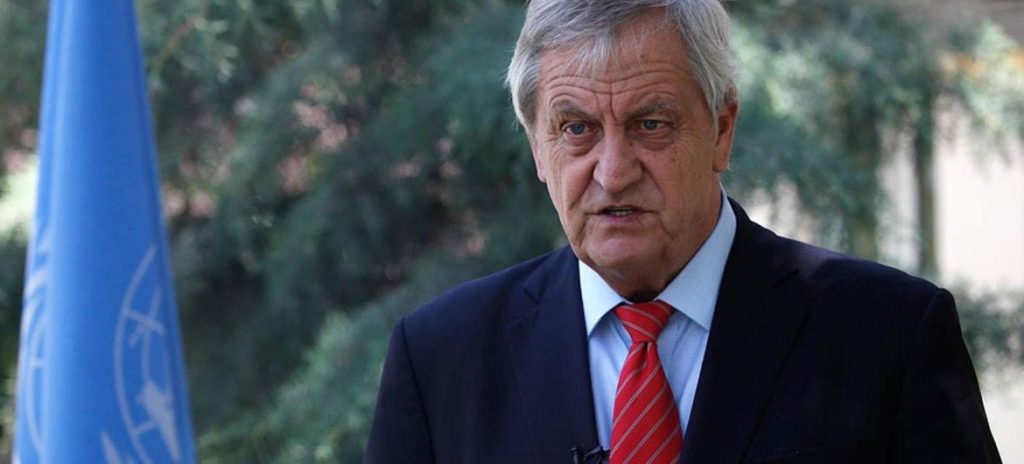
Nicholas Haysom, Head of UNMISS. Photo credit: UNAMA/Fardin Waezi
Makuei called for the White Army to be declared a terrorist organization. “Their actions qualify them to be called a terrorist organization. I’m calling upon the African Union, IGAD, and the U.N., to declare these negative forces as terrorists that are not serving the interest of the people of South Sudan,” he said.
Countries issue travel advisories
As the situation in South Sudan continues to deteriorate, the U.S. and British governments have advised citizens not to travel to the country. Further, the U.S. Department of State ordered the departure of all non-emergency U.S. government employees from South Sudan.
“Armed conflict is ongoing and includes fighting between various political and ethnic groups. Weapons are readily available to the population. In addition, cattle raids occur throughout the country and often lead to violence,” the U.S. State Department warned.
Similarly, the U.K. Foreign, Commonwealth and Development Office (FCDO) has advised “against all travel to South Sudan due to the risk of armed violence and criminality.”
Meanwhile, the embassies of Canada, Germany, the Netherlands, Norway, the United Kingdom, and the United States, as well as the Delegation of the European Union in South Sudan have offered to facilitate dialogue between Kiir and Machar to restore peace in the country.
In a joint statement, the embassies urged “All South Sudan’s leaders to avoid unilateral actions, to reject the use of violence as a tool for political competition, and to put the interests of the South Sudanese people first.”
Displacement crisis unfolds
The ongoing unrest has displaced about 50,000 South Sudanese, since February, with about 10,000 of them fleeing to Ethiopia, the UN Office for the Coordination of Humanitarian Affairs (OCHA) in South Sudan said in a statement on March 18.
South Sudanese currently constitute the highest refugee population in Africa at over two million individuals, and renewed clashes could push more citizens to seek safety across international borders.