By Carlyssa Baker
Across the United States, immigrant communities are navigating an increasingly hostile political landscape. In Maine, where thousands of New Americans have sought safety and a fresh start over the past decades, immigrant-centered organizations are under intense pressure—facing policy whiplash, critical funding cuts, and growing fear among the people they serve. And yet, in the face of these challenges, resilience remains a defining feature.
Hope Acts, In Her Presence, I’m Your Neighbor Books, and the Maine Association for New Americans are four organizations among many that continue to show up, speak out, and create spaces of dignity and safety—places that feel like home, even when the broader society fails to offer a feeling of belonging.
Fear in the air
Policy changes at the federal level are having direct, painful ripple effects in communities across Maine. Deportation fears, legal delays, and reduced access to services are shaping daily life and undermining a sense of safety.
“There are fewer people coming in,” said Martha Stein, executive director of Hope Acts. “So many people are afraid to leave their homes, afraid to get on the bus, afraid to go down the street. The level of fear in the greater community—including our staff, our volunteers, and our clients—is very real. We see it every single day. It’s always hanging in the air, even if we’re not talking about it.”
For Abusana Micky Bondo, co-founder of In Her Presence, the erratic nature of policy changes has made her work more difficult. “The impact from these changes is greater on marginalized populations who have been surviving instead of thriving from the beginning,” she said. “The confusion of understanding the policies, which are occurring at irregular intervals, has brought a lot of frustration in our work environment and our decision-making process.”
Kirsten Cappy, executive director of I’m Your Neighbor Books, said her organization has been directly affected by the political backlash against Diversity, Equity, and Inclusion (DEI) initiatives. “The administration’s threat to withhold Title I funds—which are federal funds designated for schools with high numbers of children from low-income families—has led schools nationwide to cancel Welcoming Library orders,” she explained. “Even though educators know these anti-racist book collections are more necessary than ever, they can’t risk losing crucial funding. As a result, we’ve lost critical support.”
The emotional toll of these changes is impossible to ignore. Moon Machar, community wellness program director for the Maine Association for New Americans (MANA), emphasized that policy is not just paperwork—it’s personal. “Work permit delays aren’t just headlines; they’re a father’s anxiety about feeding his children. Housing instability isn’t just a statistic; it’s a mother sleeping lightly, unsure of what the next few weeks will look like. These changes don’t just affect our work; they define it, shape it, and push us deeper into the margins to meet people where policy forgets to look.”
A mother’s cry for justice
In two separate stories published by Amjambo Africa, a mother of two named Sabine wrote an open letter to President Donald Trump. “We live in the shadows, hidden, psychologically broken — but in silence,” she wrote.
Sabine describes being too afraid to go to work or take her children to the doctor for fear of being tracked and arrested. “What have we done to deserve this?” she asks. “Why such rejection of human beings who only want to live in peace?”
Her letter is not just a cry of distress—it is a direct appeal to President Trump’s sense of justice and humanity. She urges him to see the human suffering behind immigration statistics.
“You don’t build a stronger country by breaking those who are already down. You don’t protect a nation by crushing the most vulnerable,” she writes. Sabine asks him to imagine his own children crying from hunger or fear, and to consider the unbearable choices she and others are forced to make.
ADVERTISEMENT
Her letter ends with chilling clarity: “If one day they come to arrest me and send me back, I would rather die. Because sending me back is sentencing me to death.”
A shared response: collective action
Despite mounting fear and instability, these organizations continue to respond with compassion and coordination. Their work is rooted not in reaction, but in relationship-building and long-term commitment.
“We’ve responded like we always have—with hands open and hearts full,” said Machar. “We’ve launched new peer programs that speak the languages of loss and hope. We’ve brought elders to the woods, youth to the rivers, and families into rooms where their stories are heard without shame.”
Cappy sees storytelling as a powerful form of resistance. “Reading a book with a character that is facing a situation like yours can give a reader a place of emotional refuge—a sanctuary,” she said. “Sending each book box pushes back against the narrative that immigrants do not belong here.”
Bondo emphasized that the In Her Presence leadership team is adapting strategically to the current environment. “We are working to understand the big picture—the opportunities and threats within it,” she said. “We continue to empower our women and families to the best of our ability and beliefs.”
Stein sees strength in solidarity. “It really takes a lot of people working together—ethnic-based nonprofits, faith communities, schools—trying to navigate as much of a support network as we can through these horrible times.”
Hope as resistance
In difficult times, hope becomes not just a feeling, but a choice—and a strategy.
“Our hope resides in our core mission amidst the challenges,” said Bondo. “We believe that together we are strong. The COVID era tested our ability to adapt, and we are finding ways to continue our mission despite this new political landscape.”
Machar finds hope in the in-between moments. “Hope lives in the quiet smile of a ‘Things She Carries’ participant who finally found peace on a lake. In the youth who speaks their truth around a campfire. In the elder who feels included again. Even with the threats and the fear, we are still here. Still laughing. Still building. Still carrying each other.”
Cappy added, “Hope is hard right now. Cruelty shows the worst of this nation. My hope lies in each of us using our voices to demand a just and welcoming future.”
Stein echoed this, saying, “We may not be able to solve national policy problems, but we can make a difference every day. Knowing that we’re here for people, that we’re a soft place to land—that’s what keeps me going.”
Lessons in resilience
When asked how others can keep going, these leaders offered advice rooted in care, connection, and courage.
“Celebrate the joys,” said Stein. “We have babies being born, asylum cases won, weddings—all the life cycle events. And we encourage people to reach out—to their faith communities, ethnic communities, to us. There are so many resources available.”
Bondo offered a practical path: “Understand the policies. Educate your team. Join coalitions. Stay mission-focused. Don’t build fear over hope. Diversify your funding and stay proactive and resilient.”

Machar emphasized emotional truth and joy: “Stay connected. Laugh when you can. Don’t minimize what this moment demands of you. Be honest about your limits. Let joy be part of your resistance. Your grief, your rest, your rage, your hope—they all belong.”
Speaking where the world refuses to listen
Maine-based artist Daniel Minter also sees power in creative resistance. “When your voice is denied, you can shout with color,” he said. “When your rights are denied, you can speak through images, through texture, through clay.”
He believes oppressive systems thrive by keeping people isolated and afraid. “Governments are trying to pit people against each other,” Minter said. “They’re stripping away our support systems and feeding us fear—because fearful people are easier to manipulate.”
But people have the power to resist, he insists. “When people realize the systems are broken, they start turning to each other. That’s when change begins.”
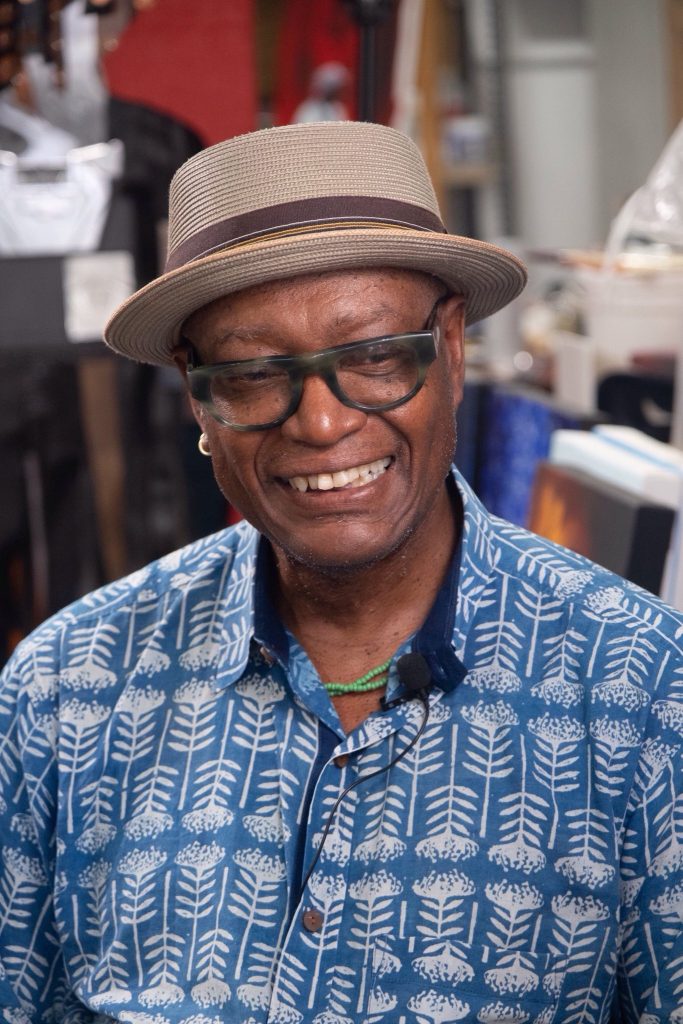
Minter remains hopeful. “I’m the kind of person who looks at broken things and says, ‘We can fix this. We can do better.’ I’m not saying it’s easy. I’m saying it’s possible.”
For Minter, resistance can also be small acts of kindness: “Say hello. It’s easy—but radical. It means: ‘I see you. You’re human. You belong.’ There’s space for all of us—if we build it.”
Showing up, holding hope
These organizations and individuals remind us that holding hope and showing up for one another are among the most powerful tools we have.
“If everybody else—people who are in direct harm’s way—can keep showing up and having hope,” said Stein, “then who am I not to show up or not have hope? I have to.”