By Sheila Ponnie
When South Sudan became an independent sovereign nation in 2011, Satimon Lako Philips, along with millions of his fellow citizens, believed that the future would be bright. But that hope was short-lived.
In 2013, the country descended into a series of bloody civil wars that fractured families, shattered livelihoods, and left millions either internally displaced or living as refugees in neighboring countries. More than 400,000 people died during the civil wars, and although no major politically motivated unrest has erupted since 2016, the country continues to grapple with intercommunal tensions and violence.
Conflicts follow tribal lines, pitting forces loyal to President Salva Kiir, an ethnic Dinka, against those loyal to First Vice President Riek Machar, a Nuer. The Dinka dominate the government and public institutions, while the Nuer form South Sudan’s second-largest ethnic group.
And so, more than 50 years after his birth, and despite the hope and pride he felt at the birth of South Sudan, Philips continues to live under the long shadow of violence. However, Philips has not given up hope for a better future.
A Peaceful Culture
A member of the Pojulu tribe, which is a relatively small group in South Sudan with a population of just over 200,000, Philips said that the Pojulu are a peaceful people who have never engaged in tribal warfare with any of the country’s other 64 ethnic groups. He believes that lessons from his culture and others may well succeed in achieving the peace he and his fellow citizens seek where politics and weapons have failed.
ADVERTISEMENT

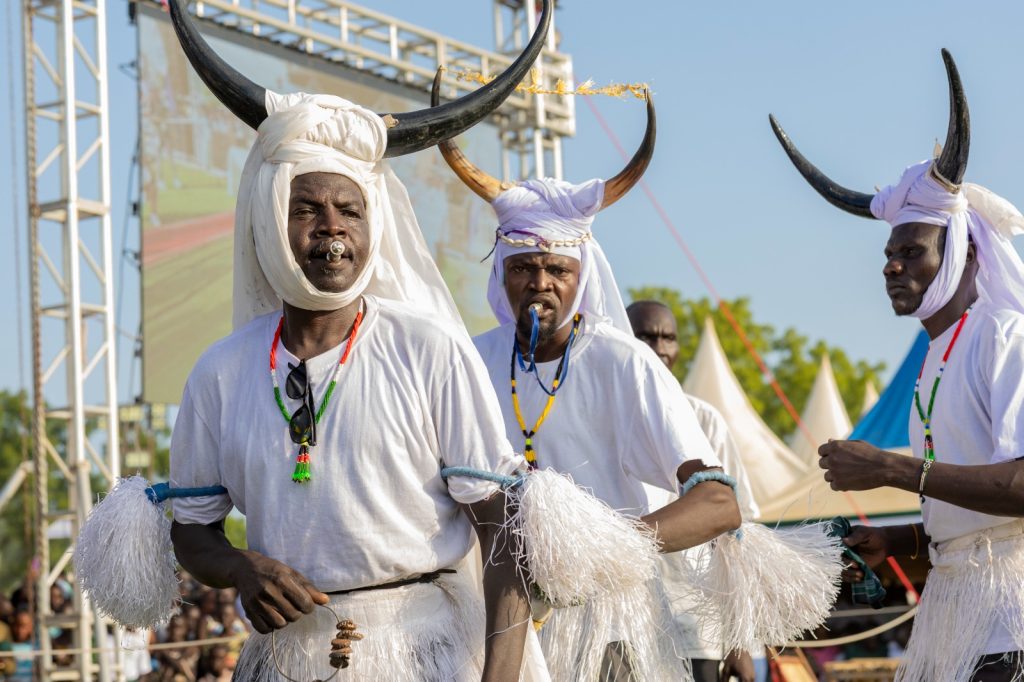
Photo: Draped in tradition and hope, members of a Nuba Mountains tribe join the rhythmic pulse of the Pojulu Cultural Festival — a vibrant gathering where South Sudan’s 64 tribes unite in dance and song, weaving together stories of peace, resilience, and shared identity
The Pojulu Cultural Festival, now in its second year, offers a platform for South Sudanese from different communities to share food, stories, and performances, all in the spirit of dialogue and healing. Pojulu culture is grounded in peaceful coexistence and mutual respect, he said.
South Sudan Vice President Josephine Ladu agrees that culture may play a key role in the nation’s future: “Where guns have failed, culture may succeed,” she noted.
Philips wears many hats in the Pojulu community. He is a community leader, a cultural ambassador, and a traditional dance trainer. Philips spoke to Amjambo Africa during a three-day cultural festival held in a suburb of Juba, while he kept a watchful eye on young dancers performing traditional dances.
Elia Lomoro, Chair of South Sudan’s High-Level Committee on Peace Implementation and Minister of Cabinet Affairs, agrees that cultural exchanges such as the Pojulu festival play a vital role in national reconciliation.
Other attendees agree. They said they want an end to the violence, and view the festival as part of a move away from the many years of grief toward a period of healing.
“My message to the government is that we want peace,” said Elike Yata, one of the attendees.
Philips said he hopes to see more and more people become involved in cultural healing. “If we can bring Pojulu together—to show the unity of Pojulu—then it will also extend to other tribes. That’s why we invited other tribes so that they will also extend to their tribes,” he said.
Despite Philips’ optimism, the country’s political atmosphere remains tense. Concerns about renewed violence have grown since the house arrest of First Vice President Machar in March.
Even so, festivals like the Pojulu Cultural Festival provide a break in the violence and tension, and a rare moment of unity.
“I know that there are pockets of instability, of insecurity. When we have a celebration like this, it showcases that… even if there are challenges around the country, the country is striving to create a better environment for peace and stability,” said Lomoro.
……………
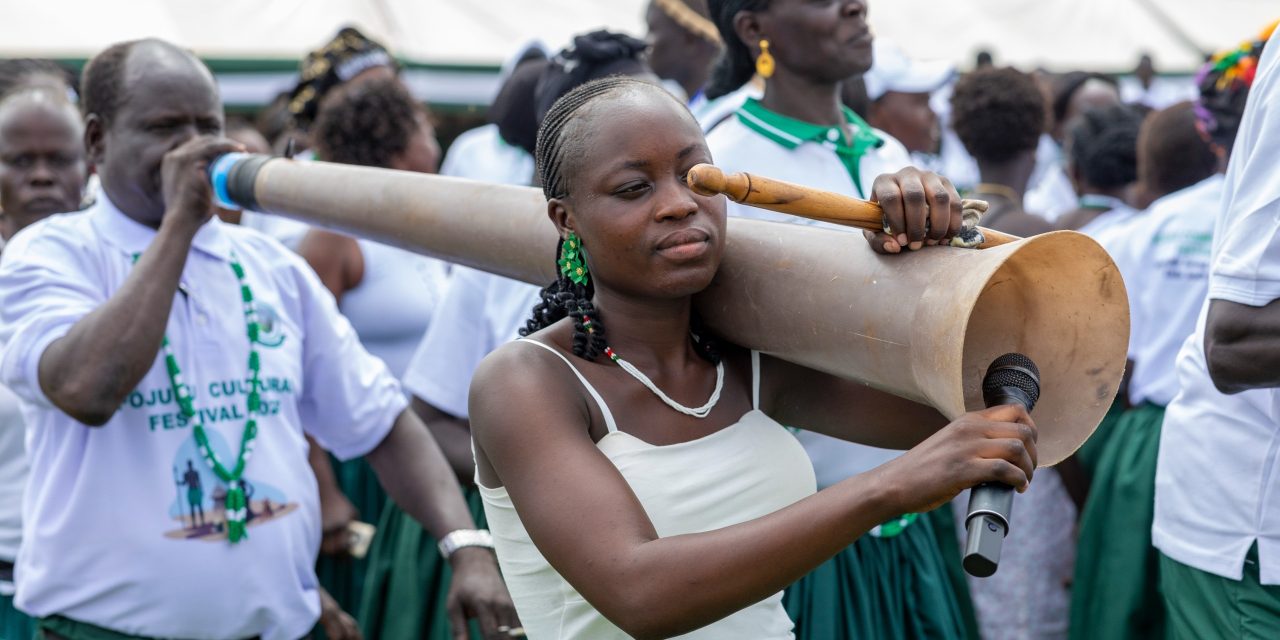
Photo : A man and a young woman carry a traditional horn instrument during a performance at the Pojulu Cultural Festival in Juba, where music, dance, and heritage served as powerful symbols of reconciliation and national identity