On August 14, Jason Arday, the youngest Black professor to be appointed at Cambridge University, was found dead in his London home. Only a few days earlier, his career came to a screeching halt when he resigned from his position due to vicious plagiarism allegations and a media campaign that dissected not only his character but his whole personal history.
Led by the British media and various online commentators, the witch hunt for credibility targeted both Arday’s personal life and professional achievements, attacking everything from his manner of speaking to his health and scholarship. Attacks on Arday landed with a fierce blow, aimed at dragging not only his reputation but also questioning the belonging of Black scholars at academic institutions as a whole.
The criticism of Black scholars, and of Diversity, Equity, and Inclusion (DEI) initiatives, came as part of the onslaught of Arday’s investigation. While academic integrity is a foundational pillar of scholarship, the discourse surrounding Arday’s case quickly transcended questions of citation and methodology. For many observers, the relentless nature of the attacks suggested that the accusations were less about preserving academic standards and more about weaponizing them to undermine efforts toward DEI in higher education.
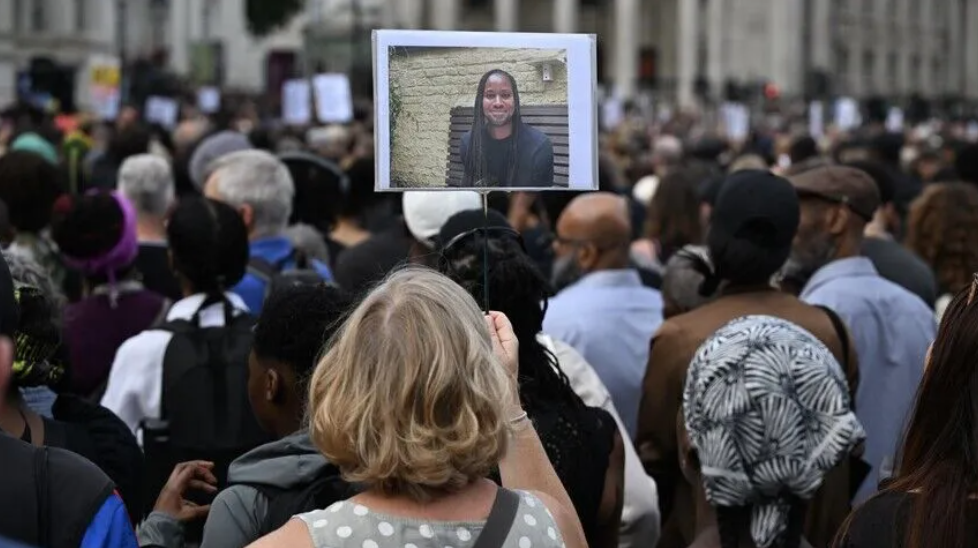
The intensity of the focus on Arday was stark. Analyses comparing media coverage highlighted a profound disparity: While white academics accused of similar misconduct often faced limited internal scrutiny, Arday was subjected to a sustained, high-volume media storm.
ADVERTISEMENT

Many of the initial accusations were led by individuals with established, public records of opposition to racial equity and, in some cases, affiliations with controversial “race science” frameworks. This intersection, where claims of intellectual dishonesty are amplified by ideological opponents of DEI, is a hallmark of contemporary “culture war” tactics used by the right wing. By framing these attacks within the language of objective academic standards, critics were able to mask potential racial bias as a noble defense of rigorous scholarship.
The reaction to the accusations against Arday drew sharp rebuke from institutional leaders. The chancellor of Cambridge University, for instance, explicitly condemned the campaign as a “racist feeding frenzy,” suggesting that the scrutiny was disproportionate and driven by prejudice.
For proponents of DEI, the Arday case serves as a cautionary tale about how academics can selectively apply academic scrutiny.. When “academic integrity” is deployed disproportionately against Black scholars, particularly those whose work focuses on race and systemic inequality, it functions as a gatekeeping mechanism. It reinforces existing power structures by casting doubt on the legitimacy of minority scholars, creating a chilling effect that discourages diverse voices from entering or advancing in academia.
The tragedy surrounding Jason Arday demands a sober reassessment of how academia handles allegations of misconduct. While maintaining high standards of research integrity is non-negotiable, it is equally vital to recognize when those standards are being weaponized for political or ideological ends.
When accusations are disproportionately leveled at scholars from marginalized backgrounds, and when those accusations are championed by ideological opponents of anti-racist work, the academic community must look beyond the allegations themselves. We must ask: Is this a pursuit of truth, or is it a pursuit of power?
Ultimately, the focus on Arday’s case highlighted the precarious position of minority academics in elite institutions. If the academy is to truly foster an environment of equity, it must guard against the abuse of its own processes, ensuring that the defense of integrity does not become a pretext for the exclusion of those historically marginalized in academia.
Editor’s Note: This article originally appeared in the October 2026 print edition of Amjambo Africa.