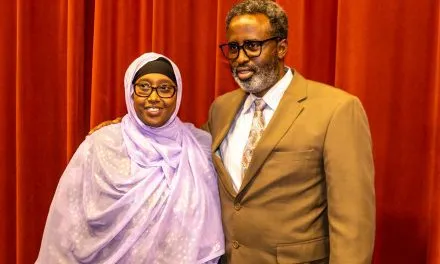
A book review by Nasser Rohani and Parivash Rohani for Amjambo Africa
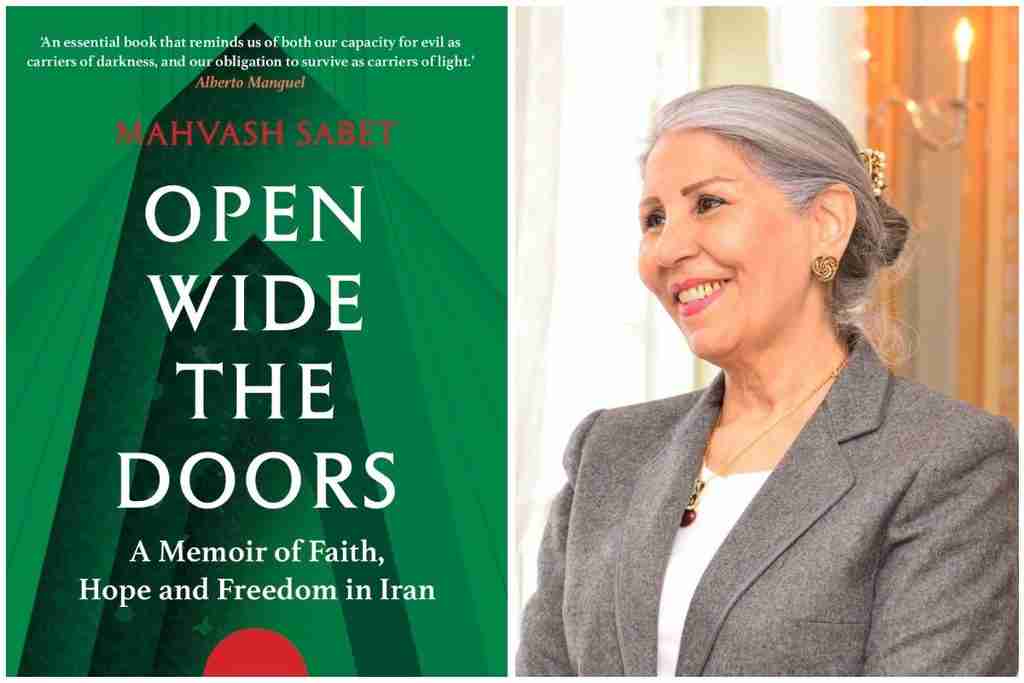
When we finished reading Mahvash Sabet’s Open Wide the Doors, we did not feel that we had simply read a prison memoir. We felt that we had accompanied a woman through isolation, interrogation, humiliation, physical suffering, and separation from her family and had witnessed her struggle to preserve her faith, compassion, and humanity.
Some passages are painful to read. At times, the cruelty inflicted upon Sabet is so severe and so senseless that it is difficult to believe human beings could treat another person in such a way. Yet this is not a work of exaggeration or self-pity. Sabet writes with remarkable restraint, honesty, and occasional humor. The result is a heartbreaking book without being hopeless and spiritual without becoming sentimental.
Sabet is an Iranian poet, educator, mother, and member of the Bahá’í Faith. The memoir recounts the first ten months of her imprisonment following her arrest in 2008, beginning in Mashhad and continuing in Tehran’s notorious Evin Prison. She was the first of seven Bahá’ís known as the Yárán, meaning “friends,” to be arrested. The other six were taken into custody soon afterward.
To understand why Sabet was imprisoned, it is helpful to know something about the religious community she served and its history in Iran.
The Bahá’í Faith began in 19th-century Persia. Bahá’u’lláh, the founder of the Bahá’í Faith, taught that humanity is one family and that the time had come for people of every religion, race, nationality, and social background to work together for the advancement of civilization.
Among the central Bahá’í teachings are the equality of women and men, the elimination of racial and religious prejudice, harmony between science and religion, universal education, the independent investigation of truth, and the responsibility of human beings to protect the earth and use its resources with moderation and justice.
These principles were not intended to remain slogans. From its earliest years, the Bahá’í community attempted to put them into practice, often under extremely difficult conditions.
One of the most courageous figures in this history was Táhirih, an accomplished poet, scholar, and prominent follower of the Báb, a central figure in the faith. At the Conference of Badasht in 1848, she appeared without the veil required by the customs of the time. In 19th-century Persia, where women had little public voice, her action was revolutionary. It represented a break with the traditions that confined women and became an early symbol of women’s emancipation.
Táhirih paid for her convictions with her life. She was executed in 1852. Her courage, scholarship, and famous determination that women could no longer be held back continue to inspire people throughout the world.
Her legacy did not disappear. In the early 20th century, Iranian Bahá’ís helped establish modern schools for girls as well as boys. At a time when educating girls was resisted or considered unnecessary in many communities, the Bahá’í teachings made their education a religious responsibility. These schools were open not only to Bahá’í children but also to children from other backgrounds. They developed strong reputations before the government ordered the Bahá’í schools closed in 1934.
The same commitment to human dignity shaped Bahá’í efforts in other areas. In the United States, Bahá’ís were holding Race Amity conferences and encouraging fellowship across racial divisions during an era of legal segregation. Throughout the world, Bahá’í communities have participated in interfaith cooperation, the education and advancement of women and girls, racial unity, community development, environmental responsibility, and service to society.
This background makes the persecution of Iran’s Bahá’ís especially tragic. A community committed to serving its country has repeatedly been portrayed as an enemy of that country.
ADVERTISEMENT

Persecution existed from the beginning of the Bahá’í movement, but it became systematic following the Islamic Revolution of 1979. Bahá’í leaders were abducted, executed, or disappeared. Ordinary Bahá’ís lost their jobs and pensions. Homes, businesses, and properties were confiscated. Cemeteries were desecrated. Young Bahá’ís were denied admission to universities, and many families were deprived of their livelihoods.
In 1983, the Iranian government outlawed Bahá’í administrative institutions. Because the Bahá’í Faith has no clergy, these elected institutions had attended to the basic spiritual and community needs of Bahá’ís. After their dissolution, the Yárán was permitted for a time to make limited arrangements for matters such as marriages, funerals, and the other needs of the community. Its members exercised no political power and posed no threat to the government.
Nevertheless, in 2008, all seven members of the Yárán were arrested. They were accused of espionage, propaganda against the state, and other national security offenses — charges that they firmly denied and that international observers widely condemned. They were initially sentenced to twenty years in prison, later reduced to ten.
Sabet completed that sentence and was released in 2017. In July 2022, however, she and fellow former Yárán member Fariba Kamalabadi were arrested again during another crackdown on Iran’s Bahá’ís. Both women were again sentenced to ten years in prison. Sabet has suffered serious health problems, including the need for heart surgery, yet the threat of renewed imprisonment has continued to hang over her.
This knowledge gives Open Wide the Doors an added sense of urgency. We are not reading about an injustice that safely belongs to the past. The persecution continues, and the book’s author is again paying a terrible price for her beliefs.
What makes this memoir so compelling, however, is not only its historical importance. It is Sabet’s ability to take the reader inside the emotional and psychological world of imprisonment.
Her description of solitary confinement is especially powerful. In one haunting sentence, she writes that “solitary confinement had stolen me from myself.” The line is brief, but it conveys something almost impossible to imagine: the way isolation can weaken a person’s connection to time, place, family, and even her own identity.
Sabet had little privacy and often lacked even pen and paper. She wrote on whatever she could find: scraps of paper, the margins of newspapers, and pages of books. Portions of her writings were secretly carried out of prison. Her voice shifts naturally between direct description, poetic reflection, the question-and-answer rhythm of interrogation, and the clear analysis one might expect from an experienced teacher.
At one point, after being deprived for so long of a kind human voice, she began speaking aloud. She recited prayers and poems and then imagined herself teaching a class, explaining the psychological effects of solitary confinement. It is an extraordinary response: when deprived of a classroom, she creates one in her mind. When denied a community, she speaks to an imagined audience. When others try to reduce her to a number or an accusation, she continues to think, teach, pray, and write.
The prison becomes more than a physical setting. It becomes a small portrait of Iranian society, filled with women from very different backgrounds. Some are political prisoners. Others have been convicted of crimes. Some are frightened, angry, or emotionally broken. Sabet does not reduce them to categories. She listens to their stories, recognizes their suffering, and describes them without harsh judgment.
She also refuses to make hatred the organizing principle of her memoir. This does not mean that she excuses cruelty or minimizes injustice. She records the interrogations, threats, beatings, deprivation, and psychological pressure with honesty. But she does not surrender her ability to see another human being, even when that person belongs to the system imprisoning her.
This may be the most challenging and moving lesson of the book. Sabet’s freedom lies not in pretending that the prison walls are absent, but in refusing to let those walls determine the boundaries of her heart.
For us, this story is also personal. Parivash was born in Shiraz into a Bahá’í family. During the upheaval surrounding the Iranian Revolution, her family experienced religious persecution firsthand. Their home was burned, and she eventually had to leave Iran and become a refugee. Together, we know what it means to leave one’s homeland, rebuild life in another country, and carry memories that do not disappear merely because many years have passed.
Shiraz also carries another painful association for us. On June 18, 1983, ten Bahá’í women were hanged there because they would not renounce their faith. The youngest, Mona Mahmudnizhad, was only 17. Several of these women had been involved in educating children — an act treated as a crime because the children were being raised in the Bahá’í Faith.
Their memory became the inspiration for the international #OurStoryIsOne campaign, which honors the ten women while connecting their story with the continuing struggle for equality, justice, and freedom of conscience everywhere.
The denial of education to Bahá’í youth continues. Even students who excel academically may be barred from Iranian universities once their religion becomes known. The #EducationIsNotACrime campaign has brought international attention to this systematic injustice. It asks a simple but profound question: How can a government consider a young person’s desire to learn a crime?
Open Wide the Doors brings all these issues down to the scale of one human life. Reports can tell us how many people have been arrested. Historical accounts can list executions, confiscations, university expulsions, and prison sentences. Sabet allows us to feel what those policies do to a person, a marriage, a family, and a community.
This book deserves to be read far beyond the Bahá’í community. It belongs in libraries, classrooms, book clubs, universities, faith communities, human rights organizations, and conversations about Iran. It will interest anyone concerned with women’s equality, freedom of religion, political imprisonment, education, human dignity, or the moral choices people make under extreme pressure.
It is not simply the story of a Bahá’í prisoner. It is the story of what happens when a government fears conscience and what can happen when conscience refuses to surrender.
We warmly invite individuals, book clubs, schools, libraries, religious communities, and community organizations to read and discuss Open Wide the Doors. We are available to answer questions or offer clarification about the book, the Bahá’í Faith, and the historical experiences reflected in its pages. We would also be honored to accept invitations to share our personal insights and stories, which may help provide a deeper human perspective on the memoir and the persecution it describes.
Anyone with ideas for introducing or promoting the book is invited to contact us. We would welcome opportunities for readings, discussions, presentations, interviews, educational programs, or partnerships that can help Sabet’s voice reach a wider audience.
Please contact Nasser Rohani at [email protected].
Mahvash Sabet reminds us that authorities may close schools, outlaw institutions, confiscate homes, and lock prison doors. But they cannot permanently imprison the truth. Through her words, a voice intended to be silenced has crossed borders and entered the hearts of readers. The question now is whether we will help open the next door.
Editor’s Note: This article originally appeared in the October 2026 print edition of Amjambo Africa.