By Elena Ray
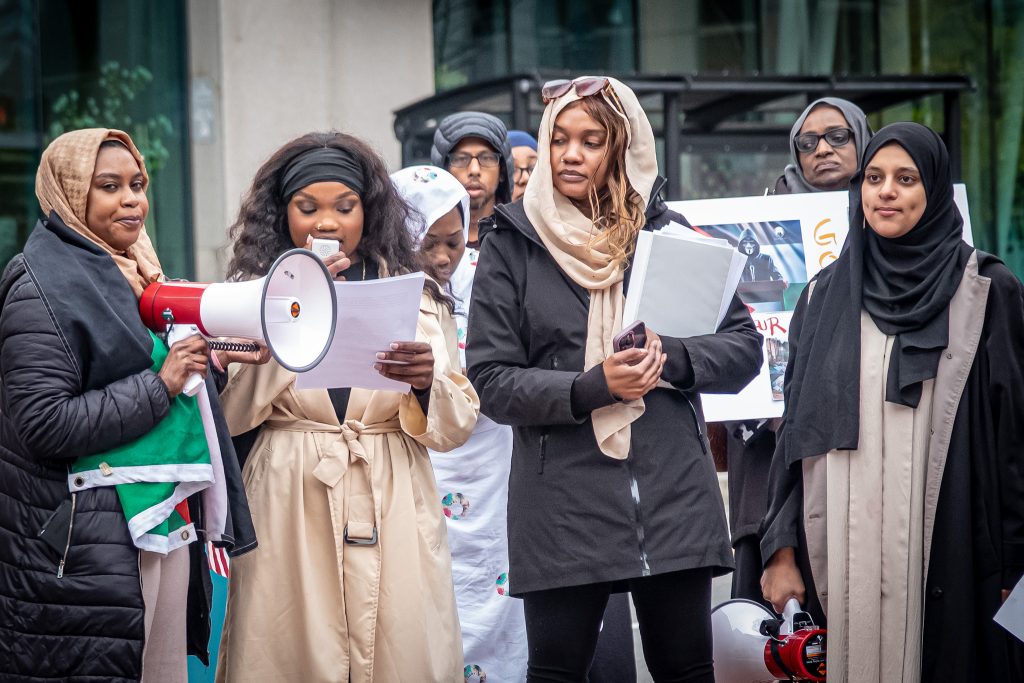
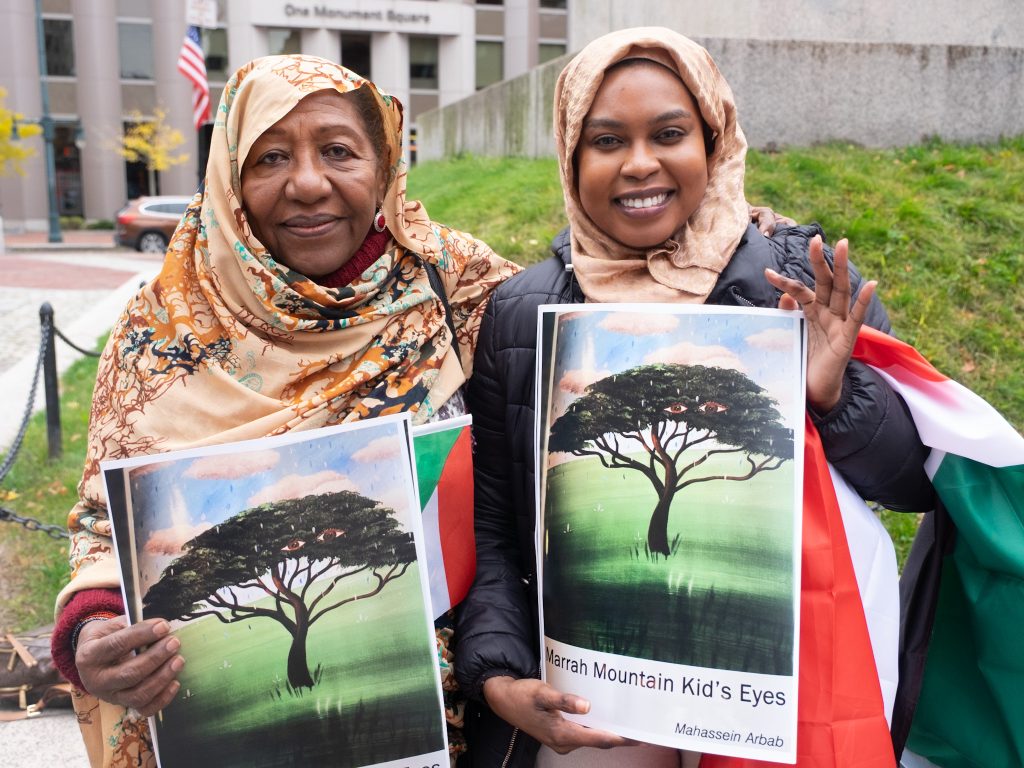
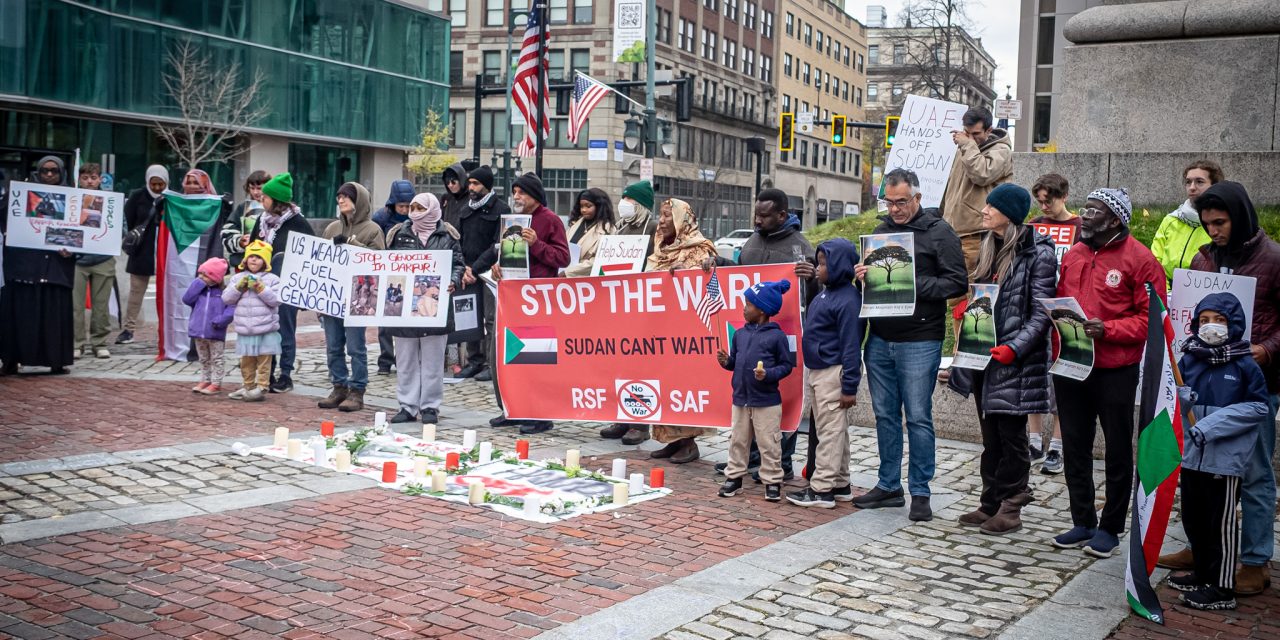
On the morning of Sunday, Nov. 9, the quiet of Portland’s Monument Square was broken by rhythmic chants as about 40 demonstrators gathered to raise attention for Sudan, a nation in deep crisis. The organizers called it the “All Out for Al-Fasher Protest,” and said they were on the streets to say that the horrors happening in Sudan cannot be ignored. They wanted to make the faraway crisis feel immediate and urgent to their fellow Mainers, and to insist that international inaction is a choice that must be reversed.
“We are saddened and angered by the situation in Sudan. It is not acceptable, and it must be stopped. We have to be the voices for those that are voiceless,” said Suzan Ali, one of the protest organizers.
The protest was a direct response to a grim new milestone. Just last month, the paramilitary Rapid Support Forces (RSF) seized control of Al-Fasher, the capital of North Darfur. After a brutal, 18-month siege, the final assault was devastating – marked by mass killings, rampant sexual violence, and the complete collapse of humanitarian aid.
The city’s fall is the latest, bloodiest chapter in a war that’s been raging since April 2023 – a power struggle between the RSF and Sudan’s military, the Sudanese Armed Forces (SAF). Their fight has shattered the country, creating the world’s largest displacement crisis, with over 10 million people forced from their homes.
ADVERTISEMENT

The conflict has also unleashed ethnically motivated killings in Western Sudan that have drawn chilling comparisons to the genocide in Darfur of two decades ago. The United Nations Human Rights Council has called for an urgent inquiry into violations of international law committed in and around Al- Fasher.
For members of Maine’s Sudanese community, the war in Sudan is a lived reality, and not just a news story. Elfadel Arbab, a Darfur genocide survivor who has called Maine home since 2004, carries the weight of this history.
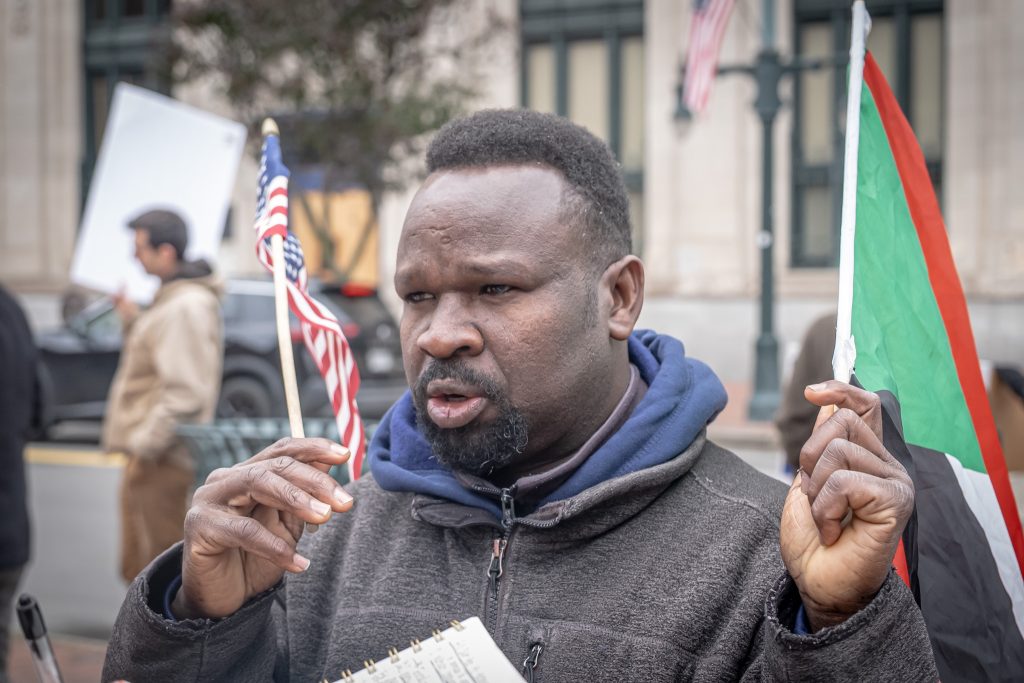
“I escaped the violence of the Janjaweed,” Arbab said, referring to the militias from which the Rapid Support Forces (RSF) was formed in 2013. “Just like 20 years ago, [the RSF] are filling mass graves and raping many women and girls.”
He implicated international complicity: “This violence and suffering, fueled by the UAE’s militarism, needs to end. That is why we are speaking out today.”
Signs reading “Kids in Sudan deserve a childhood too!” and “Stop the war! Sudan can’t wait!” expressed the raw frustration of those present.
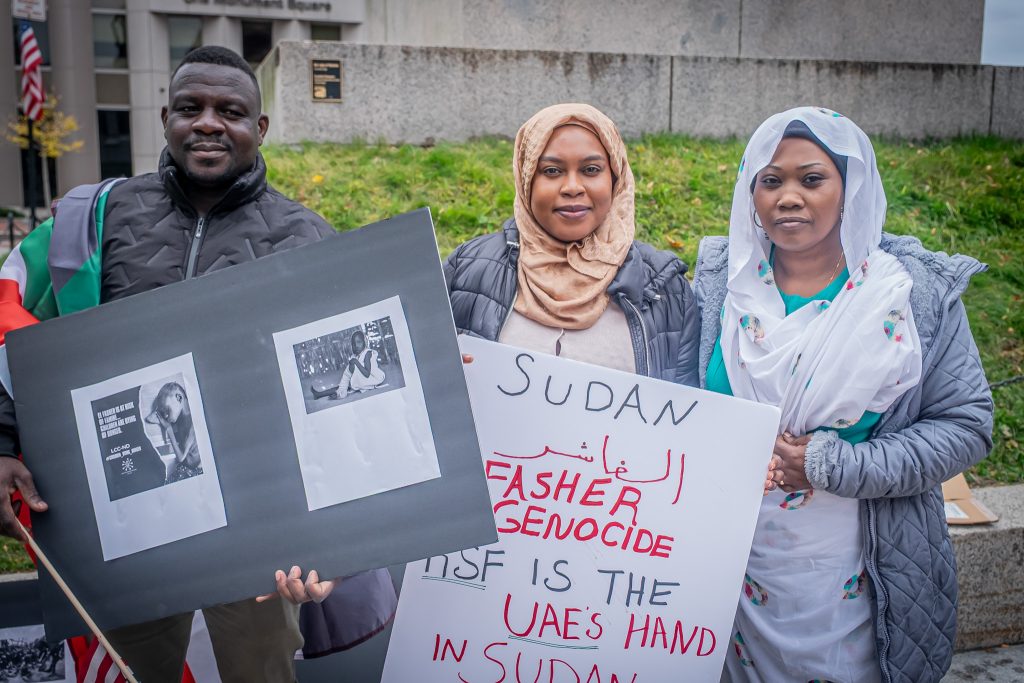
Faced with the worsening crisis in Sudan, a new generation of Sudanese Mainers led this protest, and they have a clear set of demands. They are calling for an immediate ceasefire and open humanitarian access, and for international powers to end the extraction of Sudan’s natural resources, which they say bankrolls the violence.
“This group is made up of young people with Sudanese roots living in Portland,” explained key organizer Samar Ahmed. “We put together protests, plan community and cultural events, and are currently trying to raise awareness about the genocide in Al-Fasher.”
The message from Monument Square was that global inaction is not an option, and that Mainers have a voice and a responsibility to use it. This sentiment was echoed by Portland City Councilor Pious Ali, who delivered a speech emphasizing the need for advocacy at the federal level.
“It is vital that we keep speaking out against the war in Sudan, which has sadly become a back-burner issue,” he told the gathered crowd. “I encourage all Mainers to reach out to their representatives in Congress and demand that the people with real power take action.”
The emotional heaviness of the gathering was captured in the opening comments delivered through a megaphone by Miriam, one of the organizers. “We stand here today as every Sudanese person present has had a close relative murdered. Every household is grieving, every family is broken. Our hearts are shattered, but we will not be silent.”
The young people behind the protest describe themselves as “a group of passionate Sudanese humanitarians based in Maine,” and said they are in the process of organizing future advocacy and educational events, and are determined to keep the plight of Sudan in the hearts and minds of their neighbors and politicians until the world is finally forced to act.