
By Raymond P. Diamond and Eloge Willy Kaneza
Maine state and local officials say U.S. Immigration and Customs Enforcement (ICE) has ended its enhanced operations in the state, following days of public concern, criticism, and protests. While federal officials have not publicly detailed the scope of the enforcement actions, demonstrations held across Maine in January drew hundreds—and in some cases thousands—of residents calling for accountability, transparency, and protections for immigrant communities.
In the days before officials announced the conclusion of enhanced operations, Portland held protests on January 18 and January 23. The following weekend, an estimated 1,000 people gathered in Lewiston on January 24.
Portland Protests draw hundreds at Monument Square
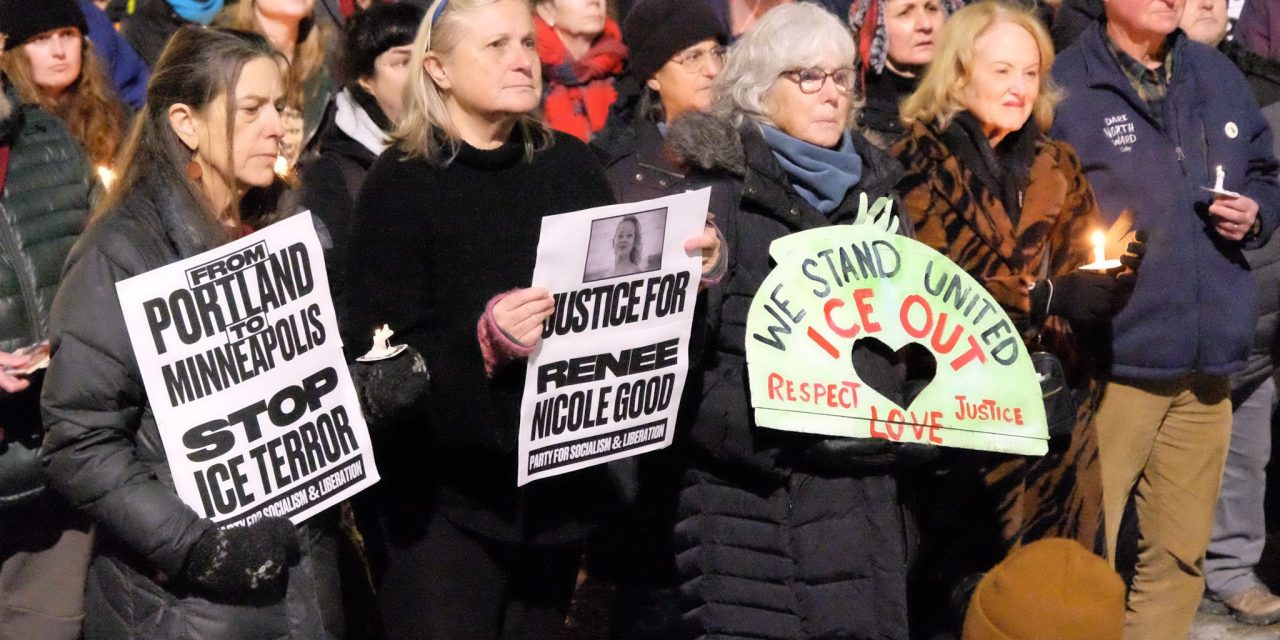
On Sunday, January 18, and Friday, January 23, several hundred protestors from across Maine gathered at Monument Square in Portland in response to what organizers described as a rapidly intensifying ICE presence in the state. For approximately an hour and a half on each day, speakers and representatives from community organizations addressed the crowd.
Both protests were held in freezing weather and were facilitated by James Fields, a member of Maine’s Party for Socialism and Liberation (PSL), who introduced each speaker.
Sunday, January 18: community voices and shared struggles
The first speaker on Sunday was a representative from Diaspora Pa’lante Collective, a politically mobilizing organization for Puerto Ricans that works toward “the achievement of a free and independent Puerto Rico” through community organizing, public education, and international campaigns.
The representative stated that 2025 was ICE’s most deadly year of detention since 2004 and memorialized Chaofeng Ge, 32, who was found dead hanging in a detention center; Norlan Guzman-Fuentes, 37, who died in a fatal ICE facility shooting in September 2025; and Silverio Villegas González, 38, who was shot and killed during a traffic stop. Addressing the crowd, the representative said, “The people of Maine can look to us Puerto Ricans, Puerto Rico, to see your future.”
Additional speakers included Todd Cretien, a writer with Pine & Roses, a statewide publication of Maine’s Democratic Socialists of America; Timothy Paradis; Kelly Merrill, Co-Chair of the Maine Green Independent Party; representatives from the Maine Coalition for Peace & Human Rights and Food Not Bombs; Faisal Khan, former Executive Director of the now-closed Greater Portland Immigrant Welcome Center; and Harley Bassett, a registered member of the Passamaquoddy Tribe.
Cretien noted that the Cumberland County Jail in Portland is the state’s largest immigration detention facility. He encouraged donations to the Maine Solidarity Fund, an initiative of the People’s Coalition for Safety & Justice, which provides direct support to individuals facing detention.
At one point, shouting between individuals was audible from the center of the crowd. Fields responded by telling attendees there was “no need to engage” with counter protesters.
ADVERTISEMENT

Merrill told the crowd that the developments unfolding in Maine reflect long-standing realities experienced by marginalized communities. “We live in an electrifying age. We live in an age of terror. An age of lost boy cosplay paramilitaries led by brutes, bullies, and sadists,” said Merrill.
A representative from the Maine Coalition for Peace & Human Rights spoke about LD 1383, legislation intended to divest state funds from corporations that provide services to ICE. The speaker noted that Maine invests approximately $140 million in Signature Aviation, which supplies flight services used by ICE.
Khan said attendees were not “here for performative politics.” He urged residents and businesses to visibly support immigrants and refugees and suggested optional online schooling for children of immigrants who may fear attending school. Addressing ICE officers, Khan said their “oath [to serve the constitution] is being tested right now in real time.”
A Food Not Bombs representative emphasized a message that drew cheers from the crowd: “We should be protecting our immigrant neighbors… because they are people and they are our neighbors.”
After the protest, Fields encouraged donations to Project Relief Maine and participation as verified ICE presence reporters. Bassett offered a land acknowledgement and drew parallels between the experiences of Indigenous communities and immigrants today, saying he was there to speak for “brown babies” who are afraid.
Friday, January 23: larger turnout and legislative focus
The January 23 protest drew a larger crowd, with chants including “One struggle, one fight, all unite for immigrant rights” and “Up, up with liberation, down, down with deportation.”
Speakers included a representative from the Maine Coalition for Palestine; Marpheen Chann, a Democratic candidate for Cumberland County Commission District 5; and Representative Ambureen Rana of the Maine House of Representatives.
Rana discussed LD 1971, which outlines how state agencies may interact with ICE, and LD 2106, which establishes protections from ICE activity in schools, libraries, hospitals, and daycares. She urged attendees to support the bills. LD 2106 later drew overwhelming support during a January 29 public hearing in Augusta from public officials, nurses whose patients were delaying care, educators whose students were staying home, and people who described fear of leaving their homes amid aggressive ICE activity.
In interviews following the protest, Rana encouraged residents to support immigrant neighbors by participating in mutual aid, contacting elected officials, helping with transportation, and ensuring families have access to food.
Lewiston rally draws about 1,000 participants
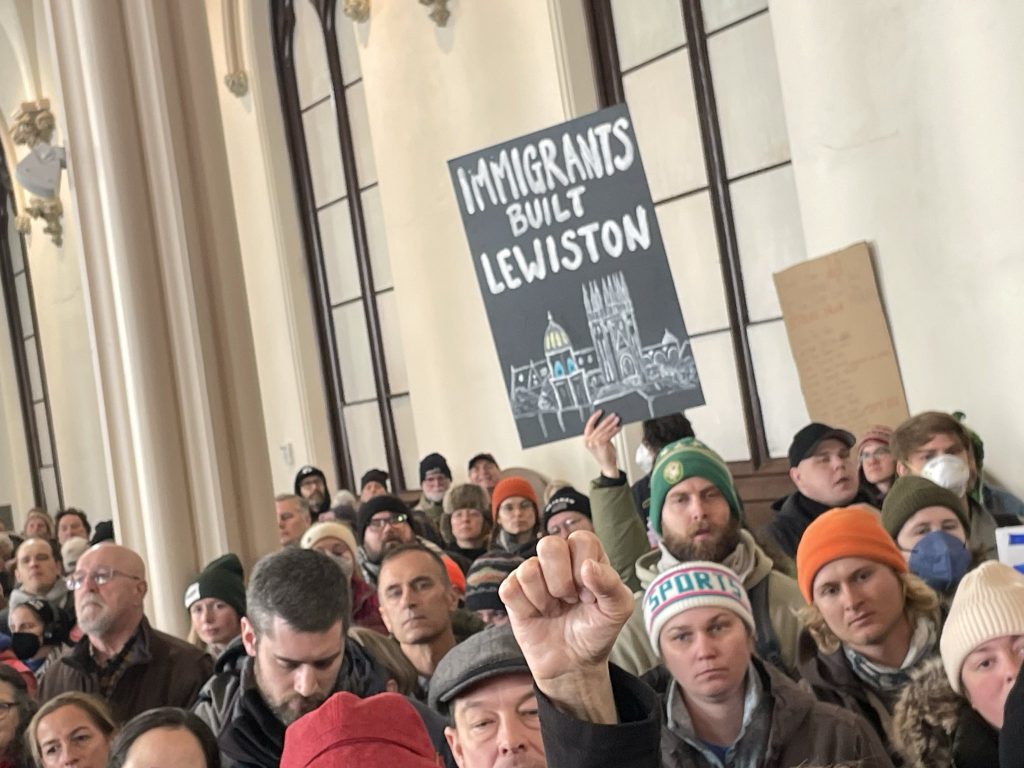
On Saturday, January 24, an estimated 1,000 people gathered at the Agora Grand Event Center in Lewiston for the “ICE Them Out” rally, protesting ICE activity in Maine. Participants traveled from across the state, including elderly residents who drove more than two hours to attend.
“We love immigrants. That’s why we came, and we will give our money to help,” one elderly participant told Amjambo Africa.
The rally lasted nearly three hours, from noon until approximately 2:40 p.m., as participants chanted, held signs, and listened to speeches in cold weather.
Notable attendees included Portland Mayor Mark Dion; Lewiston Mayor Carl L. Sheline; U.S. Senate candidate Graham Platner; gubernatorial candidates Hannah Pingree, Troy Jackson, and Shenna Bellows; and U.S. House District 2 candidates Matt Dunlap and Jordan Wood.
Safiya Khalid, Founder and Executive Director of the Community Organizing Alliance and a former Lewiston City Council member, opened the rally by describing fear and uncertainty within immigrant communities and calling for solidarity.
Local authorities in Lewiston, Portland, and other municipalities reiterated that protests must remain peaceful, emphasizing their responsibility to protect residents while respecting federal law.
Officials say enhanced operations have ended
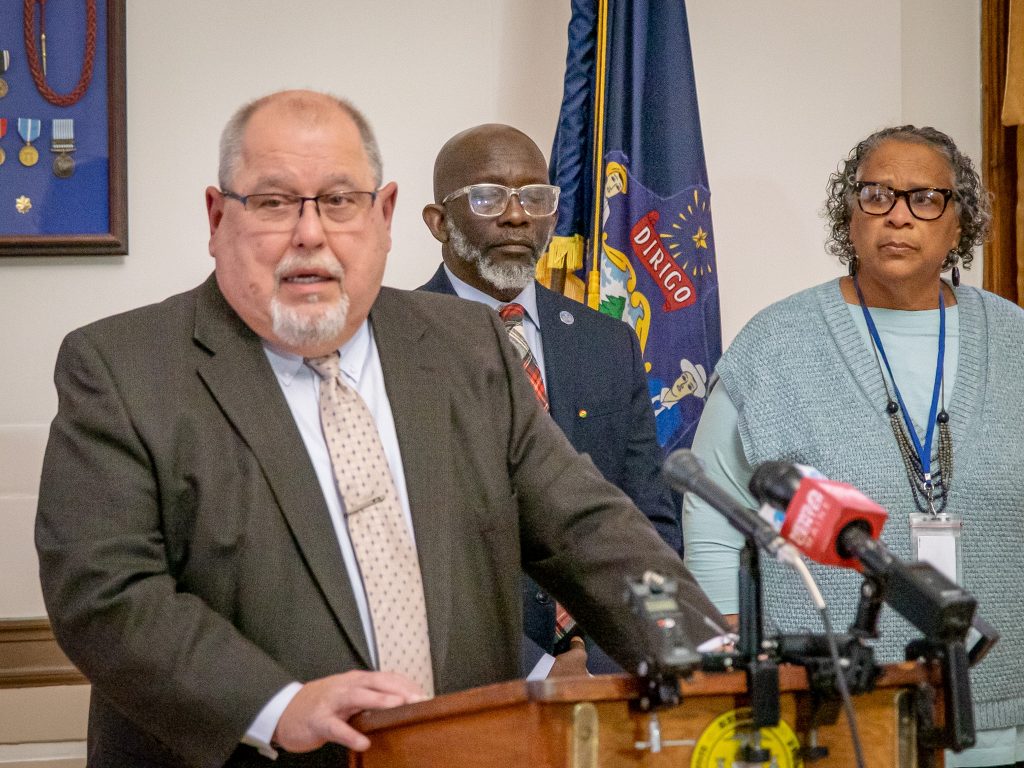
Following the protests, state and local officials said ICE had concluded its enhanced operations in Maine. Senator Susan Collins stated that Secretary of Homeland Security Kristi Noem informed her that large-scale operations were no longer ongoing or planned, though ICE and U.S. Customs and Border Protection would continue routine enforcement.
Governor Janet Mills criticized the federal operation, stating that its conclusion “does not end the pain and suffering” experienced by communities. She raised concerns about the detention of approximately 200 individuals and called for transparency and congressional oversight.
Dion echoed those concerns, saying that even if enhanced operations had ended, “it does not make up for the damage already done.”
Together, the protests in Portland and Lewiston reflect sustained statewide engagement with immigration enforcement and its impact in Maine, as residents, advocates, and elected officials continue to debate the role of federal authorities and the protections available to immigrant communities.








