By Andy O’Brien
A bill limiting the use of state and local resources to support federal immigration enforcement has officially become law in Maine and will take effect 90 days after the Legislature adjourns, likely in mid-summer 2026.
LD 1971, formally titled “An Act to Protect Workers in This State by Clarifying the Relationship of State and Local Law Enforcement Agencies with Federal Immigration Authorities,” was sponsored by Rep. Deqa Dhalac (D–South Portland) and passed both the Maine House and Senate in June 2025. Governor Janet Mills chose not to sign the bill at that time, instead carrying it over to the next legislative session. When lawmakers reconvened in January 2026, Mills allowed the bill to become law without her signature, in accordance with Maine law. The law officially took effect on January 11, 2026.
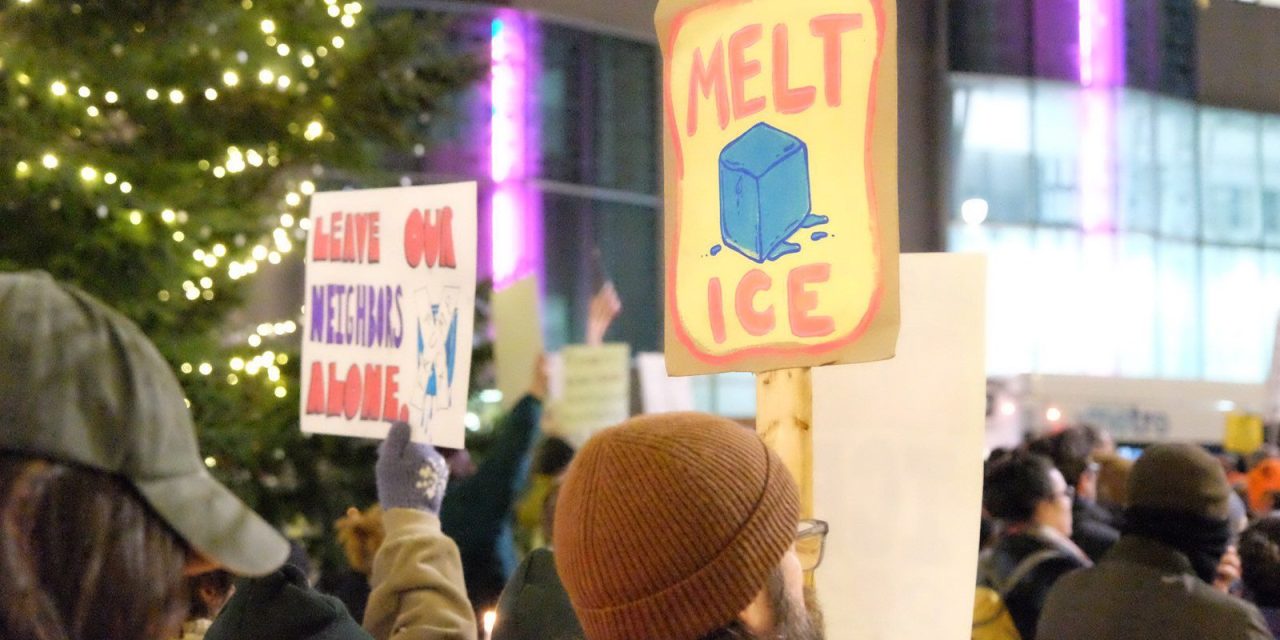
The law’s passage coincided with nationwide protests following the killing of Minnesota activist Renee Good by a U.S. Immigration and Customs Enforcement (ICE) agent on January 7. A recent Wall Street Journal investigation found 13 incidents since July 2025 in which ICE agents fired at or into civilian vehicles, leaving at least eight people injured, including two confirmed deaths—one of whom was Good. Meanwhile, a Guardian analysis reported 32 deaths in ICE custody in 2025, marking the agency’s deadliest year in more than two decades.
ADVERTISEMENT

LD 1971 clarifies that state and local law enforcement agencies may continue cooperating with federal authorities to investigate serious crimes, including terrorism, drug trafficking, and human trafficking. However, it prohibits officers from stopping, questioning, arresting, or detaining individuals solely for immigration enforcement purposes, and bars compliance with ICE detainer requests when the sole basis is immigration status.
The ACLU of Maine has documented multiple instances in which state and local resources were used to support federal immigration enforcement. In one example last June, the Oxford County Sheriff’s Office asked other agencies to locate a specific vehicle and detain its passengers for Border Patrol. Officers from the Scarborough Police Department stopped the vehicle, detained the occupants, and transferred them to federal custody—a process that, under LD 1971, would likely have been unlawful.
“From the first days of this administration, the president has pursued actions and messages that target immigrants in ways that violate core constitutional rights,” said Michael Kebede, policy director for the ACLU of Maine. “This new law will ensure Maine towns and cities are not complicit in federal abuses of power and will improve public safety by building trust between local law enforcement and the communities they are supposed to serve.”
Governor Mills, in an op-ed in the Portland Press Herald, described the bill as “imperfect” but necessary. She denounced the needless detention of new Mainers and explained that while she had concerns about the bill’s operational impact on law enforcement, she trusted Maine officers “can and will adapt.”
Mills also repealed a 2011 executive order issued by former Governor Paul LePage, which mandated enhanced cooperation with federal immigration authorities. She noted that under the Trump administration, the order had become “a broad and dangerous promise that Maine will not make.”
Rep. Dhalac praised the law’s passage while expressing disappointment over the delay. “Defining the boundaries between state law enforcement and federal immigration authorities is critical to safeguarding our communities,” she said. “Local police taking part in enforcing federal immigration law damages their relationship with immigrant communities, erodes public trust, and makes us all less safe, whether we are immigrants or not. This new law will protect the dignity, due process, and public safety of all who call our state home.”
The ACLU of Maine also applauded the law, emphasizing that state and local resources “should never be volunteered to tear our communities apart or support federal practices that often violate due process and other constitutional rights.” Michael Kebede added, “Measures like this preserve Maine resources for Maine priorities – not the goals of politicians in Washington. LD 1971 will ensure Maine towns and cities are not complicit in or liable for federal abuses of power, and will improve public safety by building trust between local law enforcement and the communities they are supposed to serve.”