By Andy O’Brien
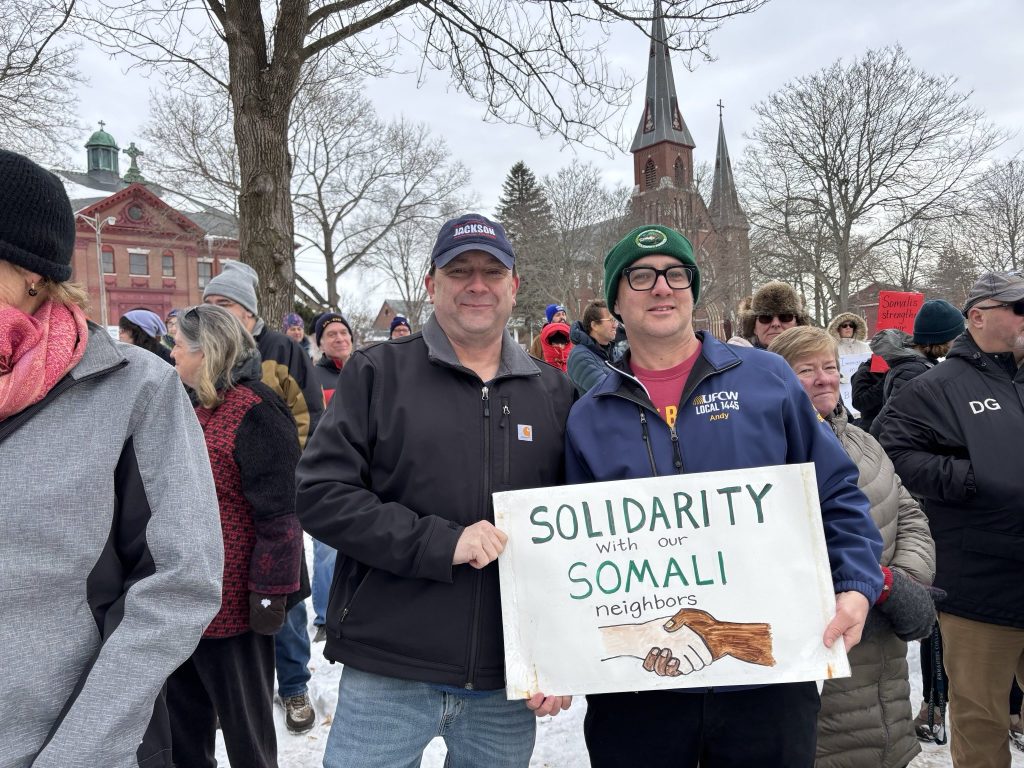
Hundreds of people participated in a rally on Saturday in support of Somali Mainers. The rally was called in response to President Donald Trump’s recent anti-Somali remarks.
Rally organizer Safiya Khalid addressed the crowd, saying “The language being used about Somali people is degrading, dangerous, and intentionally divisive…It questions our dignity, our belonging, and our humanity. We do not need to repeat those words here to understand their weight. We feel their impact in our bodies, in our families, and in our communities.”
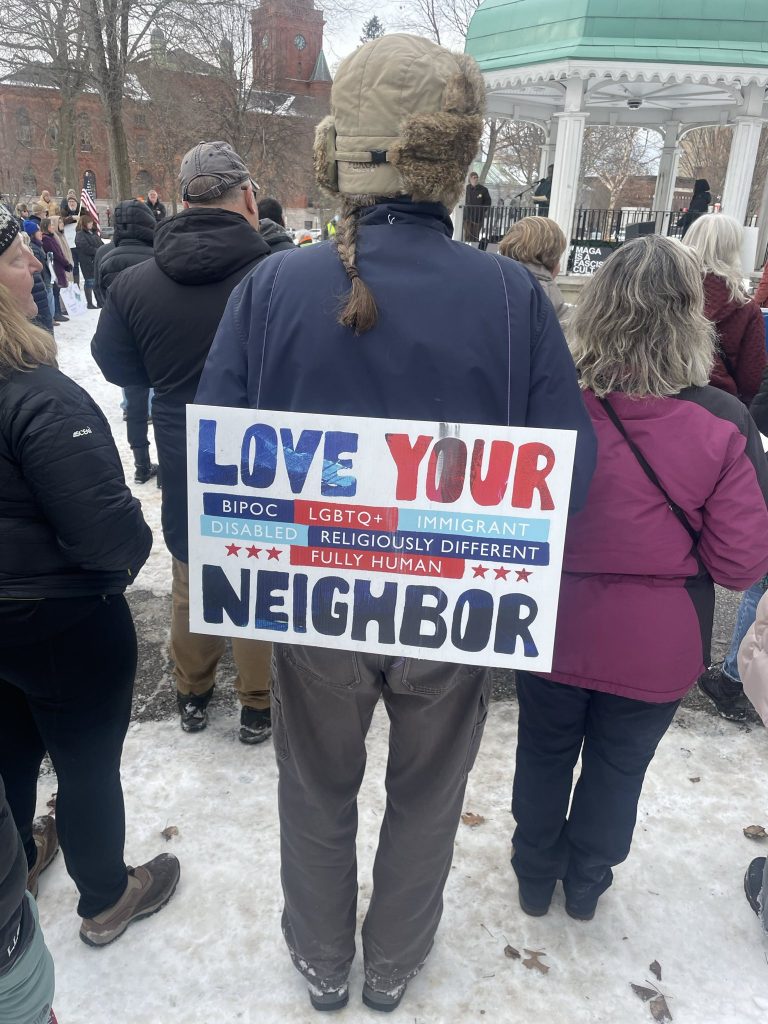
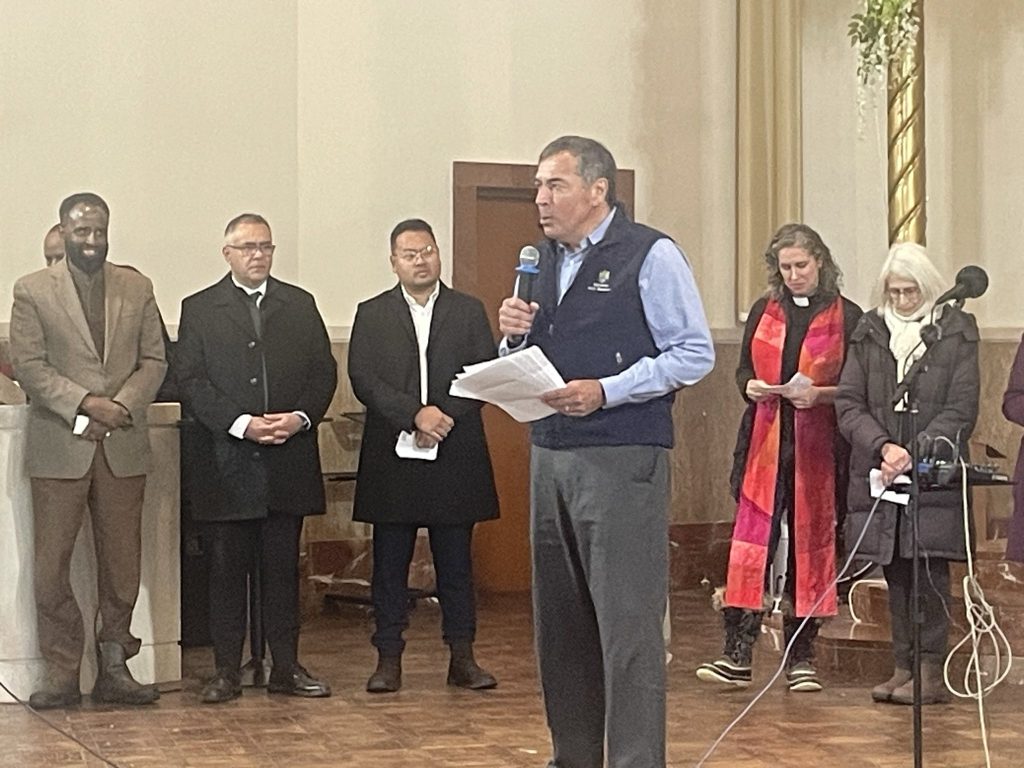
Several political leaders spoke at the rally, including Rep. Deqa Dhalac (D-So. Portland); Secretary of State Shenna Bellows; U.S. Senate candidate Graham Platner; former Senate President Troy Jackson; and Senator Rick Bennett (I-Oxford). Other political leaders in attendance included Lewiston Mayor Carl Sheline, and gubernatorial candidates Hannah Pingree and Nirav Shah. Governor Janet Mills did not attend.
Rep. Dhalac said that Somali people must be defined by their humanity and not by racist fear mongering. She noted that Somalis are business owners, doctors, nurses, teachers.
“We will not be intimated,” Dhalac said. “We will not let someone else’s hatred define who we are.”
ADVERTISEMENT
In a cabinet meeting on December 2, Trump targeted Somali immigrants, claiming they “contribute nothing” to America, calling them “garbage,” and saying “I don’t want them in our country…Their country is no good for a reason.”
Trump’s comments come on the heels of the administration’s move last month that endeed Temporary Protected Status (TPS) for Somalis – thereby stripping legal protections from immigrants whose country of origin is still grappling with armed conflict and instability. According to federal data, 705 Somalis have TPS nationwide.
Somali leaders and their allies are calling on local and state officials to publicly condemn the administration’s anti-Somali statements, and affirm the value of Somali immigrants to the state. Members of Maine’s sizable Somali community are concerned that the disparaging rhetoric is a source of unnecessary fear and division.
Somali citizens have described a palpable rise in anxiety, and Khalid noted that families are feeling the strain in deeply personal ways.
“Parents are worried about their children being bullied or targeted,” she explained. “Young people are asking why someone with so much power would speak about their families as if they are not human.”
A Somali community member and business owner in Lewiston, who asked for anonymity, said, “People are worried that these kinds of words from a sitting president could lead to real hate crimes locally.”
Amran Osman, the founder and executive director of the nonprofit Generational Noor, issued a statement encouraging youth to embrace and celebrate their cultural diversity.
“For so many young people, being in America means juggling two cultures—and we’ve always taught them this truth: You never have to leave your culture at the door to belong here. So do not let anyone, not even the president, make you feel less than. We stand with our Somali community and all immigrant communities—in pride, in solidarity, and in love.”
Several speakers at the rally noted that in the past Irish and French Canadians in Lewiston were the targets of xenophobic and anti-Catholic bigotry. Retired union longshoreman Vinnie O’Malley, a child of Irish immigrants, attend the rally wearing a copy of his mother’s alien registration card pinned to his coat.
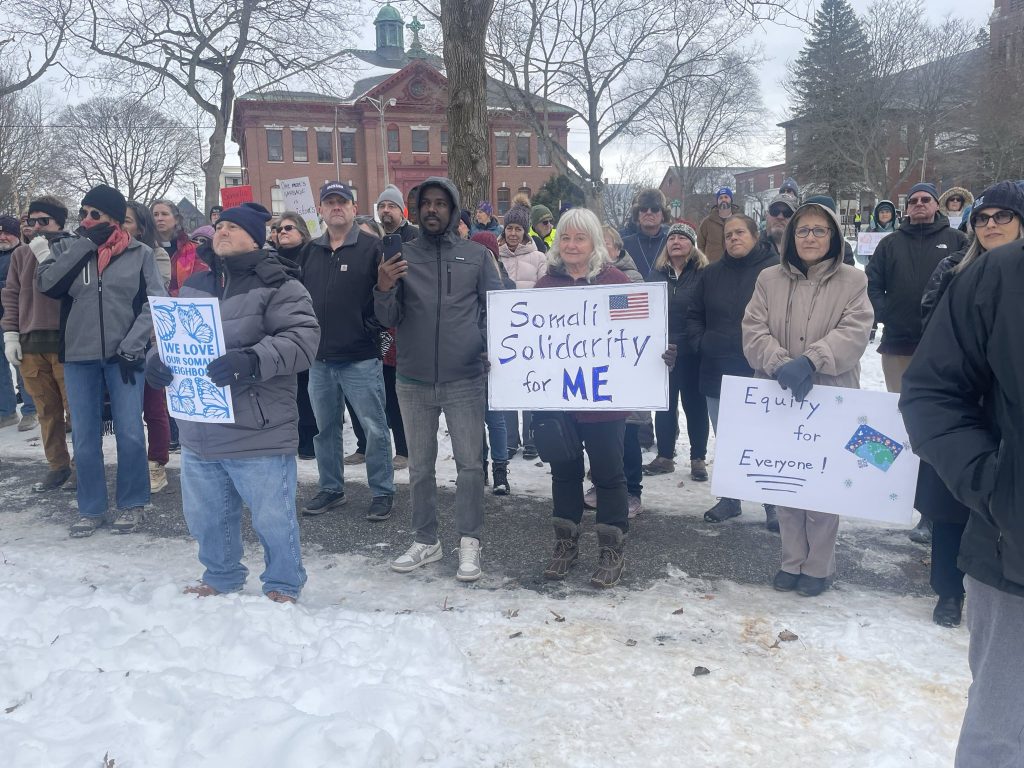
“I had to come here and show my solidarity because there’s not enough of it going around,” said O’Malley. “My mother never became an American citizen and could have very easily been lifted and carried out of this country back in the day. They fled abject poverty and civil war also so there are a lot of similarities between my parents’ experience and Somalis.”
Marpheen Chann, who is running for the Cumberland County Commission on a platform to end the county’s relationship with U.S. Immigration and Customs Enforcement (ICE), noted that Asian Americans, and Jews, have also endured the sting of prejudice in America
”But when I look out at all of you today, I don’t just see a sea of faces,” said Chann, who is the son of Cambodian refugees. “I see what [the administration] desperately fears. I see a people united. I see a community coming together. Across race. Across faith. Across background and political differences. Today, we stand together. Today, we choose solidarity over fear.”
Several Somali Mainers who requested anonymity told Amjambo Africa that they have received an outpouring of love and support from Maine’s immigrant and native-born residents following Trump’s comments.
“We’ve gotten a lot of support from local Mainers,” said one man. “Those gestures remind us that our place in Maine is valued, regardless of a racist individual’s comments.”
Safiya Khalid’s optimism was palpable. “Even at this moment of hurt, our community is strong. We have built lives, families, and futures in Maine. We are proud of who we are. We will continue to stand with one another, speak out against racism, and remind this country that Somali Americans belong here and always will.”