By Eloge Willy Kaneza and Ernest Ndayisaba
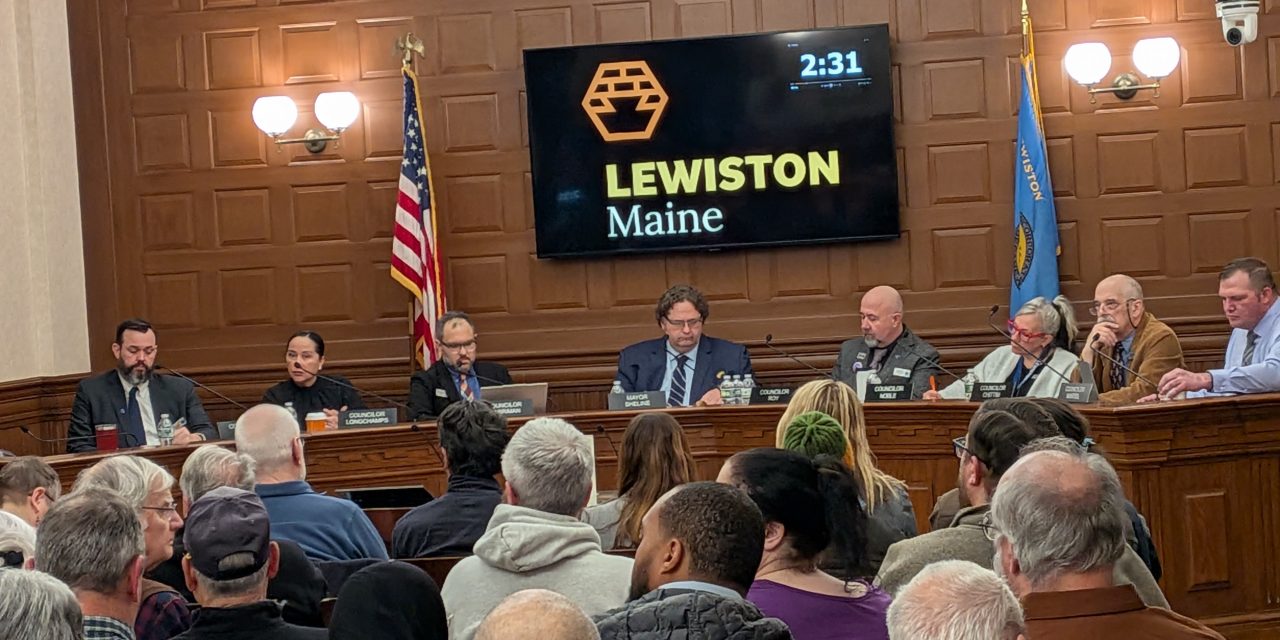
LEWISTON, Maine -After nearly two hours of emotional testimony and sharp debate, the Lewiston City Council voted 5–2 Tuesday night to pass an emergency ordinance limiting the city’s cooperation with U.S. Immigration and Customs Enforcement (ICE).
The ordinance, which takes effect immediately, bars city employees — including police — from assisting in federal civil immigration enforcement, aligning local policy with a forthcoming statewide Maine law.
The decision followed intense public comment from residents both supporting and opposing the measure.
Supporters cite public safety concerns

Residents in favor of maintaining the agreement argued that ICE’s presence had contributed to a reduction in violent crime. One supporter claimed that arrests related to violence dropped from 114 to 79 during the same period compared to last year.
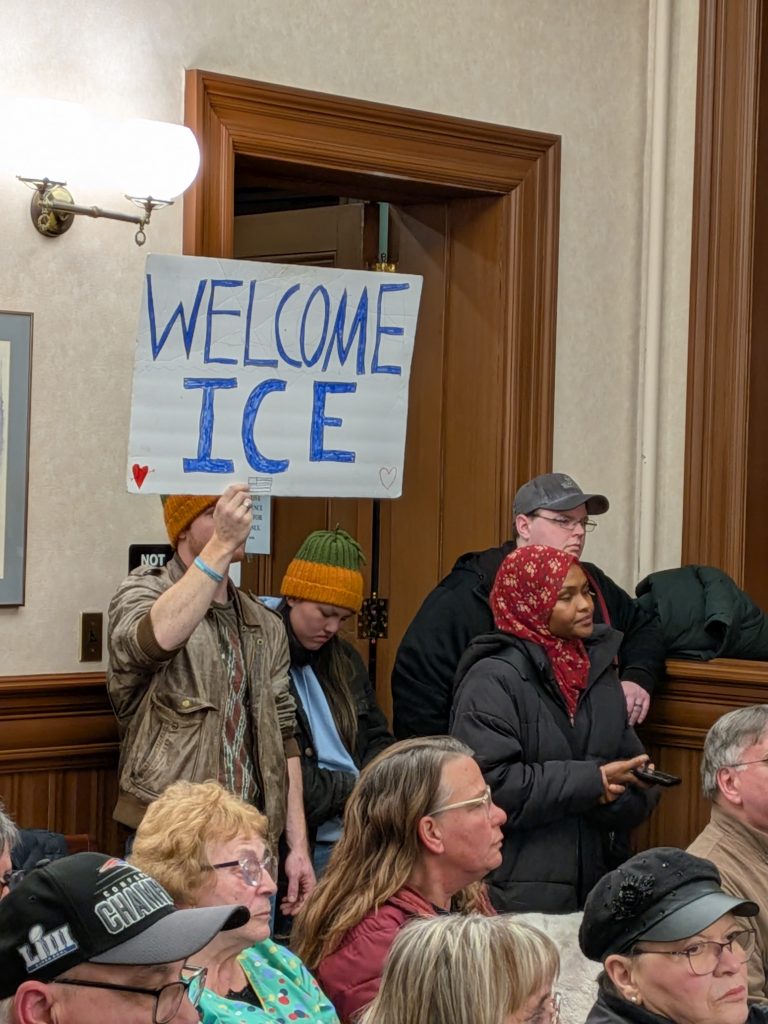
Others contended that collaboration with ICE helps address illegal immigration, unauthorized labor, human trafficking, and related crimes. A young man entered the chamber holding a sign reading “Welcome ICE,” while another supporter traveled from Falmouth to speak in favor of the agreement.
Opponents warn of fear and eroded trust
Opponents of the agreement described a climate of fear among immigrant families. A Somali American woman born in the United States told councilors she now feels compelled to carry her passport. “I am forced to carry my passport because people are being arrested because of the color of their skin,” she said. She added that her siblings, who are U.S. citizens, are afraid to leave home. “We have children who are considering not finishing their secondary school because they don’t go to school anymore,” she said. “None belong to this country unless you are Native American.”
Among the speakers was Ifraax Saciid-Ciise, Executive Director of IFKA Community Services, who has lived in Lewiston for 23 years.
ADVERTISEMENT

Saciid-Ciise emphasized immigrants’ economic contributions statewide, noting that more than 32,000 immigrant workers in Maine contribute approximately $625 million in taxes and hold $1.7 billion in spending power.
“Immigrants are not a burden. We are part of the strength of this city. We are the future of this city,” she said. “When families are afraid to report crime or send their children to school or seek medical care, it harms public safety and public health for everyone.”

“This land is Wabanaki land,” she said. “Immigrants have done a lot for this city and will continue to do great things.”
Khalid: “Public safety is about trust”
Former City Councilor Safiya Khalid, Founder and Executive Director of the Community Organizing Alliance, also urged councilors to end the agreement.
“Public safety is not just about policing,” Khalid said. “It is about whether families feel safe calling 911. It is whether parents feel safe sending their kids to school.”
She warned that fear of deportation discourages victims of domestic violence, workers experiencing wage theft, and crime witnesses from contacting authorities: “When people are afraid to interact with city officials, crime goes unreported. Public health risks increase. Trust breaks down. That makes every single one of us less safe.”
Khalid argued that local officers are not trained in complex federal immigration law and should remain focused on local responsibilities. “Community safety depends on trust. This ordinance strengthens that trust,” she said.
Ordinance takes effect immediately
In an interview with Amjambo Africa following the session, Lewiston City Administrator Bryan Kaenrath confirmed that the ordinance is effective immediately, adding that the city would formally notify ICE. He indicated there would be no contractual delay in terminating the agreement and said existing police practices were already aligned with the new ordinance.
“We stand behind transparency,” Kaenrath said. “Whatever information or reports are requested, we’re happy to comply.”
Dissenting vote
City Councilor Bret Martel, one of two members who voted against the ordinance, also spoke to Amjambo Africa after the meeting, questioning whether emergency action was necessary.
“I have seen no evidence that this ordinance was necessary, especially in an emergency nature,” Martel said in his interview. He added that he believes the Lewiston Police Department has been doing “an excellent job.”
Martel said he believes rhetoric surrounding the issue may have fueled unnecessary fear. “Trust comes with telling the truth and representing the facts accurately,” he said.
However, he emphasized that he remains open to reconsidering his position if new evidence emerges regarding community-police relations.

A community at a crossroads
The meeting highlighted deep tensions within Lewiston, a city shaped by generations of immigrants, including English, Irish, Franco-Canadian, and, more recently, African families.
While some residents see cooperation with ICE as a tool for public safety, others view it as a threat to community cohesion and constitutional protections.
With the ordinance now in effect, city leaders say the focus will return to local priorities. For many immigrant families, the vote represents reassurance. For others, it raises ongoing questions about how best to balance enforcement and trust.
As Lewiston moves forward, the broader debate over immigration enforcement and local governance remains far from settled.