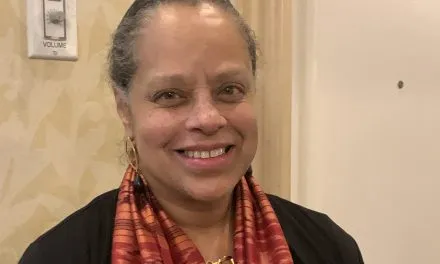
“Forced labor, torture, forced marriages, religious persecution, and mass executions – these were not isolated atrocities but systematic crimes against humanity. Victims were made to dig their own graves, children were torn from their families and put into labor brigades, and entire communities were shattered. Through the Extraordinary Chambers in the Courts of Cambodia, Khmer Rouge leaders were brought to justice – convicted of genocide, crimes against humanity, and war crimes. It was a step toward justice and recognition of the suffering endured by millions of Cambodians.” – Dr.Theresa de Langis
By Dhananji Rathnayake
The Cambodian community of Maine gathered on April 17 to commemorate the 50th anniversary of the Cambodian Genocide and hear a keynote address about the Extraordinary Chambers in the Courts of Cambodia (ECCC) for the Prosecution of Crimes Committed during the Period of Democratic Kampuchea. Hosted by Khmer Maine at the Jewish Community Alliance of Southern Maine, on Congress Street in Portland, the solemn event honored survivors, educated the public, and reaffirmed a commitment to historical truth, justice, and peace.
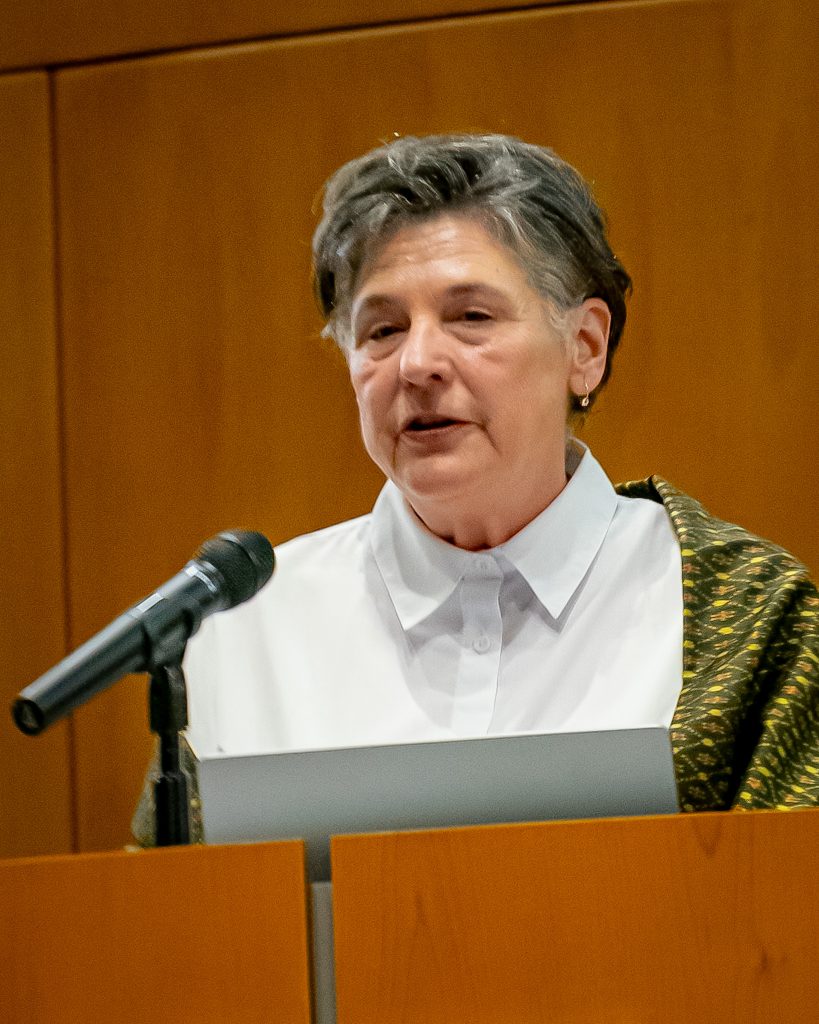
Dr. Theresa de Langis, an international human rights expert who has worked for decades to protect women’s rights in conflict zones, delivered a moving keynote presentation. She said that the ECCC was established by the United Nations and the Royal Government of Cambodia, and sought to bring the leaders and key perpetrators of the genocide to justice. The ECCC is also known as the Khmer Rouge Tribunal. Survivors participated as witnesses in the judicial process, which lasted 16 years, and received reparations. The tribunal included both Cambodian and international staff and judges. Pol Pot, the notorious dictator at the head of the Khmer Rouge, died in 1998, before he could be brought to trial.
Ffrom 1975 to 1979, the Cambodian Genocide resulted in the deaths of 1.5 to 3 million people – about a quarter of Cambodia’s population at the time. In the name of agrarian reform, the Khmer Rouge forced people into rural labor camps, perpetrated mass executions, and tortured civilians. The country’s population suffered from widespread starvation and disease as a result of the regime’s policies.
Maine is home to approximately 2,000 people who either arrived here in the 1970s after fleeing the Pol Pot regime, or are descended from those arrivals. Among those who shared personal stories at the commemoration was Siekly Gnin, a survivor who recounted living with her husband in Phnom Penh when the Khmer Rouge entered the city.
“I cannot erase that dark memory from my mind,” Gnin said through tears. “They told us there was peace and that we could go wherever we wanted. We had a motorbike and decided to visit my mother, who lived nearby. But on the way, we sensed something was wrong. I wanted to turn back, but Khmer Rouge soldiers pointed guns at us and ordered us to keep going.”
ADVERTISEMENT

Gnin and her husband eventually found her mother at a nearby temple, where Khmer Rouge officials registered them and falsely promised they would be sent to a peaceful place with food and safety. Instead, Gnin, her husband, and 30 other families were forced onto ox carts and transported to a remote province deep in the forest.
“We had to work hard, day and night,” she recalled. “One day, my husband found a single sweet potato and brought it home to share with our family. The Khmer Rouge accused him of betrayal and jailed him. They separated us – we couldn’t even stay together as a family.”
Years later, Gnin’s daughter, who had fled to the U.S. and married another Cambodian refugee in the U.S., helped bring her parents to safety in America.
During the Khmer Rouge regime, religious and ethnic minorities faced severe persecution. While Buddhists and Christians were also repressed, the Cham Muslim community suffered the most. Up to 500,000 people, or 70 percent of their population, were killed. The regime also targeted intellectuals, including teachers, doctors, lawyers, and clergy – anyone seen as educated. Glasses were viewed as an indicator of education.
Sakun Prak was a young monk when the Khmer Rouge took power. He recalled that monks were stripped of their robes, forced into hard labor, and treated as enemies. “Pol Pot labeled monks as parasites because they were educated,” he said. “We were tortured, starved, and made to carry rocks up and down the mountains. Many did not survive.”
Khmer Maine Art and Cultural Coordinator SreyArt Rathbut helped translate survivor interviews, bringing raw and emotional testimonies to light.
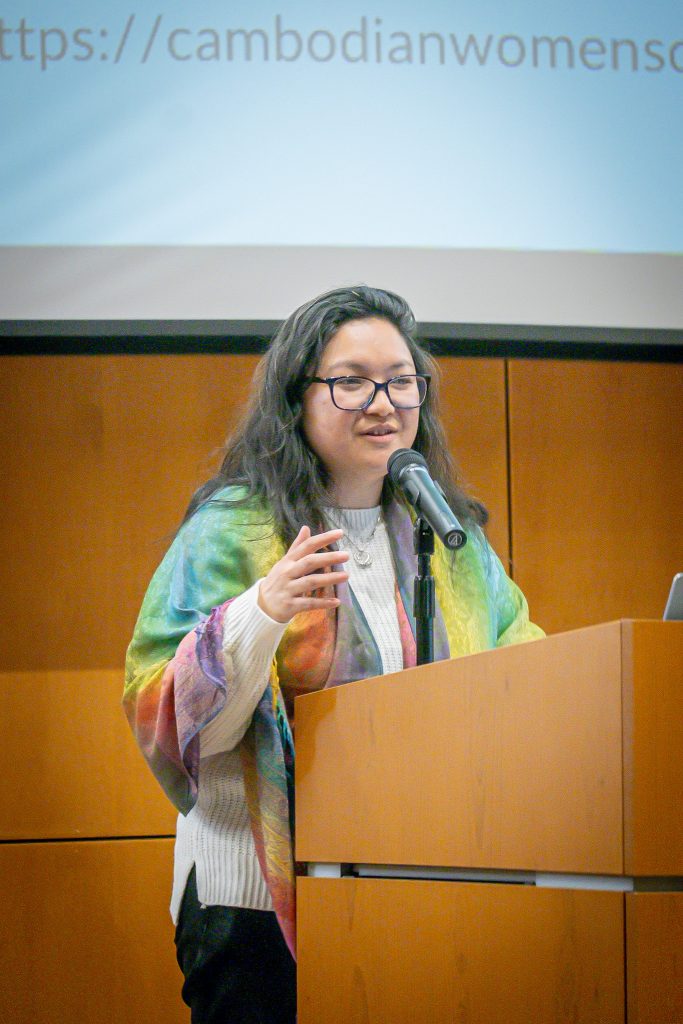
For Sosanya Pok, Acting President and Founder of Khmer Maine, the day was deeply personal. “My parents are survivors.They were just around 20 years old when it all happened. My mother lost many family members. For me, this is a powerful opportunity to honor them, and for them to see me standing here in strength and remembrance.”
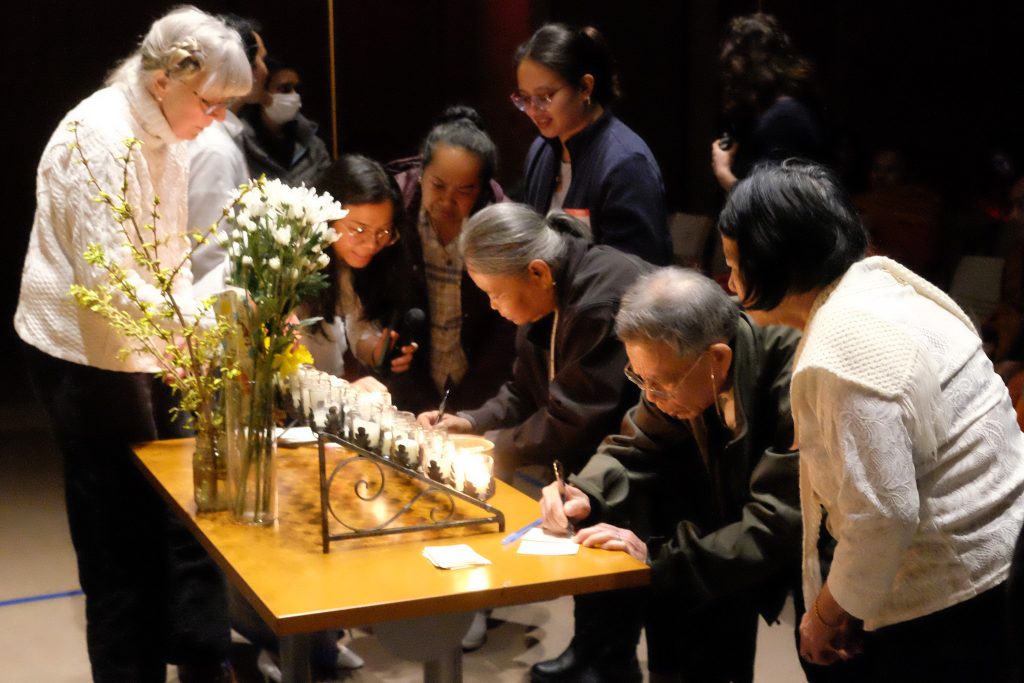
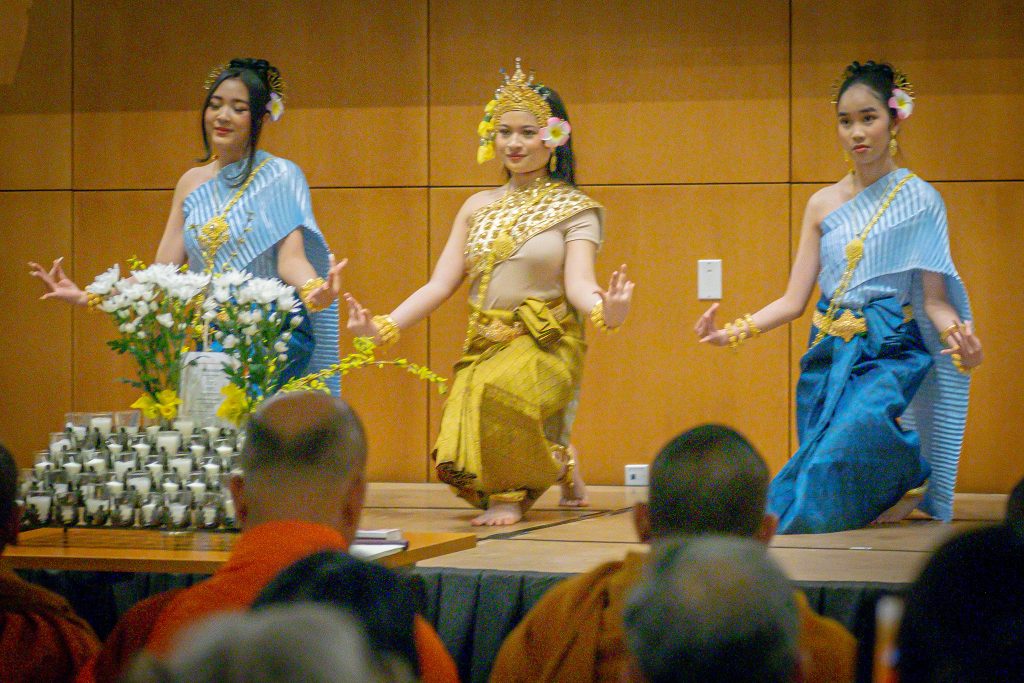
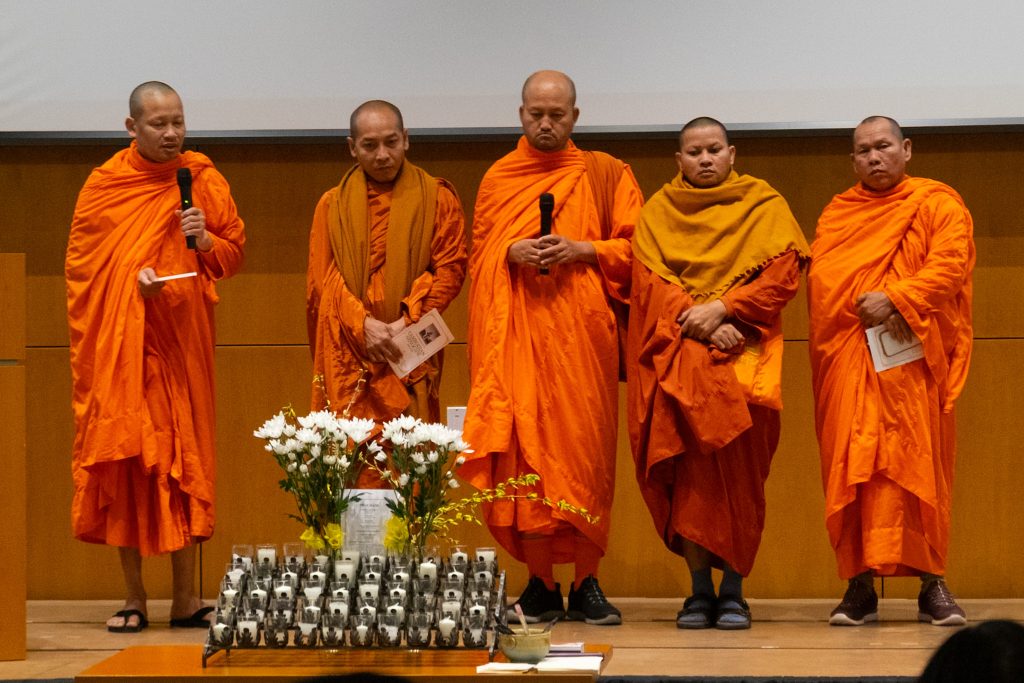
The event also featured traditional Cambodian dance by the Khmer Maine Dance Company, a moment of silence, candle lighting, and blessings by monks at Watt Samaki Cambodian Buddhist Temple in Buxton. Attendees wrote the names of lost loved ones on slips of paper to be blessed in prayer. SreyArt Rathbut, helped translate survivor testimony.
Depth, solidarity from community voices
Sarah Boothby, President of the Filipino-American Samahan of Maine, reflected on the importance of the event. “Being a Filipino, this history was never taught in school. Seeing the images, hearing the stories – justice is being served, and it’s a lesson we must never forget.”
Archana Palaniappan from the Nature Based Education Consortium noted that not all young people of Cambodian extraction know the reality of the genocide: “This event keeps the collective memory alive. Many young Cambodians today don’t know this history. Events like this ensure the truth isn’t buried.”
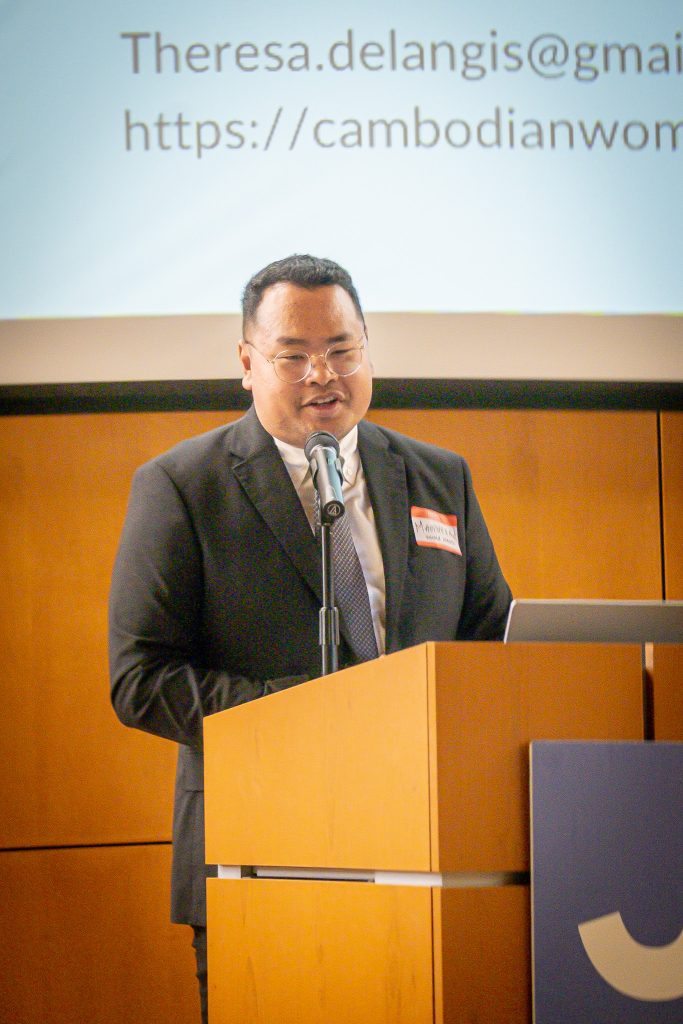
Khmer Maine Executive Director Marpheen Chann concluded the Cambodian Genocide Memorial event by emphasizing the shared responsibility of all Americans – immigrants and non-immigrants alike – to uphold peace, unity, and justice.
“If we can all tap into the resilience and hope that immigrant and refugee communities have shown – despite the odds – we can move beyond division and find a better way forward, just as Dr. Martin Luther King envisioned,” Chann said.