By Dardan Ukaj | photo by Mark Mattos
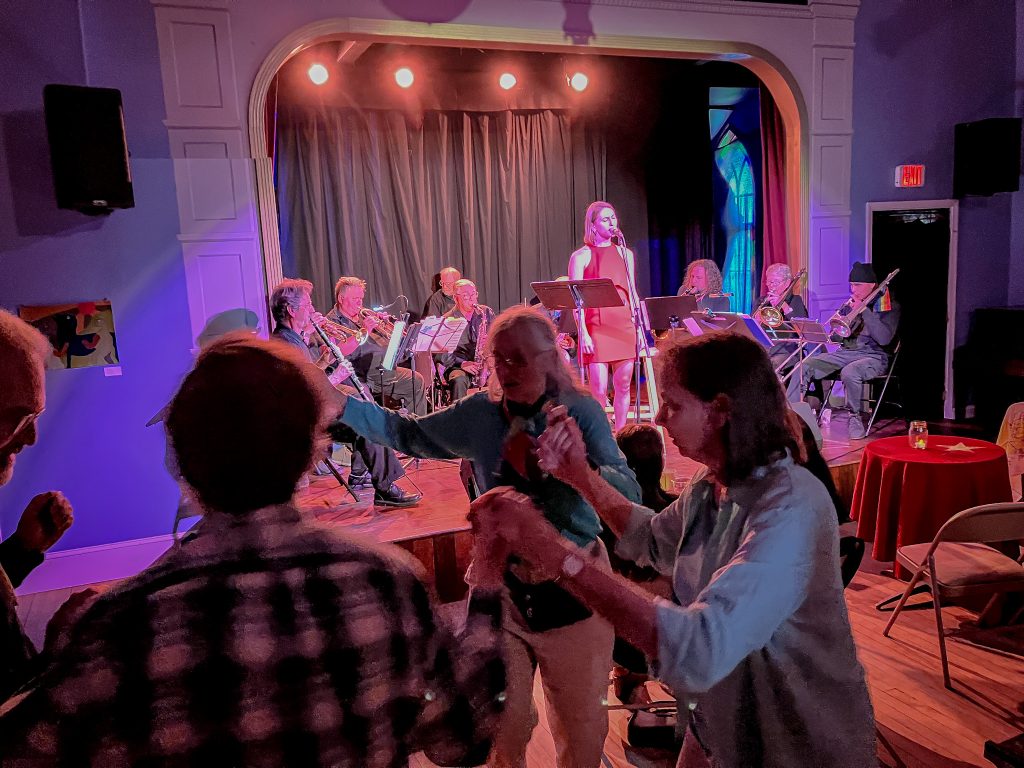
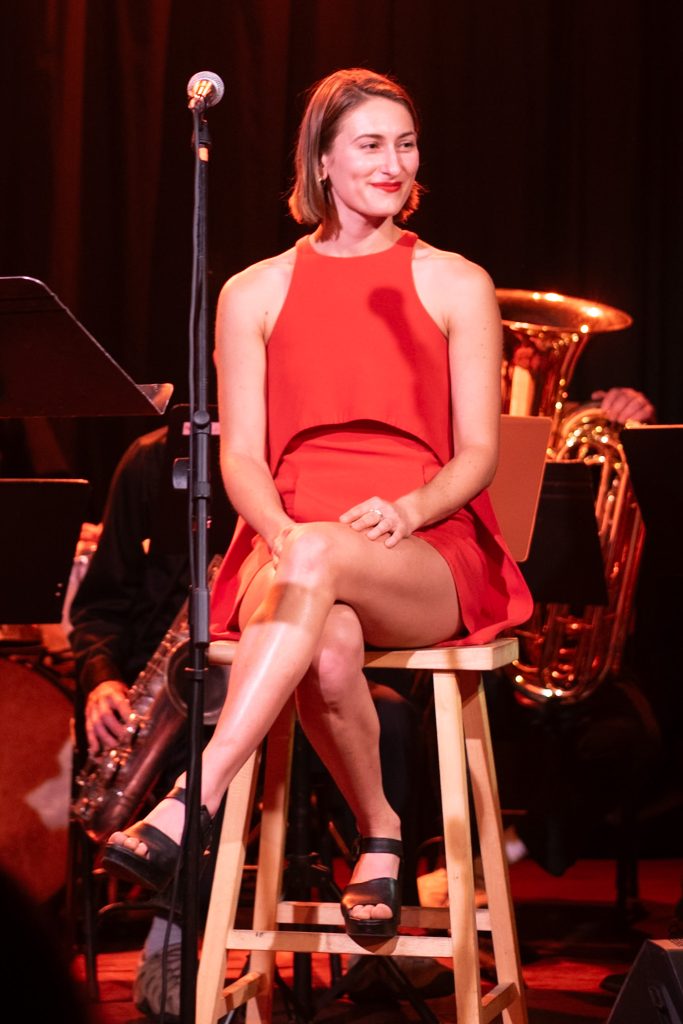
On June 14 vocalist Lara Rakočević and the Huddled Masses Orchestra delivered a powerful performance of vibrant Balkan music at Portland’s Mayo Street Arts that had many on their feet dancing. Huddled Masses’ origin story dates back to the 1970s, when Joe Niemczura, of Polish-American heritage, was first introduced to Balkan folk music through folk dancing. That discovery proved life-changing.
“I loved the harmonies, the rhythms — influences that run through so much of Balkan music,” Niemczura said. “This stuff is virtuosic. It’s fun, wild, and musically rich.”
A few decades after his introduction, Niemczura formed a band that he named “Huddled Masses,” in reference to the famous poem by Emma Lazarus, which includes the lines:
…Give me your tired, your poor,
Your huddled masses yearning to breathe free,
The wretched refuse of your teeming shore.
Send these, the homeless, tempest-tost to me,
I lift my lamp beside the golden door!”
ADVERTISEMENT

Although few of the band members are Serbian, the group is deeply committed to performing the music as authentically as possible. They study modal structures, listen to endless playlists, and rehearse complex time signatures. They are well aware of the cultural context behind the music, much of which connects to migration and adaptability.
Meet Lara Rakočević
D: Tell us a little about how your musical journey began.
L: I’ve always loved to sing. It was something I did constantly as a little girl, but I didn’t pursue it professionally for a long time. My academic and career background is actually in math and computer science. But a few years ago, I finally decided to give music the space it deserved in my life. I started taking voice lessons in New York, where I was living at the time, and that eventually led to performing.
D: You’re now part of a Serbian brass band in Maine — how did that happen?
L: Honestly, it felt like fate! When I moved to Maine, I saw an ad from a band looking for a drummer. I’m not a drummer, but I reached out anyway and said, “Hey, I’m Serbian and I sing — is that of any interest?” They wrote back almost immediately saying, “We’ve been waiting to meet you.” And just like that, we started working together. It was totally unexpected and completely serendipitous.
D: How does your heritage influence your music?
L: It’s at the heart of everything I do. I feel deeply proud of where I come from — of my family, our traditions, and the resilience of the people from the Balkans. My parents immigrated from Serbia during the wars of the early ’90s, before I was born. I’ve lived in the U.S. all my life, but I go back to Serbia every summer. I’ve always felt like I’m living between two worlds — in Serbia I’m “Amerikanka – the American,” and here I’m “the Serbian.” That in-between space has actually given me a deeper love for both cultures.
D: What does Balkan music mean to you on a personal level?
L: It reminds me of my grandparents. They helped raise me, and when I’d visit them in Serbia, their home was always full of people, food, and music. Singing was just part of daily life. Even with my friends when I went out at night, someone would always break out in song around the table, and then everyone would join in. It was joyful, emotional, and a big spirit. That kind of emotional openness is just part of the culture.
D: Are you performing this summer?
L: Yes! We’re performing for Pride in Rockland, and we’ll also be playing at the Common Ground Fair, Belfast Summer Nights, and a few other events later this summer and early fall. It’s been amazing to see people who’ve never heard this kind of music dance and connect with it.
D: What would you say to someone who has never listened to Serbian music?
L: You’ve got to listen! It’s truly a whole world. There are so many different types of music, not just Serbian but Balkan music. I personally love and listen to… mainly bands like Haustor, Bajaga, and other older bands.The emotion is so real. Every time I have shown them to my friends, they have gotten excited and hooked in immediately.
D: What does it mean to you to represent your culture here in America?
L: It means everything. I’m incredibly proud of my heritage. The Balkans are full of people who are strong, funny, expressive, and open-hearted. Being able to share even a piece of that spirit through music is such an honor — especially since so many people here don’t know much and have misconceptions about the region. I can’t count how many times someone has said to me, “Oh, Serbia — do you mean Siberia?”
D: Do you collaborate with other immigrant or multicultural communities in Maine?
L: I’ve done some Greek folk dancing, and I’ve been to Balkan folk events, and I’m always looking for ways to connect with others who are celebrating culture through art and music. If there are festivals, community events, or collaborations — I’d be honored to participate.