
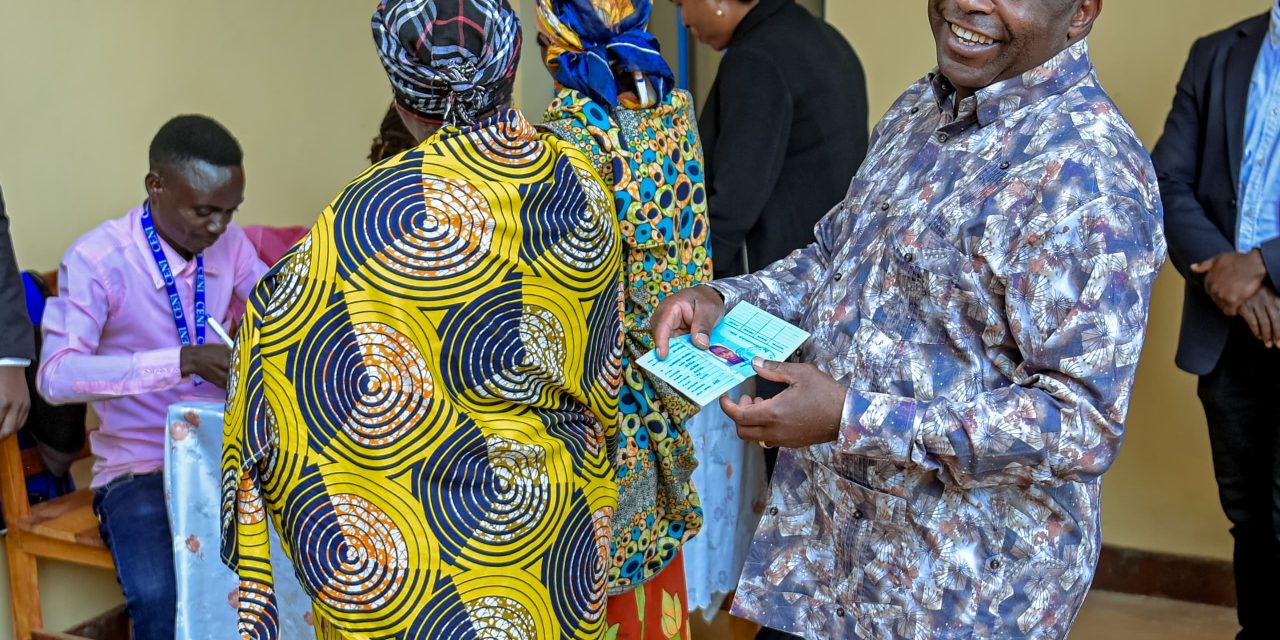
Pierre Claver Niyonkuru
Burundi will hold legislative and communal, senatorial, and council elections in summer 2025. For the first time, these elections will be held separately from presidential elections, slated for 2027. The Burundian Constitution, which was revised in 2018, now includes a change in the length of the presidential term, from five to seven years.
At the end of December, Burundi’s Independent National Electoral Commission (CENI) rejected all candidates from lists provided by a coalition of four political parties, known as “Burundi Bwa Bose” (Burundi for Everyone), for the upcoming 2025 legislative elections.
Burundi Bwa Bose was first officially recognized by the Burundian Minister of the Interior on December 17, and two weeks later, the candidates were disqualified.
The banned candidates included those put forward by Agathon Rwasa, a longtime opponent of the ruling party of Burundi, the Conseil National Pour la Défense de la Démocratie-Forces pour la Défense de la Démocratie (CNDD–FDD).
According to the decision issued by CENI, some candidates were rejected because they included “three MPs sitting in the National Assembly on behalf of the Congrès national pour la liberté [CNL] party, which is not a member of the coalition, in contradiction of Article 112 of the electoral code and Article 7 of the law related to political parties in Burundi.”
Rwasa, who was the runner-up in the 2020 presidential election, is one of the MPs mentioned in CENI’s decision. Rwasa contested the official results of those elections by petitioning the country’s constitutional court.
In March of last year, government-supported dissidents succeeded in removing Rwasa from CNL party leadership after accusing him of corruption and lack of transparency. Nestor Girukwishaka became the party leader.
Nonetheless, in an attempt to hold onto the leadership of the CNL party, Rwasa chose to include his name on one of the coalition’s lists opposing the ruling party in this year’s election.
Rwasa, 60, rose to prominence as a Hutu rebel leader during Burundi’s civil war (1993-2009). Accused of widespread atrocities during this period, Rwasa has held a volatile and controversial place in Burundian politics ever since.
Ruling party seeks to neutralize opposition
The coalition and the CNL party immediately launched an appeal to the decision by CENI, which wasted no time in responding by issuing a divisive ruling, giving political parties and coalitions just three days to “reorganize” their lists of candidates for the 2025 legislative elections.
With such a short deadline, any meaningful opposition has been neutralized.
ADVERTISEMENT

The Electoral Commission’s decision, blessed by the Constitutional Court, comes after the early December announcement of a decree under which independent candidates would only be allowed to stand in legislative elections “if they have not been a member of a political party for at least a year.”
In addition, according to the decree, a former member of a party’s governing body will only be able to stand for election after two years have passed since “resigning or being ousted from their original political party.”
Patrick Nkurunziza, president of Burundi Bwa Bose, said, “We have taken note of the Constitutional Court’s decision to no longer include members of the CNL party on our lists.” He stated that the coalition’s decision to take part in the elections was irreversible, regardless of the number of votes it garners.
“Even if some people don’t want us to take part in the next legislative elections, we’ve decided to continue on our own, even if we get 2, 3, or 5 percent,” Nkurunziza said.
Kefa Nibizi, President of the Council for Democracy and Sustainable Development of Burundi (CODEBU), and spokesperson for the hastily reorganized Burundi Bwa Bose, the only political bloc still recognized by Burundian authorities, said, “They don’t want our coalition to take part in the legislative elections for electoral purposes. The ruling party is afraid of the strength we represent.”
Throughout these legal battles, the main target of the ruling party has been Agathon Rwasa and his supporters. The controversial figure has yet to reveal his next steps.
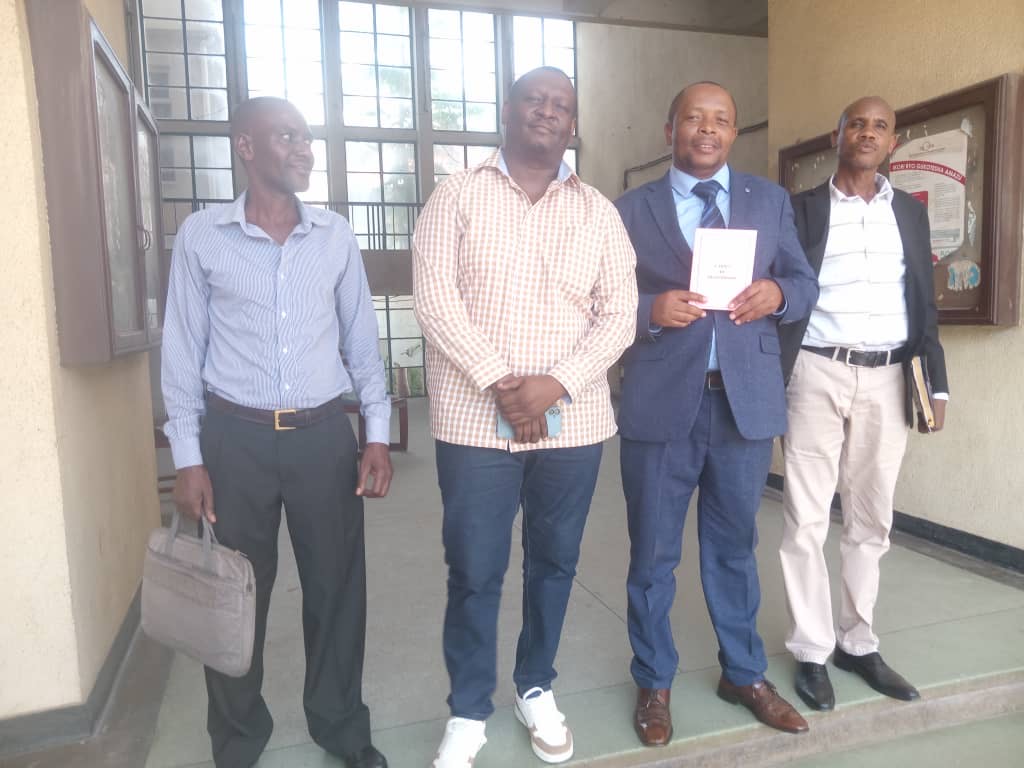
Photo: Four opposition leaders to form the coalition for the 2025 elections
Meanwhile, Rwasa continues to strike a defiant posture, as expressed in a January 20 audio text in French responding to a query from Amjambo Africa: “If the people who manage Burundi today are aware that Burundi will outlive them, they might as well accept the competition, let the parties organize themselves freely.
“It is the dictatorial drift that is being consolidated. And with that we can expect anything. We have a whole procession of misfortunes befalling our militants – who are sometimes kidnapped, who are arrested without cause, who languish in prison even though they have been cleared by the courts. We suffer injustices and humiliations from the authorities.”
According to Tatien Sibomana, a leading political player in Burundian politics, the ruling party’s attempts to undermine competition represents “a headlong rush that compromises the entire electoral process.”
He added that the Constitutional Court’s ruling confirming what CENI had already decided amounted to rubber stamping, and revealed an unholy political alliance.
In a press conference held at his offices in the commercial city of Bujumbura on January 3, Prosper Ntahorwamiye, President of CENI, said, “Any party that does not manage to meet the conditions – I’m sorry but these are the rules of the game – cannot participate in this competition. They will participate in the elections as voters but not as competitors.”
Ntahorwamiye pointed to Rwasa’s participation in the CNL party as justification for his exclusion as a candidate:
“The Honourable Agathon Rwasa has lost the leadership of the CNL party, but he has not lost the status of member of the party, and as proof, he still sits in the National Assembly on behalf of this party. The same is true of the people of this party who find themselves in almost the same conditions. The CNL party is not a member of this coalition, the law on political parties does not allow anyone to be a member of two political parties at the same time.”
Charles Nditije, President of UPRONA – the Union for National Progress, a Burundian opposition party in exile – adds that the Independent National Electoral Commission and its branches, the provincial and communal commissions, were set up unilaterally. He decries the dictatorial direction of the country.
“All the political parties, including those close to the CNDD-FDD, have cried foul … 90 percent of [CENI] members are close to the CNDD-FDD,” he said in an interview with Amjambo Africa. Nditije lives in South Portland, and has been living in exile since 2016.
A nation at the tipping point
According to Nditije, there’s nothing to stop the ruling CNDD-FDD party from celebrating what he predicted would be “a crushing victory.”
“There won’t be any foreign observers. Even the Catholic Church, which could have denounced the situation, hasn’t been included, and journalists are forbidden to publish or say anything about the irregularities that are taking place, otherwise they risk imprisonment or death.
“In short, these are elections fraught with danger, where everything is tightly controlled and locked down. So, these elections will be worse than those of 2020,” Nditije predicted.
Reverien Ndikuriyo, CNDD-FDD Secretary General, blamed the opposition parties for being banned from the elections. At a press conference last week he said:
“The problem is that they [the opposition parties] get together at the last minute! Let them do it as they like, but we’ve been ready for a long time. We’re already celebrating victory, because our party is well organized to win all the votes, as the CNDD-FDD is well established among many Burundians.”
According to Burundian political analyst and university lecturer Prof. Julien Nimubona, “It’s clear that the government, which is facing an unprecedented socio-economic crisis, has done everything in its power to keep Agathon Rwasa and other leading opposition figures out of the electoral race, as he is seen by some of the population as a credible alternative.”
The CENI timetable shows that the legislative and communal council elections will be held on June 5. They will be followed by senatorial elections on July 23. Elections for hill and ward councilors are scheduled for August 25. CENI has identified a total of 4,246 registration centers across the country, with over 15,600 registration offices. Voter registration, in which citizens were forced to participate, ended last October.
According to many political players, the outcome of the 2025 elections will play a decisive role in the presidential elections scheduled for 2027.
Echoing many Burundian commentators and activists, Nditije described this year’s elections as “elections full of danger” that will escalate political violence, and potentially lead to civil war in the coming years.








