By Violet Ikong
Only first names used to protect the identities of refugees
On March 3, police in Kenya fired tear gas and shot at thousands of refugees protesting food cuts and water scarcity in Kakuma camp, on what is the second day of demonstrations. Several Kenya refugees were injured and are now receiving treatment at the Kakuma Mission Hospital located in the camp.
The demonstrations began on Feb. 28 with refugees marching from camp shelters to the premises of the World Food Programme (WFP) and the United Nations Office of the High Commissioner on Refugees (UNHCR) to demand better living conditions.
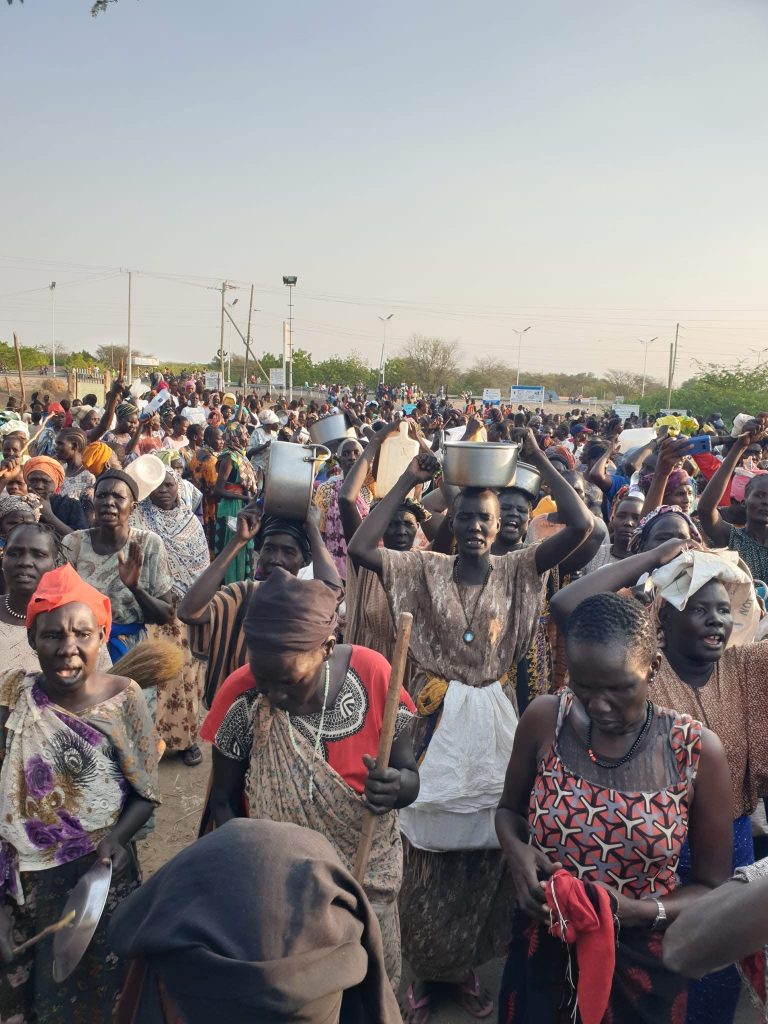
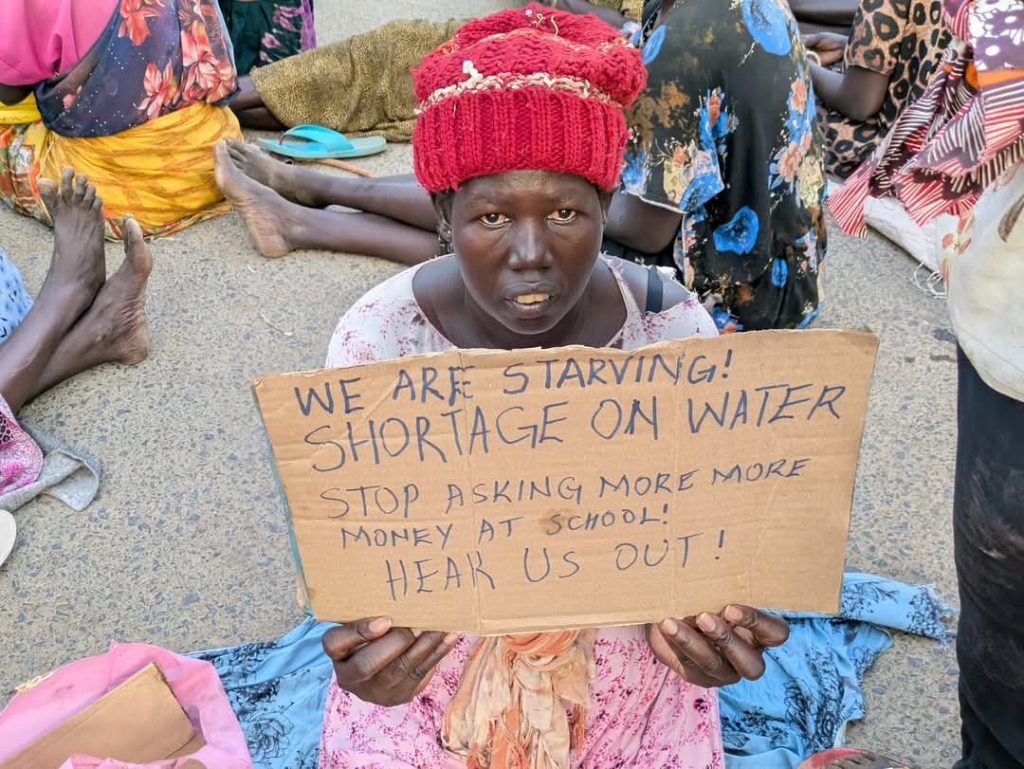
Refugee women marched with empty pots and plates to demonstrate a lack of food and water, while young people held placards with messages like “We are starving,” and “Water is life.” Hungry children, unaware of the reasons behind the protest, also accompanied older adults to demonstrate.
Digging for water
With global humanitarian assistance on the line due to funding freezes by the U.S. government, WFP in Kenya announced new cuts of 5 percent from the food rations a refugee receives each month. This means that people will now receive just 40 percent of the Minimum Expenditure Basket (MEB) per individual – down from the current level of 45 percent of the rations a person receives. Calculations are based on a need for 2,100 calories per day.
But already people are going hungry, according to Andrew, a South Sudanese refugee who spoke with Amjambo Africa.
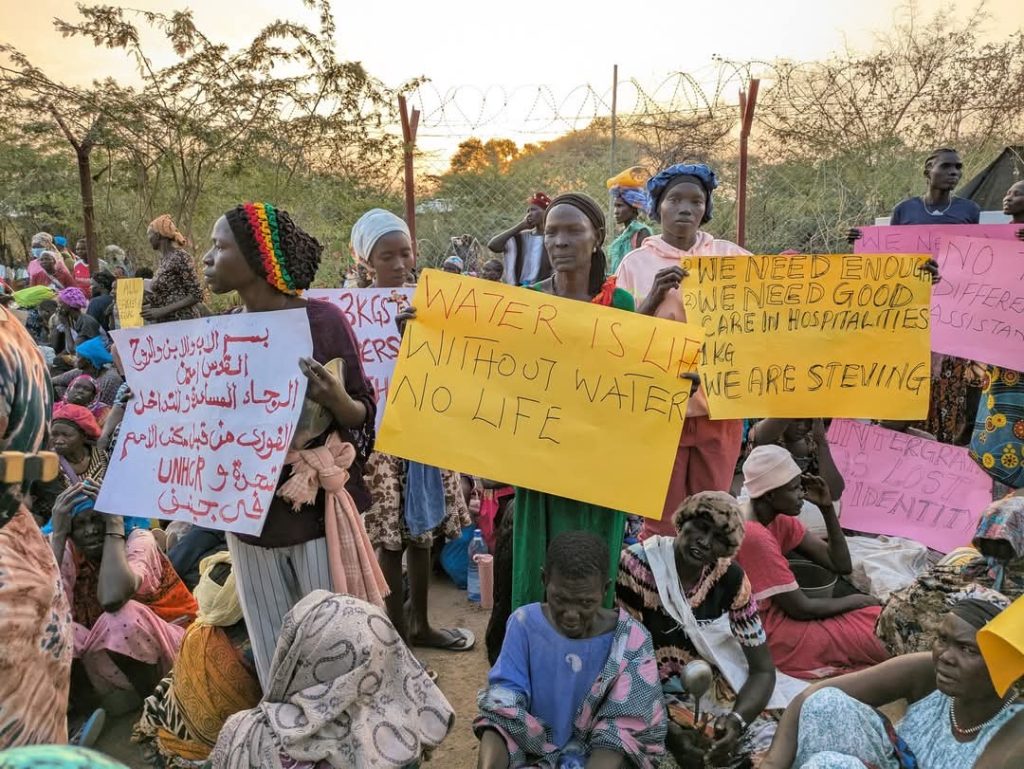
“The food given to us is not enough to last a family for a month. We usually receive five kilograms of cereal and two liters of cooking oil but now it’s just three kilograms of cereals – with no oil,” Andrew said. “What will we use to cook those cereals? It’s hard for me to explain things now. It’s tough.”
ADVERTISEMENT

Documents obtained by Amjambo Africa show that in addition to cereals and oil, refugees previously received pulses and food vouchers called “Bamba Chakula” worth Ksh 650 ($5.03 USD). According to WFP, Bamba Chakula for March and April will be increased to Ksh 820 ($6.35) to enable refugees to purchase cooking oil and pulses. However, many refugees argue this amount is insufficient to cover the cost of these items.
In addition to food cuts, water taps in the camp have been non-functional for over a week, forcing refugees to walk long distances to get water from unclean sources.
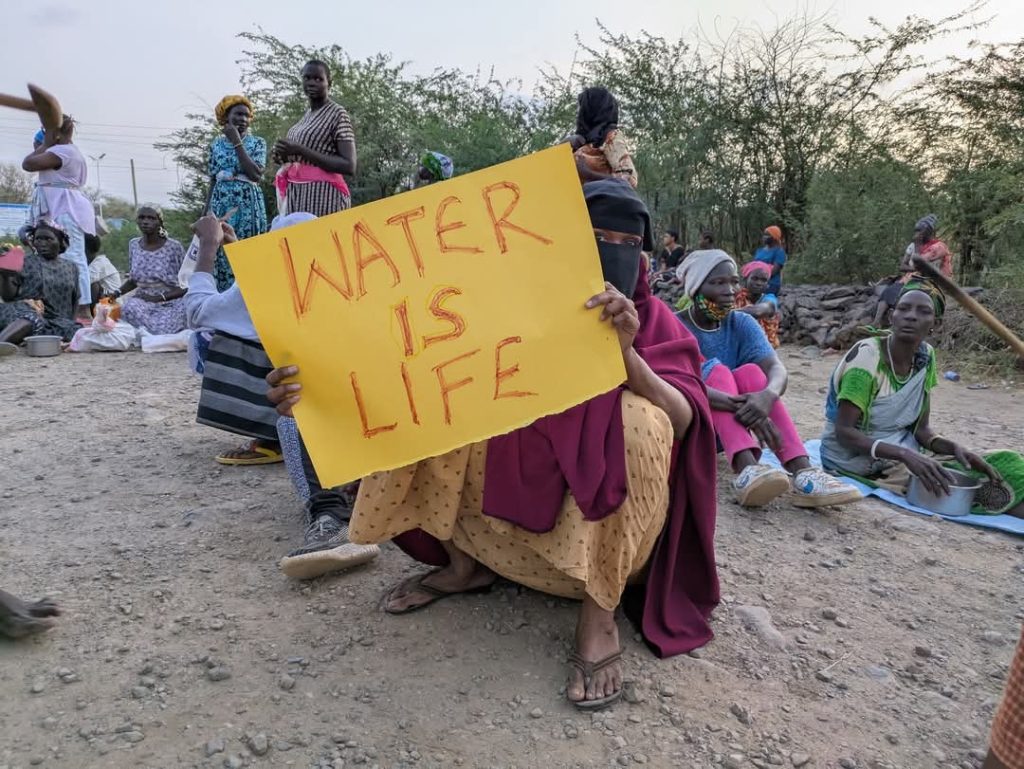
“People are digging for water from the ground because there’s no water coming out from the taps in the camp. They are forced to go to dry riverbeds to dig and search for water which isn’t even safe for drinking or consumption,” said Peter*, a Kenya refugee and camp resident.
Many others have resorted to buying water from host community members in Turkana County, and from refugees in the Kalobeyei integrated settlement. Amjambo Africa spoke with multiple sources who confirmed that refugees pay between Ksh 150 ($1.16) and Ksh 200 ($1.55) to community members for 20 liters of water.
“I have seven family members and we don’t know how to manage with 20 liters of water to cook, drink, wash, and bathe. I don’t know whether to return home to my country or die here in the camp,” said Budhendwa, a Congolese refugee.
The situation in Kakuma has also forced children to skip school, with many joining the search for food and water, while others have been withdrawn by parents who can no longer afford fees.
“We don’t want integration”
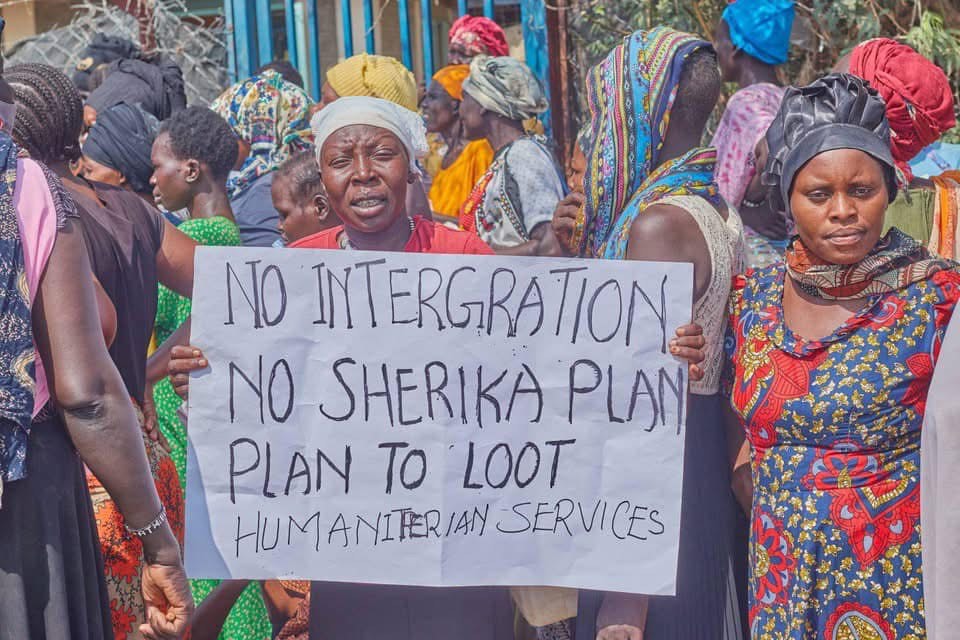
Other issues of concern raised by refugees during the protests include poor health services and plans by the Kenyan government and UNHCR to integrate Kenya refugees with their host community, Turkana County, under the “Shirika Plan.”
This initiative seeks to transform Kakuma and Dadaab refugee camps into integrated settlements, where refugees are allowed to live and carry out economic activities, like citizens, and become self-reliant.
Refugees are against the Shirika Plan, which they suspect is a ploy by the government to extort taxes from Kenya refugees and strip them of their national identity.
Andrew said, “The Shirika plan means I will be entitled to a Kenyan ID card, but won’t be allowed to vote. We see that as they’re trying to eat from us with taxes. We hope to return home someday, and while we appreciate the protection of Kenya, we don’t want to be integrated.”
“Aid freeze affecting refugees”
The administration of U.S. President Donald Trump in January announced the suspension of foreign aid for 90 days. That decision has affected global humanitarian activities including those led by United Nations agencies.
Over the years, the U.S. has been the highest donor country to UNHCR and WFP, contributing $1.902 billion to UNHCR in 2023 and $2.49 billion last year. WFP said it received over $3 billion from the U.S. government as of November 2024 for global humanitarian interventions.
It remains uncertain whether foreign aid will be restored, but refugees say the freeze is worsening conditions in camps.
“The aid freeze is affecting us [Kenya refugees]. It has come with negative consequences because refugees depend on the food from the World Food Programme and other essential needs services like healthcare,” Andrew said.
No official statement has been released by UNHCR and WFP regarding the protests, but the Kenyan government has announced daily curfew and movement restrictions in Kakuma and Kalobeyei, starting today from 6 p.m. to 7 a.m., until further notice.
Kakuma refugee camp is home to over 200,000 Kenya refugees mostly from South Sudan, Somalia, Congo, Ethiopia, and Burundi.