
By Ignatius Ssuuna
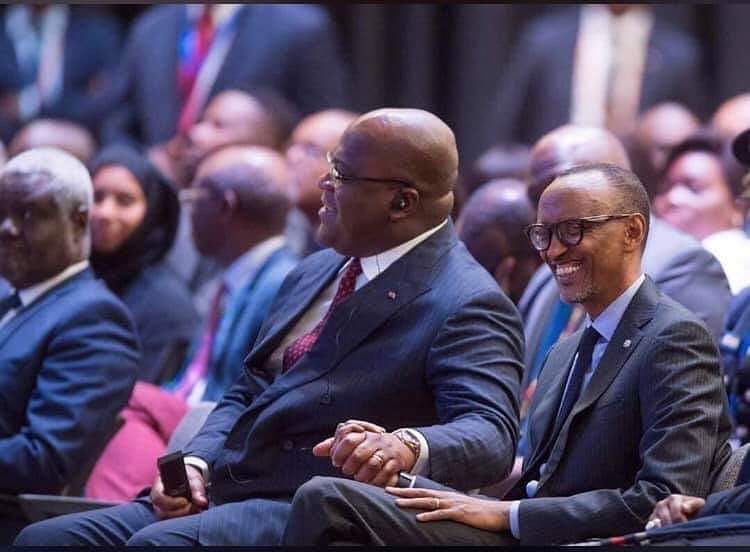
KIGALI, Rwanda — Félix Tshisekedi and Paul Kagame are expected to travel to Washington, D.C., on Dec. 4 to meet with President Donald Trump’s negotiating team and sign a peace agreement.
Rwanda’s President Paul Kagame said Thursday that the prospect of meeting his counterpart from the Democratic Republic of the Congo, Félix Tshisekedi, in Washington to “discuss, agree or sign anything” represents a positive step in efforts to resolve the ongoing conflict between the two countries.
On June 27, 2025, Rwanda and the DRC did sign a major peace agreement brokered by the United States.
According to Kigali, Congolese authorities often renege on agreed-upon commitments, shifting positions and undermining progress. The success of any agreement, Kagame warned, will depend on the commitment of the parties directly involved in the conflict.
The Congolese government has insisted that Rwanda must withdraw its troops from Congolese territory before any final agreement is signed in Washington. United Nations experts estimate that up to 6,000 Rwandan forces are present in eastern Congo.
Kigali, however, argues that the neutralization of the FDLR (Forces démocratiques de libération du Rwanda) – whose members include alleged perpetrators of the 1994 genocide against the Tutsi – must come first.
ADVERTISEMENT

Speaking to reporters in Kigali ahead of the Washington trip, Kagame described the peace process as “limping.”
Landmark agreement, ongoing tensions
The deal brokered by the U.S. on June 27, 2025, calls for a cessation of hostilities, respect for territorial integrity, withdrawal of Rwandan troops from eastern DRC, disarmament of armed groups, and a framework for economic cooperation, including mineral supply chains and infrastructure projects.
Separately, earlier this month, Congo and the M23, an armed, Tutsi-led rebel group, signed a framework agreement in Doha after Qatari mediation, marking the latest step in years of unsuccessful efforts to end the decades-long conflict in eastern Congo.
Earlier this year, M23 seized Goma and Bukavu, expanding control over several mineral-rich areas and significantly escalating the conflict. Despite Rwanda’s denials, a 2024 U.N. report estimated that up to 4,000 Rwandan troops were active inside the DRC. In a notable policy shift, the U.S. State Department officially designated M23 as a Rwanda-backed force in 2024 and urged Rwanda to withdraw all its forces and missile systems from Congolese territory.
Doha agreement, M23’s position
The Doha agreement is not a final peace deal but outlines protocols and a timeline for future discussions, said Benjamin Mbonimpa, head of the M23 delegation, in a video posted on X (formerly Twitter).
“There will be neither any change in the situation on the ground, nor any activity whatsoever, until the measures are debated, negotiated, and discussed one by one and a final peace agreement is reached,” Mbonimpa said.
According to Kinshasa, the framework agreement signed this month includes eight measures forming the basis for a peace deal. Two of those – on the release of prisoners and the creation of a ceasefire oversight body – were already signed in September and October.
The remaining six measures, which include the restoration of state authority in M23-controlled zones, humanitarian access, and refugee resettlement, will be negotiated in the coming two weeks, the Congolese government said.
Qatar has hosted multiple rounds of talks since April between the DRC and M23, focused on confidence-building measures and preconditions for a peace deal. Despite this, both sides continue to accuse each other of violating commitments, and fighting has persisted.
In July, the DRC and M23 signed a declaration of principles in Qatar, committing to work toward a comprehensive peace agreement.
Kinshasa continues to accuse Rwanda of backing M23 and has called on European countries to sanction Rwanda for what it describes as interference in its internal affairs.
Prospects for success in Trump meeting
Reflecting on previous attempts to achieve peace between the countries, Kagame said, “They agree on one thing in the United States or in Doha [Qatar]. The next day or a week later someone says, no, no, we are not going to do this, and until something else is done – even when what they are referring to has also been under discussion.”
He continued, “You know some of these processes will not work – not just because we are meeting in Washington or because the United States is involved – but until those people concerned directly are committed to achieving end results.”
Additional regional involvement
Kenya’s State House announced that Ruto has been invited by the U.S. to attend the signing ceremony of the DRC–Rwanda peace agreement alongside Kagame and Tshisekedi. Ruto will act as a high-level African guarantor of the next phase of the peace deal, giving him a recognized role in the process. Ruto left Nairobi for Washington on December 2, as well as his counterpart of Burundi, Évariste Ndayishimiye, whose country deployed more than 10,000 soldiers to help the Congolese army and its militia allies fight against the M23. During a press conference in the economic capital Bujumbura, Ndayishimiye declared on Monday that “I will go to look after Burundi’s interests.”








