
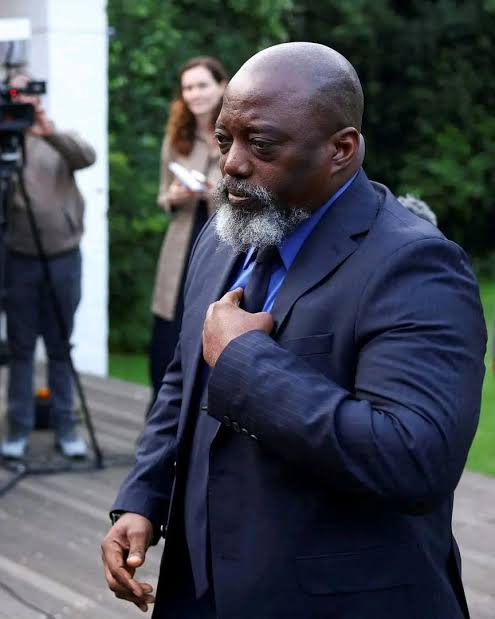
By Éloge Willy Kaneza
In a dramatic turn of events, former Democratic Republic of the Congo (DRC) President Joseph Kabila has resurfaced in Nairobi to announce the formation of a new political movement, Save the DRC, even as he faces a death sentence handed down in absentia by the High Military Court of Kinshasa. This unprecedented convergence of legal condemnation and political maneuvering underscores the high-stakes tension in Congolese politics.
Opposition leaders unite at Nairobi summit
On October 14, 2025, Kabila convened a meeting at a hotel in Nairobi’s affluent Karen neighborhood, bringing together several prominent Congolese opposition figures, including former Prime Minister Augustin Matata Ponyo. Leaders from the Common Front for the Congo (FCC), Kabila’s former political platform, were also present.
Ironically, it is in the same city that the Alliance Fleuve Congo (AFC) was formed in December 2023 – and at the same hotel where, in November 2018, the coalition that brought President Félix Tshisekedi to power was established. This historical symmetry underscores Nairobi’s enduring symbolic role in shaping Congolese politics. However, “Save the DRC,” Joseph Kabila’s new political platform, was launched in the same city but not at the same hotel, a distinction that carries its own political message.
By once again choosing Nairobi, Kabila seemed to want to evoke the city’s legacy as a place of major political turning points for DRC, while signaling that his new movement represents both continuity and change – a new chapter written in a familiar setting.
Despite the shadow of a death sentence, Kabila and his allies signed a declaration establishing Save the DRC, with Kabila as its president. The platform aims to unite citizens, political parties, and civil society organizations to resist what they described as the monopolization of power by Tshisekedi, while advocating for national reconciliation and restoration of peace and stability. The formation of this platform in the context of his death sentence sends a bold signal of defiance and of a determination to maintain political influence.
Kabila death sentence: vendetta or justice?
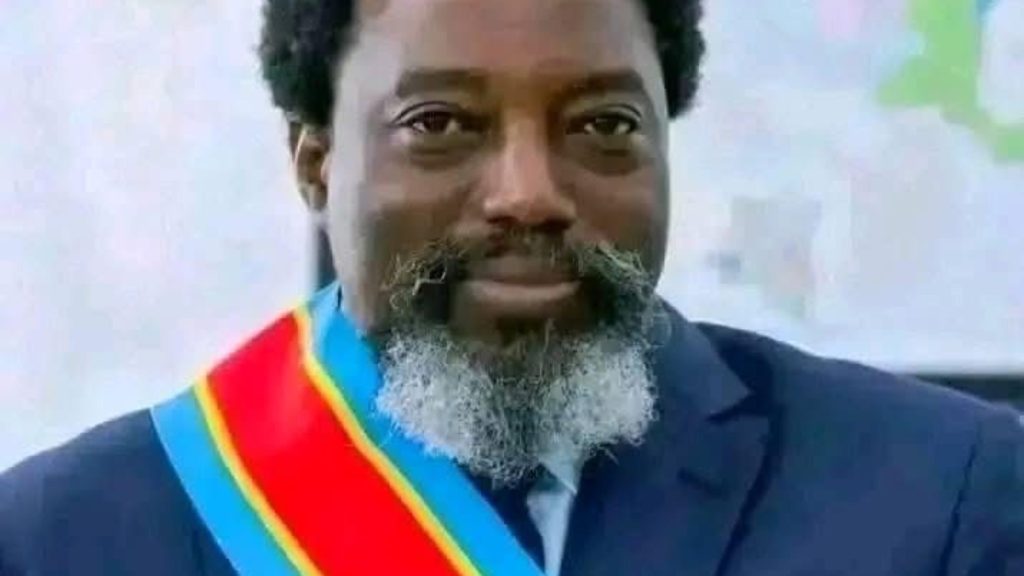
The High Military Court of Kinshasa, on September 30, 2025, sentenced Kabila to death and ordered him to pay $33 billion in damages – $29 billion to the state and $2 billion each to victims in North and South Kivu. He was found guilty of treason, participation in an insurrection and war crimes, and accused of leading the AFC/M23 coalition, an armed network in eastern Congo. According to the court, Kabila allegedly supervised training centers, chaired rebel meetings, and orchestrated hostilities against the DRC – all while in exile for over two years.
The M23 rebellion, largely Tutsi-led, has controlled significant territories in the Kivus since late 2021. The group, aligned with the AFC, is suspected of receiving support from Rwanda, allegations denied by Kigali. The court also implicated former CENI (Independent National Electoral Commission) head Corneille Nangaa in efforts to destabilize the government, including plans against Tshisekedi.
ADVERTISEMENT

Government response, regional tensions
The Congolese government, through spokesperson Patrick Muyaya, dismissed the Nairobi summit as a “non-event,” labeling participants as “fugitives and convicts” and calling Nairobi a “capital of conspiracy against the DRC.” The government’s stance appears to reflect concerns over Kabila’s continued political influence and the perceived threat of the M23/AFC network.
The situation is further complicated by ongoing instability in the east, where the M23 controls key provincial capitals. Despite Rwanda’s denials, a 2024 United Nations report estimated up to 4,000 Rwandan troops are operating in the DRC. In 2024, the U.S. State Department officially designated M23 as a Rwanda-backed force, calling for withdrawal of foreign forces and missile systems from Congolese territory.
Human Rights Watch condemns trial
In early October 2025, Human Rights Watch (HRW) criticized the military court proceedings in “Vendetta in the Democratic Republic of Congo.” HRW described the trial as deeply flawed and politically motivated, noting that Kabila was tried in absentia, denied legal representation, and judged by a military tribunal, in violation of international standards for civilian trials.
“Show trials like this one don’t strengthen democracy – they destroy it,” said Lewis Mudge, Central Africa Director at HRW. “When courts become instruments of politics, they lose their legitimacy, and the people lose faith in justice.”
HRW emphasized that the verdict follows a period of selective arrests and forced exile of Kabila’s allies, raising concerns of political retaliation.
Catholic bishops speak out
The Catholic Church, through the Conférence Épiscopale Nationale du Congo (CENCO), also condemned the ruling. On October 6, 2025, the bishops decried the trial as “expedited” and warned that execution of the death penalty violates the right to life.
“Dialogue is the best path to address the root causes of this crisis and to restore unity, peace, social harmony, and territorial integrity in the DRC,” said Archbishop Fulgence Muteba, President of CENCO.
The church highlighted the necessity of inclusive political dialogue over military solutions to address long-standing structural conflicts.
Kabila voices earlier concerns
Earlier in 2025, Kabila had delivered a May 24 declaration denouncing what he called an “emerging dictatorship.” He criticized the concentration of executive power, fraud in the elections of December 2023, rising tribalism, repression of opposition, and Parliament’s weakening.
He also highlighted instability in the east, massacres in Goma, inadequate preparation of the FARDC (the Congolese army) and abuses against Swahili-speaking communities. In response, he proposed a 12-point citizen pact to restore democracy, ease tensions, revive dialogue with neighbors, and restructure state institutions.
Despite the lifting of his parliamentary immunity, he returned to Goma, affirming readiness to defend the DRC’s integrity “up to the ultimate sacrifice.”
Looking ahead: a platform amid peril
The formation of Save the DRC amid Kabila’s death sentence demonstrates his determination to remain politically relevant. The move sends a defiant message to Tshisekedi’s administration and international observers that Kabila’s influence endures despite legal and political pressure.
Analysts warn that the combination of judicial condemnation, ongoing M23 insurgency, and Nairobi-based political organizing could further polarize the country and challenge regional stability. International engagement will be crucial to mediate between competing forces and ensure that political dialogue prevails over vengeance.
As HRW concluded, “If the Congolese government continues to weaponize the justice system, it risks undoing the fragile democratic gains of the past decade.”
For the people of the DRC, Kabila’s trial and the launch of Save the DRC serve as a stark reminder that justice, politics, and survival are inseparable in the nation’s current crisis. The path to reconciliation, accountability, and peace remains fraught – and Nairobi has once again become a key stage for Congolese political history.








