
By Sheila Ponnie
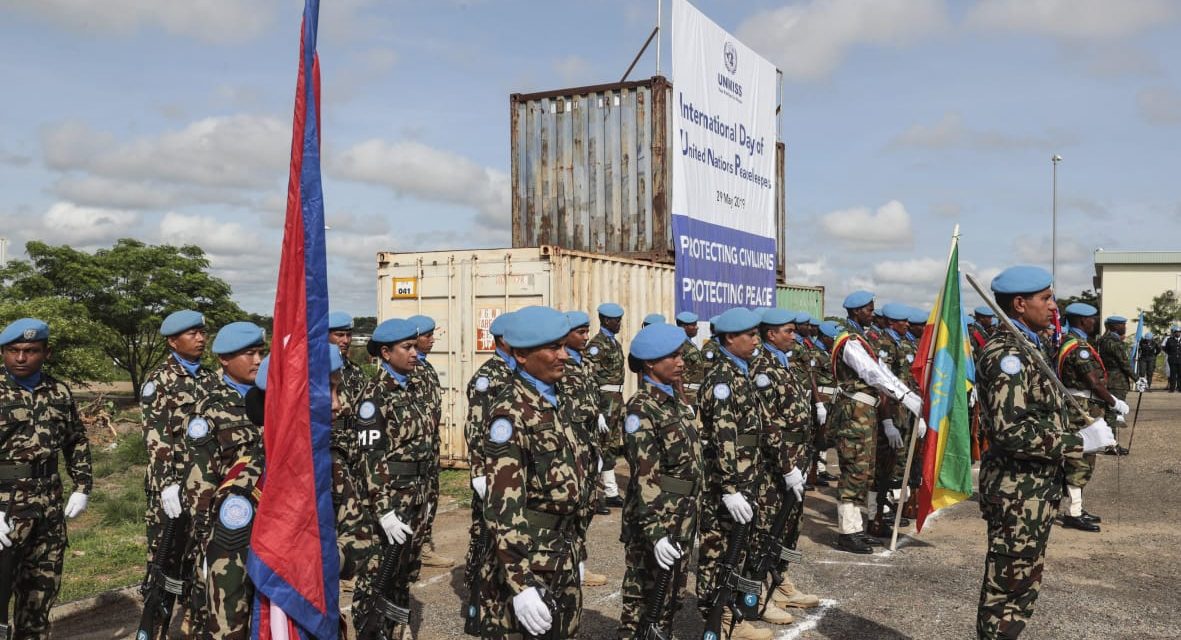
The United Nations Mission in South Sudan (UNMISS) has recently closed over a dozen bases in the young east African nation. The move follows a UN directive to reduce the UNMISS budget by 15 percent by June 30, 2026. The base closures come on the heels of U.S. budget cuts to the UN. Austerity measures by the UNMISS also include cuts in operational expenditures and staffing levels.
Key mandates for UNMISS include the protection of civilians under imminent threat of physical violence, the facilitation of safe delivery of humanitarian aid, the investigation of human rights violations, including those that may amount to war crimes or crimes against humanity, and the building of a durable peace in the conflict-ridden country.
Meanwhile, South Sudan’s general elections are slated for December 2026. If these take place, they will be the young country’s first since independence from Sudan in July, 20211. Five previously scheduled elections were cancelled.
Election concerns
The Mission is tasked with supporting the implementation of the 2018 Revitalized Agreement on the Resolution of the Conflict in the Republic of South Sudan. Although many provisions of the Agreement have not been implemented, including an updated census and the development by South Sudan of a professional security force, Juba says she is not concerned. However, some analysts worry that a reduction in the UNMISS presence could result in weakened security and unfair elections.
Semaya Kumba, South Sudan’s Minister for Foreign Affairs, said that the government will rely on its own internal security apparatus in the upcoming general elections to ensure safety.
ADVERTISEMENT

“We don’t think that the departure [of UNMISS staff] will affect our arrangements for conducting the elections,” Kumba said.
“We are preparing our security forces,” Kumba said at a meeting with the diplomatic community in Juba. “We are working with the regional partners to make sure that the gap that we are going to have during the election time can be filled with our security. We are preparing the security organs for that.”
The government has not conducted a population census since independence. Alex Mambo, a voter who recently participated in a four-month civic education training organized by the United Nations Integrated Electoral Assessment Team, worries that illegitimate practices resulting from incorrect voter rolls might skew the elections. He cited his own experience as indicative of a big problem.
“I first voted when I was 13-years old – which was against my rights as a child – but now I know my civic rights,” Mambo said.
Political tension inside South Sudan
President Salva Kiir’s government, which has been in power since independence in 2011, has been embroiled in a protracted civil war since 2013, which simmered down briefly, then erupted again in 2016. More than 400, 000 people died during the wars, and millions were displaced. Finally in 2020, a coalition government was formed.
After some years of a fragile peace, First Vice President Dr. Riek Machar, leader of the main opposition party to Kiir’s government, was arrested by Kiir in March 2025. Machar is now under house arrest, accused of funding the White Army, a youth-led Nuer militia group. He is charged with treason.
Abraham Kuol Nyuon, an associate professor of political science at the University of Juba, says that going ahead with elections despite an incomplete implementation of the Agreement, and in a time of political tension, is a move intended to show strength
“Proceeding … could help legitimise the current political order,” Nyuon told Radio Tamazuj.
Political tension between Washington and Juba
Meanwhile, diplomatic tension is growing between Washington and Juba. The U.S. has accused South Sudan of grounding UN peacekeeping aircraft and obstructing UN operations. In a quick rejoinder, Juba has accused the UNMISS of smuggling natural resources.
“Through our intelligence we found that these aircraft were …engaged in smuggling the natural resources – namely sandalwood – between South Sudan and Sudan, and we have initial evidence for that,” Kumba said. Juba has created an independent committee to investigate the allegations.
Washington has also accused the South Sudanese government of imposing exorbitant fees on shipments of humanitarian aid, and has warned that the U.S. “will not be taken advantage of…This behaviour must stop immediately.”
Washington said it is seriously considering a comprehensive review of her foreign assistance in South Sudan with the likelihood of making significant reductions, if Juba does not “halt these actions.”
South Sudan is yet to respond to the allegations.







