
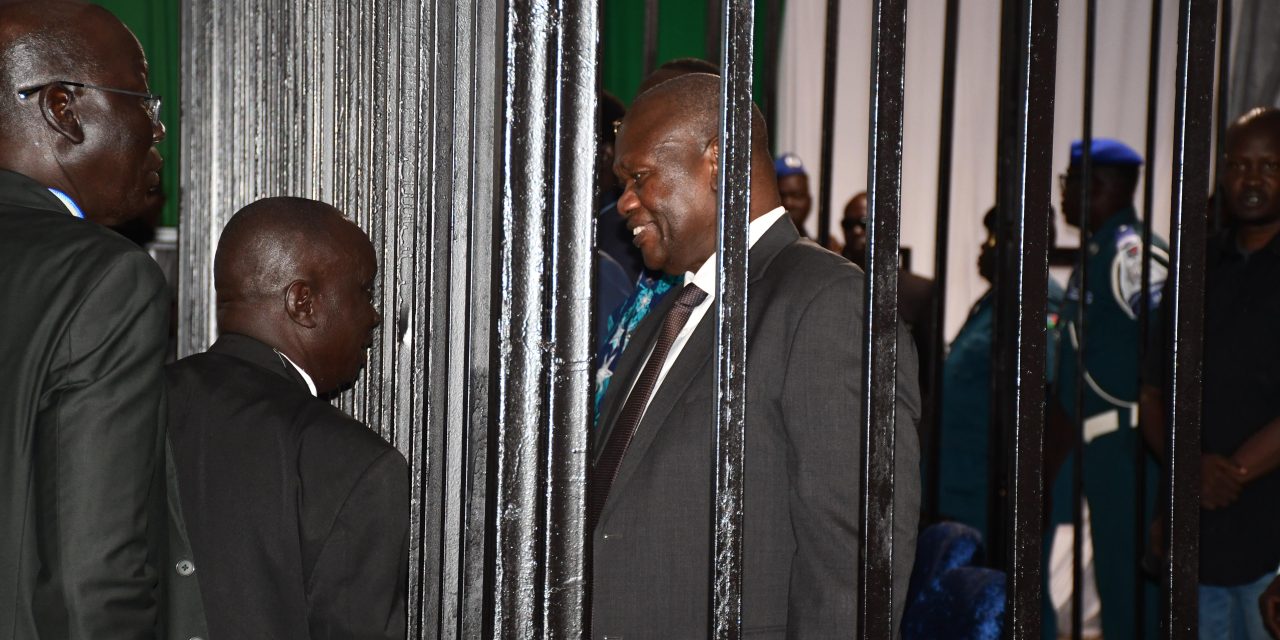
Revered by his supporters, and loathed by his opponents, Riek Machar Teny Dhurgon, once first vice president of South Sudan, is in Juba, facing charges of treason, crimes against humanity, mass murder, terrorism, and destruction of property. He was placed under house arrest in March 2025.
The charges against Machar stem from a conflict in Ulang and Nasir in February 2025 when government forces were attacked by the White Army, a militia group. A top military commander and a United Nations peacekeeping pilot were among those killed during the attack. Machar maintains he has no link with the White Army – an assertion refuted by the government of Salva Kiir Mayardit.
Machar-Kiir power struggle
Machar rose to prominence during Sudan’s civil war as a top commander of the Sudan People’s Liberation Movement Army (SPLM-A) under the late Dr. John Garang. He later split from SPLM-A to form his own movement, the Sudan People’s Liberation Movement in Opposition (SPLM-IO). What followed were years of power struggle and mistrust between Machar and his political foes, led by President Salva Kiir. Even from his current place behind bars, Machar remains a pivotal voice in South Sudan’s fragile peace process.
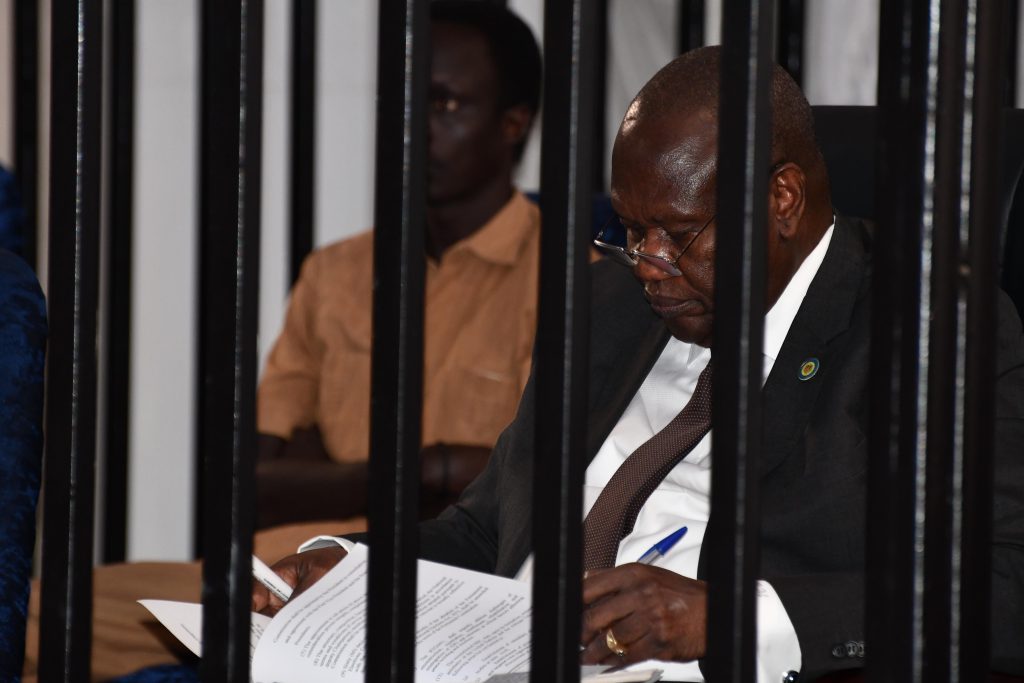
For some, Machar embodies both the scars of war and hope for a peaceful and inclusive South Sudan. He was once a rebel leader and twice held the second most powerful seat in South Sudan – the latest as first vice president. For six years, Machar enjoyed close state protection. But now, the same soldiers who once guarded his convoy with semi-automatic weapons and tankers keep a closer watch on him as his grim face peers from a metal grill.
While the case against Machar makes its way through the courts, government forces have targeted opposition forces loyal to Machar. Despite frequent accusations of civilian killings by government troops, this is the first time the South Sudanese government has charged someone with crimes against humanity. Many observers say Machar’s tribulations are politically motivated.
ADVERTISEMENT

Political leadership
Kiir has led the presidency since South Sudan gained independence in 2011, assuming power after John Garang’s death in a helicopter crash. Kiir will turn 75 next September, and as he ages, those close to him are already planning a succession strategy. Bol Mel, a Kenya-trained economist, is seen by many as a potential successor.
With no prior experience, Mel was appointed vice president in charge of the economic cluster, then deputy party leader in the ruling SPLM. Then in September 2025, he was promoted to full general in the army, despite lacking military experience. Observers suggest Bol Mel’s sudden rise is a calculated move by the ruling party to groom him as Kiir’s successor. Others in line for leadership, such as James Wani Igga, seem to have been replaced by Bol Mel.
At 72, Machar’s political and personal future looks bleak. While South Sudanese law exempts those above 70 from capital punishment, a guilty verdict could mean life imprisonment and disqualification from political office.
“I don’t know which jail they will take him to if he’s found guilty,” said James X., a South Sudanese political science student at Strathmore University in Kenya, who asked for anonymity to protect himself.
The last major conflict in South Sudan occurred in 2016, when gunfire erupted at the presidential palace between government forces and Machar loyalists. A U.N. report estimated that over 400,000 deaths resulted. In 2018, Machar and Kiir signed a comprehensive peace agreement, naming Machar as first vice president. Over time, he accused Kiir of violating their agreement. Following his indictment, Kiir “suspended” Machar, though constitutionally, only peace guarantors like the African Union and the Intergovernmental Authority on Development in Eastern Africa can recommend suspension.
International concerns
U.N. and international watchdogs warn that convicting Machar could jeopardize South Sudan’s stability, possibly sparking renewed conflict.
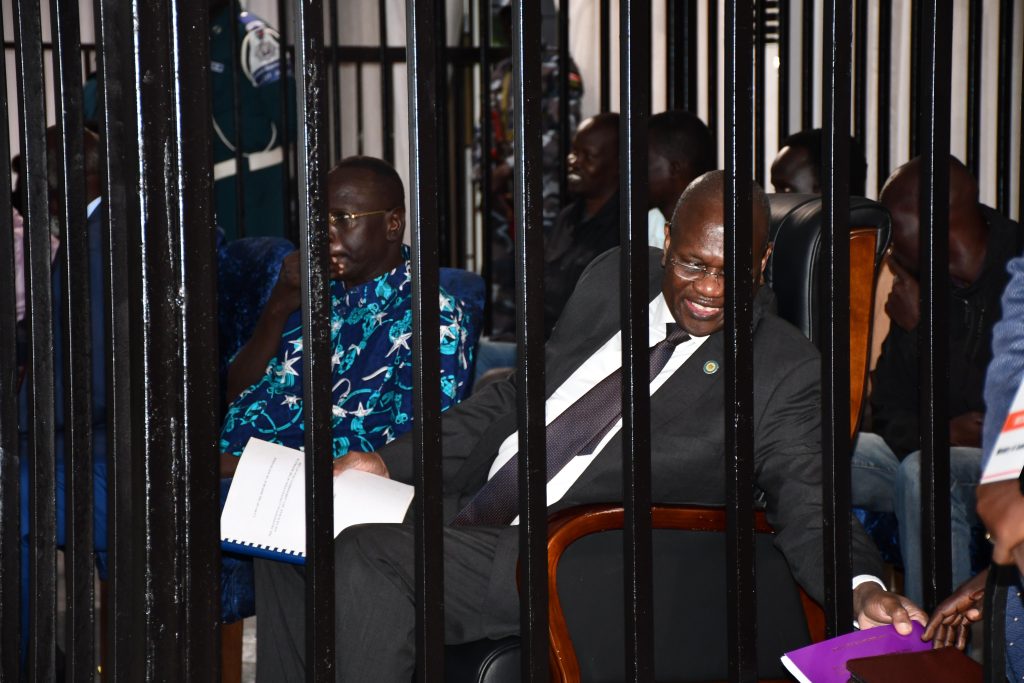
In its quarterly report, South Sudan’s peace monitoring body, the Reconstituted Joint Monitoring and Evaluation Commission (RJMEC), cited persistent political and security violations, describing 2025 as the most challenging year for peace implementation.
The U.N.’s human rights body in South Sudan called the treason charges “reckless.”
South Sudan is scheduled to hold its first-ever general election in December 2026. Kiir insists the country will not return to war. Meanwhile, key government positions have been filled with allies and family members of both Kiir and Bol Mel, sidelining potential obstacles.
In 2017, the U.S. sanctioned Bol Mel after his construction company received preferential government contracts. A September U.N. report described “systematic corruption and brazen predation” by South Sudanese elites. Part of the report notes South Sudan received over $25.2 billion (USD) in oil revenue over 13 years, much of which was plundered. The commission warns that ongoing corruption and political upheaval have severely diminished the prospect of a successful transition.
Machar is seen by many as a stumbling block in Kiir’s succession plan.







