By Eloge Kaneza
work-in-progress readings
When Dorcy Rugamba performs in public, he usually does so in French, but in a double appearance of his work-in-progress at Mechanics Hall in Portland on January 18, he performed in English for the first time. The choice of language was not only related to the fact that his presentation was aimed at an American audience. There was another reason, too, which is that Rugamba, a writer, actor and director, was about to launch an Australian tour, where he will present Lettre aux absents or Letter to the Absent in English.
ADVERTISEMENT

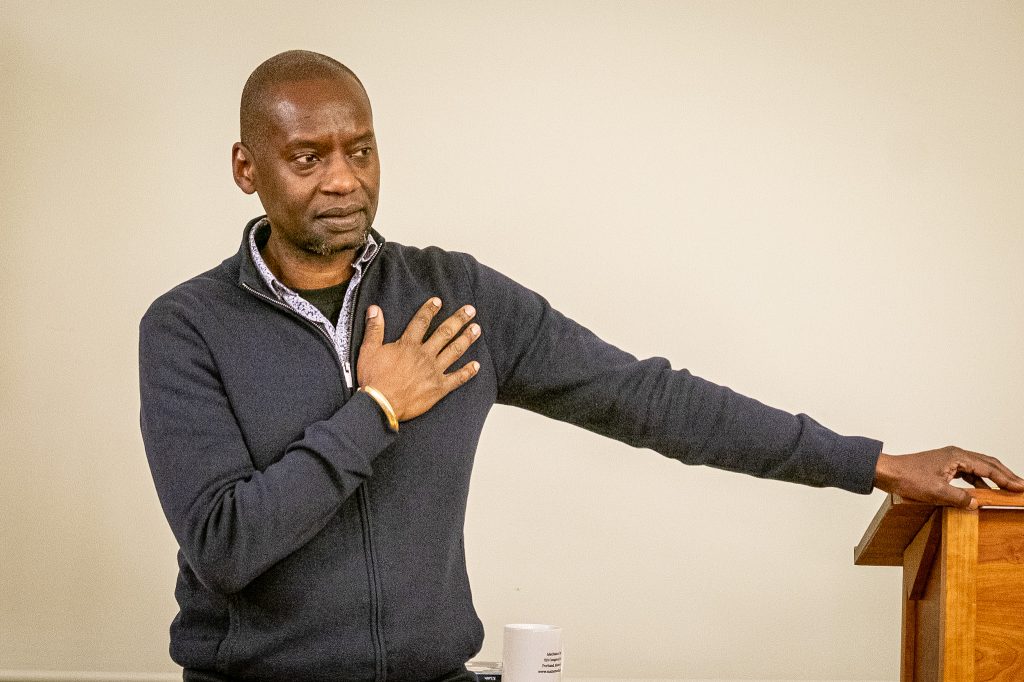
Dorcy Rugamba is the son of Cyprien Rugamba, a well-known artist in Rwanda, who was murdered along with his wife, Daphrose, on the first day of the Genocide against the Tutsis in Rwanda, on April 7, 1994. Lettre aux absents is addressed to his family members who were decimated during the genocide, as well as all others who died during that time. His parents, along with six of their 10 children, including a little girl under the age of 8, were all massacred. Dozens of other relatives were massacred as well, he said.
At the time, Rugamba was 22 years old, and not living with his parents in the Kimihurura area. He lived in the south of Rwanda – a nation nicknamed “the land of a thousand hills” – in Butare, present-day Huye, not far from the border with Burundi, the country to which he would later flee. The day before the genocide began, Dorcy had planned to take a bus back home. But his father told him to wait until the next day to go to Kigali. The country was already in a civil war and Cyprien Rugamba did not want his son to travel on a 5 p.m. bus. It would be their last conversation.
Thirty years later, Dorcy Rugamba has released Lettre aux absents, “to speak to the disappeared,” he said, in an exclusive interview with Amjambo Africa:
“I wanted to do it according to an ancestral Rwandan tradition, which is called ancestor worship – the way Rwandans and Burundians and people from the region honor the absent. Called guterekera at the time, the ancestor worship involves talking about the ancestors to the living, often including those who did not know them, and talking to the ancestors, and giving them news of those who are still alive.”
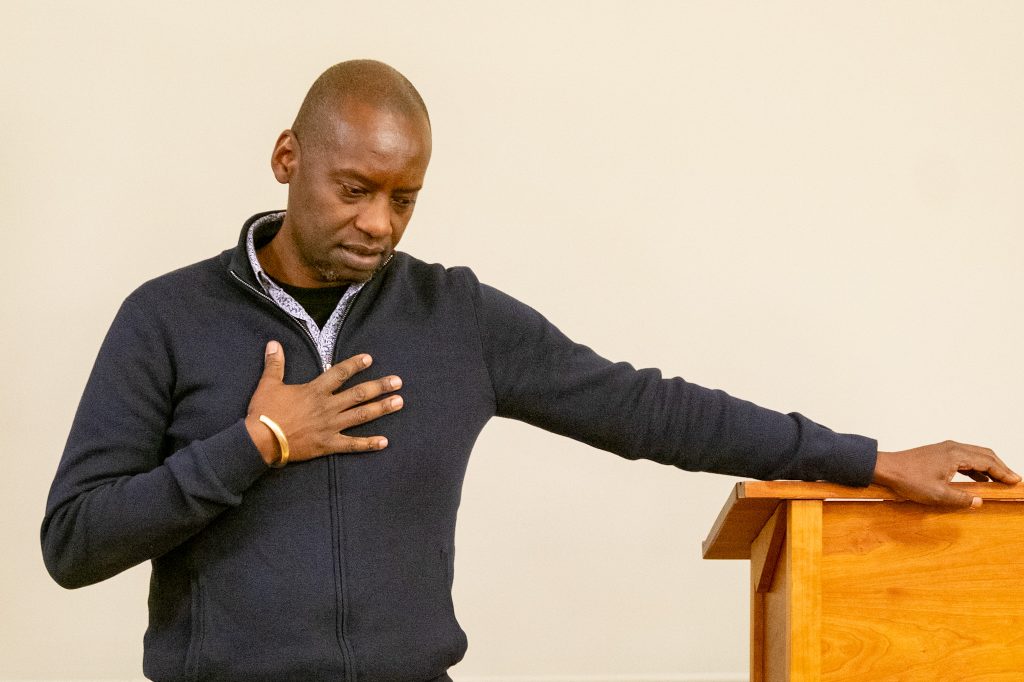
Rugamba wants people to remember the people who were massacred during the Genocide against the Tutsis in Rwanda. “Victims begin to disappear from people’s memories because people did not know them. Among them I count my children, so it’s a work of transmission,” he said.
“I address all those who are absent. [When] I talk about my mother, everyone can feel the same affection for their own mother, so I pay tribute to all mothers.”