
By P.Claver NIYONKURU
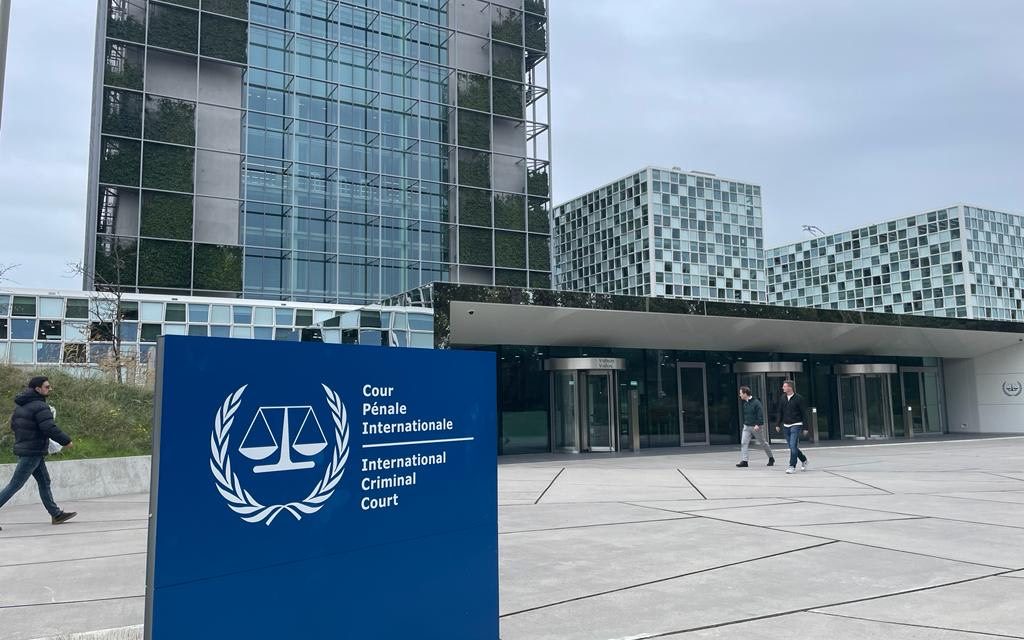
Karim Asad Ahmad Khan, chief prosecutor of the International Criminal Court (ICC), arrived in Kinshasa, the capital of the Democratic Republic of the Congo, on Monday, Feb. 24, for a visit to a country where conflict has intensified in the east in recent weeks, his office announced.
“We are extremely concerned about recent developments in Congo. We know that the situation, particularly in the east, is serious,” he told the media on his arrival.
He added that a very clear message must be sent about the importance of respecting international law: “No armed group, no armed force, no ally of an armed group or armed force has a blank check. They must respect international humanitarian law. … We’re going to see whether international humanitarian law can stand up to the demands of the people of the Democratic Republic of Congo, namely the uniform application of the law.”
The ICC chief prosecutor’s visit comes as his office has re-opened investigations into crimes committed in the east of this African giant, where the M23 rebel movement, which took up arms against DRC President Félix Tshisekedi’s government in late 2021, has since seized vast territory in the mineral-rich eastern region of the country. In a strong offensive in recent weeks, the M23 took control of Goma and Bukavu, the capital cities of the North and South Kivu provinces.
The M23, the most active rebel group in this region of the giant central African country, rose to prominence more than a decade ago when its fighters seized Goma, eastern Congo’s largest city on the border with Rwanda. The group derives its name from a March 23, 2009, peace deal – one that it accuses Congo’s government of failing to implement.
What about ongoing investigations?
The ICC’s investigations will center on four alleged crimes: genocide, war crimes, crimes against humanity, and crimes of aggression. Announcements relating to the opening of the investigations were made by Karim Khan of the ICC in October 2024.
Khan’s statement followed a referral, submitted in May 2023, alleging crimes committed in North Kivu by members of different armed groups and forces since January 1, 2022.
“Priority focus of the investigation will be given to any alleged Rome Statute crimes occurring in North Kivu since January 2022,” Khan’s statement read.
Eastern Congo has long been overrun by more than 120 armed groups seeking a share of the region’s gold and other resources. The result is one of the world’s largest humanitarian crises on record, with mass killings and more than 7 million people displaced – many beyond the reach of aid and barely surviving, according to reports from the United Nations.
In August 2024, clashes between the rebels and pro-government militias killed 16 villagers in a violation of the cease-fire announced in August to try to help millions of displaced people.
Mixed reactions to ICC investigation
ADVERTISEMENT

According to government spokesman Patrick Muyaya during a press briefing in October 2024 in Kinshasa, the Congolese government has pressured the ICC to open investigations.
“We talk a lot about the judicial front in our strategy against Rwandan aggression in the east of the Democratic Republic of Congo. So, it is within the framework of these diplomatic efforts, among others, that we will be able to have investigations, because we no longer want all those who have committed crimes in the East of the Democratic Republic of Congo, whoever they may be, to go unpunished,” Muyaya said during the press briefing.
According to LUCHA, a civil society organization active in eastern Congo whose acronym stands for Lutte pour le Changement (Fight for Change), the investigations must be extended to all armed actors, not just M23, including the security forces of the government itself.
A press release from LUCHA said, “What we want is for the investigations, obviously, to be carried out, and for them to lead to the prosecution of people who may have been identified as perpetrators of serious human rights violations. Because they do exist. Secondly, these investigations should extend to all armed actors involved in the armed violence taking place in North Kivu province, even if we know that the government is focusing very strongly on the M23.”
Amnesty International applauded the renewal of investigations by the ICC and agreed that investigations must extend beyond M23. A communiqué from the organization said, “The Congolese authorities’ agenda of confining any investigation to crimes committed by the M-23 and the Rwandan army is a political agenda to which the ICC cannot and must not submit, including crimes that we have documented, and that could also fall within the jurisdiction of the Court.”
Meanwhile, a collective of lawyers representing victims of crimes committed in Ituri and South Kivu, two more provinces in eastern Congo, have written to the ICC prosecutor to express their satisfaction that alleged crimes in these regions will be investigated and to urge expansion of the investigation to Ituri and South Kivu:
“First of all, we welcome the opening of investigations in North Kivu. We had forwarded to the Prosecutor a series of files and complaints concerning Tutsi victims of crimes against humanity, and we hope that thanks to this, investigations will progress, and the perpetrators of these crimes will be prosecuted in the short or medium term.”
The collective of lawyers, led by chief attorney Bernard Maingain, also expressed their fear that justice will be manipulated by the Congolese government. Maingain told Amjambo Africa, “What also struck us a little, and this is our concern, is that the prosecutor did not announce investigations into the case of the Hema community in Ituri, victims of the CODECO [Cooperative for the Development of the Congo] militias, and the case of the Banyamulenge community in South Kivu, victims of crimes against humanity for a very long time.
“We didn’t want to discriminate between victims. There can be no variable-geometry justice. We don’t rule out the possibility of pressure being brought to bear on judicial authorities, such as the ICC prosecutor, to steer these investigations in one direction only. And we’re not going to accept that.”
ICC prosecutor defends investigation
The chief prosecutor of the ICC insisted in his statement that the investigation will not be limited to the M23 and will be impartial: “Our investigations in North Kivu will not be limited to particular parties or members of specific groups. Rather, my Office will examine holistically, independently and impartially the responsibility of all actors allegedly committing Rome Statute crimes. My Office will also pay close heed to the principle of complementarity and seek engagement and cooperation from national authorities and all relevant actors with a view to ensuring effective justice for the victims of the crimes concerned.”
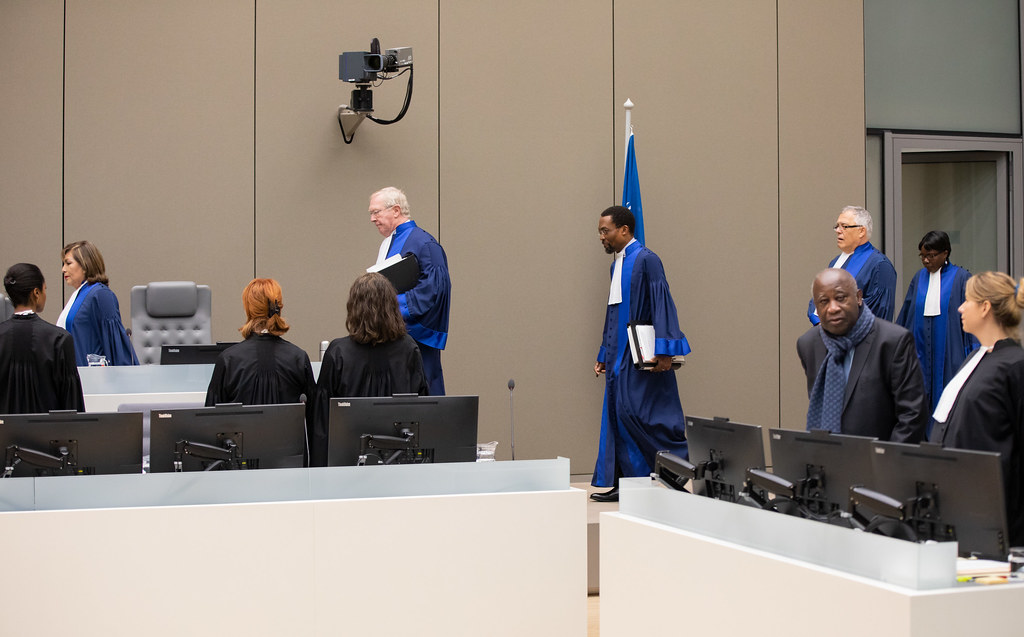
Photo: ICC Appeals Chamber hearing of 6 February 2020 in Gbagbo and Blé Goudé case, credit: ICC
Khan also wrote that clashes between the rebels and pro-government militias that killed 16 villagers in August 2024 in violation of a cease-fire would fall into the scope of the investigation.
“I have determined that the latest episodes of violence in North Kivu since 2022 are interconnected with patterns of violence and hostilities that have plagued the region since at least 1 July 2002, the start of the Court’s jurisdiction in the DRC. Therefore, any alleged Rome Statute crimes committed in North Kivu since 1 January 2022 would fall within the remit of the ongoing investigation opened.”
Bernard Maingain is skeptical that justice will be served, despite Khan’s insistence on the integrity of the investigation. He told Amjambo Africa:
“The ICC’s investigations are lengthy, secretive, and insufficiently accessible to the population and victims. Normally, it’s the state that has to deal with this. But if the political, military or judicial authorities are in any way complicit with the perpetrators of crimes or support criminal acts, there will be no justice.”
Rwanda’s support
Many U.N. reports have confirmed Rwanda’s involvement in the conflict in DR Congo. The most recent of these was presented to the U.N. Security Council on January 12, 2025.
In the January report, U.N. experts confirmed the direct involvement of the Rwanda Defence Army (RDF) in addition to the M23 in the conflict in DR Congo.
According to this report, “at least three to four thousand RDF soldiers are still deployed in the territories of Nyiragongo, Rutshuru, and Masisi, belonging to the province of North Kivu.”
U.N. experts believe that the insurgents would not have been able to conquer new territories without military support from Rwanda, which carried out selective operations, and had at its disposal high-tech weapons and sophisticated systems that were essential to the M23’s superiority – all of this in violation of the arms embargo on the insurgent group.
However, on more than one occasion, Rwandan Deputy Government Spokesperson Alain Mukularinda has denied the presence of Rwandan troops on Congolese soil. In addition, Rwanda’s Foreign Minister Olivier Ndhungirehe continues to deny his country’s responsibility and involvement in the crisis in eastern DR Congo, which he described as a “Congolese-Congolese conflict” in September 2024. The description was in relation to efforts by Angolan President João Lourenço to broker a peace deal.
ICC convictions in Congo since 2004
The ICC previously convicted three rebels of crimes in Congo’s eastern Ituri region, including the notorious Bosco Ntaganda, known as “The Terminator,” who was found guilty of crimes that were committed in 2002-2003, including murder, rape, and sexual slavery. His convictions and 30-year sentence were upheld by appeals judges in 2021.
On another occasion, five of seven Congolese officials were eventually found guilty after they were arrested on warrants issued by the ICC in 2004.
.








