By Eloge Willy Kaneza
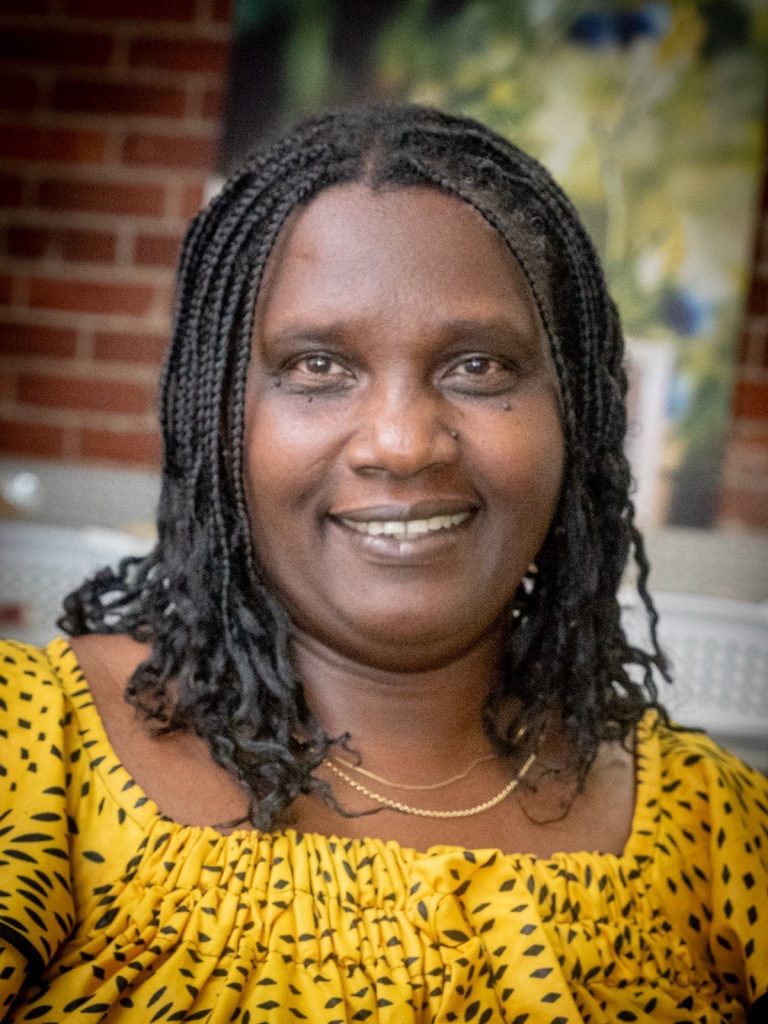
When Gloriose Karumuna first arrived in the U.S. in late 2014, the cultural shock was immediate—and deeply personal. “The first day I arrived in the U.S., it was very difficult for me to eat American food. It was full of sugar,” she recalled.
Her discomfort sparked a deep realization for Karumuna, who is from Burundi – food is not just sustenance, it is identity, memory, and culture.
She soon joined forces with two partners—one from Burundi and another from the Democratic Republic of the Congo—to plan the launch of an African food store called Glory Store LLC. The idea matured over years of longing for familiar flavors and community connection.
“Because I was a businesswoman in my country… it was easy for me to open this business,” she said.
Today, Glory Store LLC offers everything from cassava flour to Ndagala (tiny, dried fish from Lake Tanganyika), yellow beans, green peas, and even the famed Akabanga chili oil from Rwanda. “There are even people who were born here in the U.S. who like our food,” she told Amjambo Africa with pride.
ADVERTISEMENT

A dream in practice
Karumuna is a firm believer in the American Dream, but not the simplified version so often reduced to material success. Her version is rooted in faith, determination, and vision. “God gave us wisdom,” she said. “And here in the U.S., it requires only to have a vision and put it into practice. Do not let anyone look down on you.”
Today, Glory Store LLC is expanding. With its own stock and sourcing networks in Africa, the business is growing across state lines—including into Massachusetts, New Hampshire, and Vermont. “In a few years, I see myself in all the states of the U.S. All is possible,” Karumuna said.
A daughter of Bashingantahe
Born in Kiganda district, Muramvya province—the heartland of Bashingantahe culture in Burundi—Karumuna carries more than the entrepreneurial spirit of her ancestors. She is one of the few women in the diaspora formally recognized as a mushingantahe, a traditional elder and community leader in Burundian culture.
The Bashingantahe are known not for their wealth or titles, but for their moral integrity, wisdom, and commitment to justice. They serve as mediators, counselors, and guardians of truth, often resolving conflicts that would otherwise end up in court.
“According to our culture, some cases are just misunderstandings that can be handled in the community,” Karumuna explained. “You cannot say that the Bashingantahe have no reason to exist in the U.S.”
Karumuna’s uncle, Father Adrien Ntabona, was a respected university professor and one of the leading figures behind the post-colonial revival of the Bashingantahe. “My father was a mushingantahe, my uncle too. If they saw and accepted me, then I truly am one,” she says. “No one in the community opposed it.”
The roots and the road ahead
Now a widow, as well as a pillar of her community, Karumuna uses her dual identity—as a businesswoman and a mushingantahe—to mentor, support, and guide others. “When people come to us seeking advice, we help them. We’ve seen cases resolved peacefully without going to court,” she said.
Her message to fellow immigrants is one of dignity and continuity. “We came to learn,” she said. “Let’s keep our roots and help our kids stay connected to our culture. Because one day, they will go back to build our nations.”
In a world where migration often comes with the cost of cultural loss, Gloriose Karumuna proves that it is possible not only to preserve one’s heritage but to thrive by sharing it.