By Patrick Nduwimana
Ghana is regularly hit by devastating flooding during the rainy season, a recurring crisis that environmental experts attribute to a complex mix of heavy seasonal rainfall, inadequate urban planning, weak waste management, poorly maintained drainage networks, and illegal construction on natural waterways. The capital city of Accra, which houses a vibrant metropolitan population of over 5 million people, remains the epicenter of the destruction whenever torrential downpours strike.
In June 2026, severe flooding swept across large parts of the West African nation, destroying hundreds of homes and leaving a trail of hardship. Reports from the Ghana National Fire Service confirmed that at least 12 people lost their lives and over 58,000 individuals were displaced during the disaster, underscoring the urgent need for a permanent, structural solution.
The scale of the devastation has galvanized people in the Ghanaian diaspora across the United States and around Maine, inspiring them to unite with citizens and local organizations back home. In August, the U.S.-based Forward Ever Collective Foundation organized a landmark virtual town hall under the theme “Flooding, Resilience and the Future of Ghana” to discuss concrete ways overseas communities can lend their technical expertise, resources, and influence to address the issue.
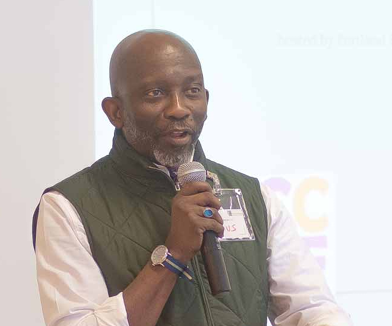
Pious Ali, co-executive director of the Forward Ever Collective Foundation, emphasized that the current crisis stems from decades of rapid, unmanaged expansion. He said that when Accra was originally established, it was a relatively small urban center. But over time, uncontrolled growth and evolving human behaviors have outpaced city planning, leaving the capital vulnerable every time it rains.
“The initiative does not seek to replace state action, but rather to complement existing efforts on the ground. While dealing with national disasters is fundamentally a government responsibility, the diaspora community believes that solving complex public challenges requires diverse perspectives,” Ali explained.
He added that every administration works within the limits of its resources and traditional approaches, whereas Ghanaians living abroad bring global insights and alternative frameworks that can be tested in local environments.
ADVERTISEMENT

A central highlight of the town hall was the inclusion of youth-led grassroots movements, represented by the Buz Stop Boys, a famous volunteer group based in Accra. These dedicated young volunteers don high-visibility safety vests to clean public spaces, clear choked gutters, scoop out trash, and trim overgrown vegetation, actively mitigating flood risks while improving public sanitation.
Ali noted that the work of the Buz Stop Boys revives an old Ghanaian tradition from his youth, when entire communities would pause once a month to sweep neighborhood streets, collect litter, and maintain a clean environment. Supporting these young leaders is considered vital, as sustained resilience relies heavily on local labor, civic ownership, and daily environmental stewardship alongside large-scale engineering projects.
Beyond public sanitation, addressing the root cause of urban flooding requires a fundamental shift in civil engineering and urban planning.
Gideon Masedi Nii Ayi Lomoko, a Ghanaian civil and environmental engineer who presented at the meeting, stressed that rapid urbanization in Accra has dramatically increased impervious surfaces like concrete, asphalt, and rooftops, preventing natural groundwater infiltration. Decades of uncoordinated development have encroached upon floodplains, wetlands, and natural drainage corridors, while poor waste disposal practices severely reduce the functional capacity of existing storm drains.
To combat these challenges, Lomoko urged the nation to move away from mere reactive flood management and transition toward true structural resilience, particularly within the construction and building sectors. He advocated for sustainable urban drainage systems centered on a core philosophy: slow stormwater down, store it safely, infiltrate it into the ground, and gradually release the surplus. Implementing technical interventions such as rain gardens, permeable pavements, retention ponds, soakaways, green roofs, and rainwater harvesting systems can significantly reduce the volume and peak rate of runoff entering municipal drains. Furthermore, Lomoko highlighted the need for mandatory flood risk assessments prior to new construction projects, strict enforcement of local sanitation by-laws, and coordinated efforts between municipal assemblies, waste management contractors, and community volunteers to clear main drains before the rainy season begins.
Prioritizing preventative infrastructure is also a matter of economic prudence. Following the disaster in June, the Ghanaian government allocated an estimated $27 million for emergency relief and recovery operations. Ali pointed out that because seasonal rain cycles are fully predictable, national policy must prioritize proactive risk reduction over postdisaster expenditure. Funds spent on emergency response and rebuilding damaged property could otherwise be diverted to critical social development sectors, such as primary education, public health infrastructure, and affordable housing, if the government established adequate preventative measures in advance.
The convening marked the beginning of a sustained, structured effort.. Stephanie Adjeley Doe, executive operations director of the Ghana Diaspora Public Affairs Collective, confirmed that the organizers are establishing a comprehensive execution pipeline to translate ideas into measurable outcomes. Immediate next steps include drafting a postconvening action report that synthesizes technical recommendations, forming a specialized advisory group for the Blue Green Community Initiative, and designing a diaspora-backed flood-resilience accountability framework to track progress across government bodies, traditional authorities, and the private sector. Furthermore, the team is exploring the establishment of a dedicated Diaspora Resilience Fund in partnership with the Ghana Infrastructure Investment Fund, alongside direct financial commitments from the Forward Ever Collective Foundation to support targeted projects.
In a recent conversation with Amjambo Africa, Buz Stop Boys founder Heneba Kwadwo Safo revealed that the greatest challenge in mobilizing youth to clear Accra’s blocked drainage systems is securing basic necessities like food, water, and stipends, a hurdle they currently overcome by trading social media promotion for meals from local vendors.
To scale this vital work, Safo stressed that the most urgent need from the diaspora is direct resources to equip neighborhood-level volunteer teams, fostering grassroots resilience across every community. Furthermore, echoing the need for proactive preparedness, he identified comprehensive public education on waste segregation as the single most critical behavioral shift required; by teaching citizens to separate plastics, organics, and textiles and treating them as distinct economic resources, Ghana can address the root cause of its recurring flood crisis.
While the foundation provides strategic support and resource mobilization, its leadership insists that local partners in Ghana will maintain full ownership of project execution on the ground. Local actors possess a deep understanding of community dynamics and will lead implementation, establish success metrics, and adjust operational strategies as needed. Through this collaborative model, the organizers hope to create a reproducible blueprint for civic engagement, demonstrating how African diaspora networks can partner effectively with their home countries to improve social, civic, and economic resilience for generations to come.
Editor’s Note: This article originally appeared in the early August 2026 print edition of Amjambo Africa.