
By Violet Ikong
For the local people of Bakassi, an area in Southern Nigeria that borders the Republic of Cameroon, fishing is more than an economic activity; it is a significant part of their identity and cultural heritage.
Men, women, and even children from the area are known for fishing in the Akpa Yafe River – which forms a boundary line between Nigeria and Cameroon – and far into the Atlantic Ocean’s Gulf of Guinea, where the river empties. However, in 2008, the inhabitants of Bakassi suffered a major blow when an oil-rich area known as Bakassi Peninsula, once part of their land, was ceded to Cameroon, following a 2002 ruling by the International Court of Justice to resolve long-standing territorial disputes.
The decision displaced thousands of people, mostly fishermen, and Bakassi became an epicenter of violence and unrest, overshadowing its identity as a fishing hub.

Photo: Frank Edima, founder of the Bakassi International Fish Festival, credit: Bakassi International Fish Festival
“I was born and raised in Bakassi and it was beautiful,” said Frank Edima, a local. “But after the peninsula was ceded to Cameroon, I would go online and always see stories with different headlines and images talking about social vices and violence coming out of Bakassi. I began to wonder if it was the same community I grew up in.”
Now, years later, Edima is leading local people in rebranding the image of Bakassi by reviving their fishing identity through an annual festival called the Bakassi International Fish Festival.
Edima, a marketing specialist, spoke to Amjambo Africa about the project: “I said to myself, ‘If I can help organizations build a good reputation, why can’t I use my expertise to build a good reputation for my community by showcasing our fishing heritage to the world?’ ”
With the support of like-minded locals, the festival came to life in June 2022, driven by volunteer efforts and donations, and has grown into an annual event.
Showcasing culture and unity
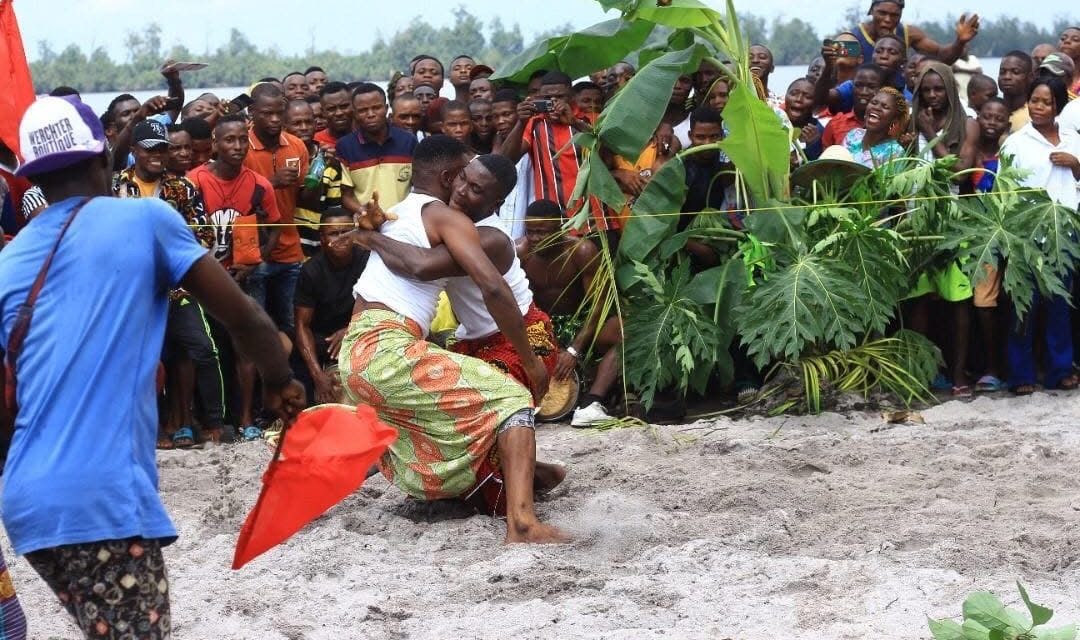
The third edition of the festival was held December 4-6, 2024, and had over 3,000 attendees, including locals from Bakassi Peninsula who had moved elsewhere, and visitors from Nigeria, Cameroon, and Equatorial Guinea.
ADVERTISEMENT
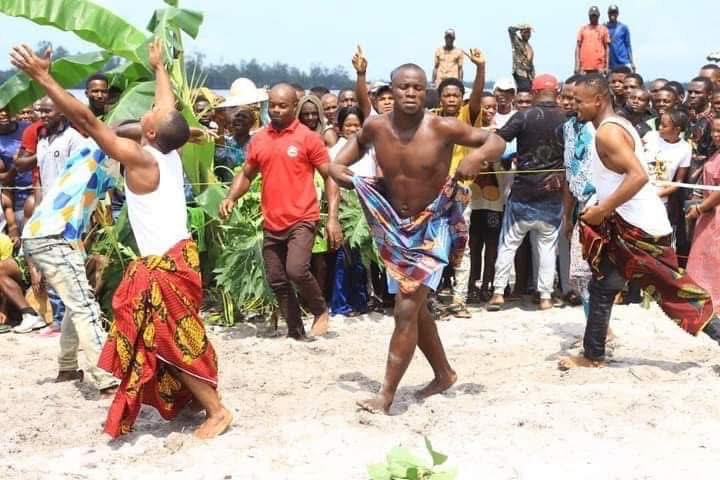
Photo of activities during the event, credit: Bakassi International Fish Festival
The event featured different activities designed to entertain guests, all of which showcased the fishing culture of Bakassi, and promoted unity. A popular activity was a fishing competition that included 12 men and three women who traveled far into the Atlantic Ocean a day before the grand finale to prove their fishing abilities.
After over 24 hours on the ocean, all fishermen returned to the cheers of a massive crowd while judges weighed their fishing catches on a scale, and announced that a woman was the winner, having caught the biggest fish. Over 100 fishermen and fishmongers residing in Bakassi seized the opportunity to auction and sell fish, shrimp, and periwinkles at discounted prices to guests.
Events included a friendly soccer match that was played between Bakassi, Nigeria, and Isangele, a community in neighboring Cameroon, to encourage cross-border peace and cohesion.
“We have Nigerian and Cameroonian citizens who cross the border for business engagement and things that bring them together. We introduced the soccer match to promote peace and encourage everyone to live and work together without violence,” Edima said.
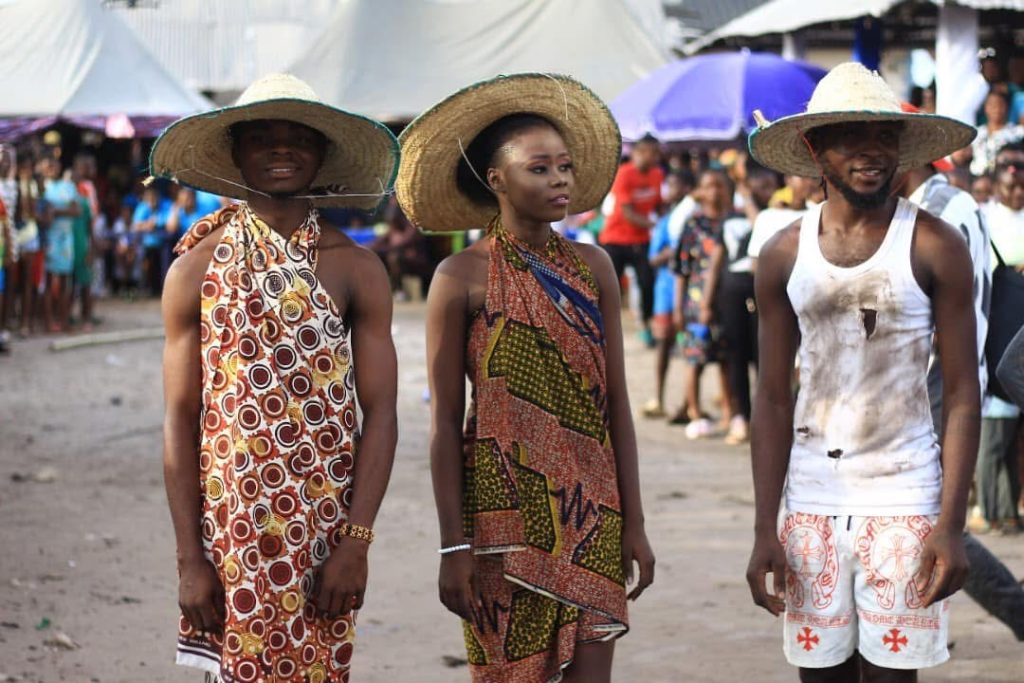
Photo of activities during the event, credit: Bakassi International Fish Festival
Guests at the event were entertained by locals and non-locals alike, who all took part in a cooking and eating competition involving a local dish called “fisherman soup.”
“We discovered that the different tribes that live in Bakassi have different ways of preparing fisherman soup, so we decided to give them a chance to express and show the judges,” Edima said.
“The eating competition was also to show there are people who can comfortably eat fish without choking or having a bone stuck in their throat. It’s a skill that people don’t think is important, but it is because when I travel outside of Nigeria and eat at a restaurant, people admire how I eat fish,” she added.
Other activities that took place during the festival were cultural dances, local wrestling, diving, and a boat regatta.
“We don’t want pity”
Beyond showcasing the cultural heritage of Bakassi, Edima and the team at the Bakassi International Fish Festival aim to attract investors to the area through the festival.
“Our people are loving and not violent like the media usually project them to be. We have been wounded on all sides [by the ceding of territory], and the best that the world can do for us is to invest in Bakassi,” Edima said, adding, “We don’t want international agencies to pity us and give us aid; we want them to invest in Bakassi, because it has all the resources to develop itself.”
Nsa Ekeng, another local and festival team member, echoed these sentiments.
“We are telling the world that while Bakassi is known for displacement and secession, there’s more to us as a people,” Ekeng said
Challenges and resilience
Despite its popularity, the Bakassi International Fish Festival faces funding challenges that limit its impact.
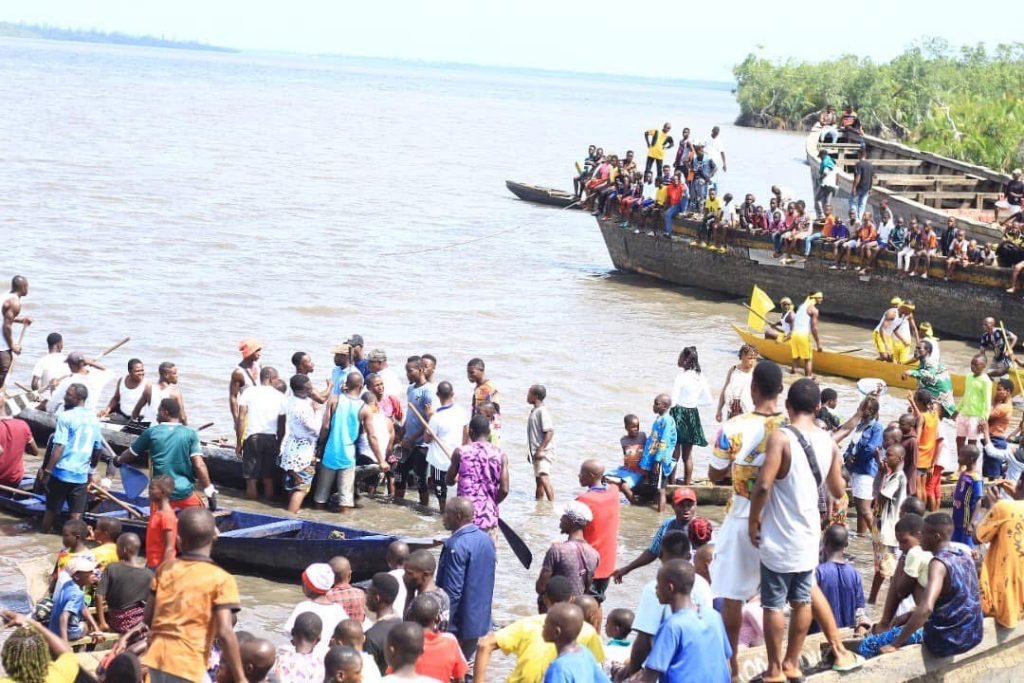
Photo of activities during the event, credit: Bakassi International Fish Festival
“When we started, one of our goals was to donate fishing materials to all fishermen who partake in the festival, and train them as well in modern fishing techniques. So far, we have not been successful on that part, due to limited funding,” Edima said.
She added that climate change has reduced the fish population in Bakassi’s waters, making it vital to introduce fish farming as a sustainable solution.
“The fish from the wild is not enough to feed Nigeria, so we are seriously considering fish farming culture so that those who can go into the wild can do that, and those who can do the fish farming can also do that to support the fishing community,” Edima said.
Starting in 2025, the fish festival will become a government-backed event, as its growing impact has attracted attention from local authorities. With this development, the festival’s team is hopeful that current financial challenges will be managed, and that local and international organizations will be encouraged to partner with and support the festival.
According to Edima, the Bakassi International Fish Festival has come to stay. And it’s not just a celebration of culture, but a testament to the resilience and determination of the Bakassi people, who aim to reclaim their fishing identity, and attract investment opportunities to the area.








