By Éloge Willy Kaneza
Maine, known for its scenic coastlines and quiet towns, recently has become a frontline for a troubling shift in U.S. immigration enforcement. Residents have been arrested suddenly by U.S. Immigration and Customs Enforcement (ICE), usually for minor infractions, or overstays, or with no reason given at all, and placed in detention facilities far from their homes, often under harsh conditions.
Martha Stein, Executive Director of Hope Acts, a Portland nonprofit serving asylum seekers, described a surge of sudden arrests and detentions that has left families and communities reeling.
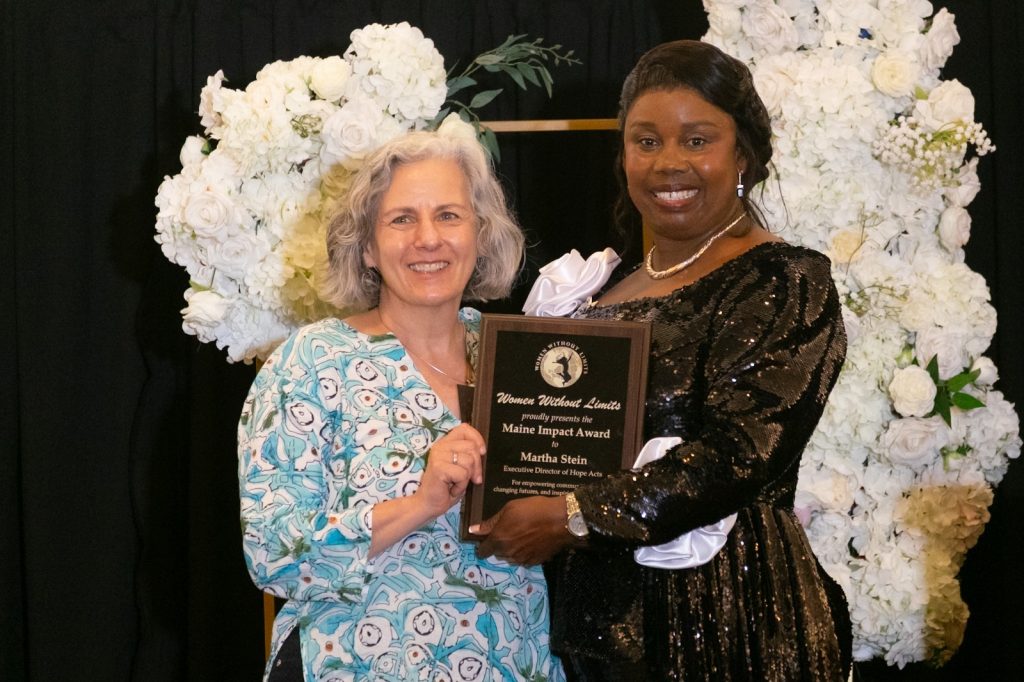
The award was presented by the nonprofit Women Without Limit.
Surge unlike any before
Since February 2025, Hope Acts has documented over 50 cases of asylum seekers who were clients, detained by ICE, a dramatic increase from previous years. “Previously, it was unheard of,” Stein explained. “These are people who follow the law, who have filed all their paperwork correctly. By and large, they are not criminals.”


My family doesn’t even know where I am. They treat us like criminals. The food is insufficient, and access to medical care is very limited.
— B.G.
She said that individuals are often summoned to ICE offices for routine check-ins, unaware they will be taken into custody, while others are pulled over while driving, sometimes without cause. The demographic of those detained has expanded in recent months from mostly men to families with children, heightening both emotional and financial stress.
One man, a Maine resident for nearly six years who was detained and released, recalled the shock of his arrest. Amjambo is calling him B.G. to protect his identity. “Two cars follow me and stop abruptly. Agents come out in uniform, ask my name, and handcuff me without explanation,” he said.
J.U, another man also detained and released, described his experience with arrest: “I was leaving home for work when two people called me by my first name. They are in plain clothes, and I don’t know if they are ICE agents. Upon arrival, they took everything: my phone, personal belongings.”
Inside detention: harsh, dehumanizing, isolating
Once in custody, detainees face a starkly hostile environment. Even though detention facilities vary, accounts paint a uniformly bleak picture of overcrowded rooms, harsh lighting, and freezing temperatures. Many detainees report sleeping on concrete floors with thin blankets, leading to physical pain and chronic discomfort.
ADVERTISEMENT

“The cells are very cramped, and you can barely see the sun. Sometimes they call it the ‘crackdown.’Four times a day, we must return to our cell. It’s traumatic,” D.J., a former detainee, said.
B.G. said that the treatment was degrading and isolating. “My family doesn’t even know where I am. They treat us like criminals. The food is insufficient, and access to medical care is very limited.”
Stein, of Hope Acts, recounted what she has heard from detainees about what they experienced.
“People are literally sleeping on the floor. In one facility, the beds are few and the blankets thin. You try to wrap yourself in layers, but it’s never enough,” she said they told her.
And meals are served on institutional trays, and the food is often cold and unpalatable.
“They are fed,” Stein said. “But the food is horrible. Often, it’s barely edible. You have no choice but to eat it.”
Detainees sometimes have to purchase additional items such as snacks and basic personal hygiene products through commissary accounts, yet delivery of the items can be delayed by weeks.
“One man finally got his coat after weeks,” Stein said, “only to give it away to someone who hadn’t received theirs yet. It’s a constant scramble just to maintain basic dignity.”
Access to showers is irregular, soap and toothpaste are rationed, and long waits make basic grooming a challenge.
“People are washing their clothes in tiny sinks, trying to stay clean with what little they have. It’s humiliating and exhausting,” said Stein.
Mental health: fear, uncertainty
Beyond physical discomfort, the mental toll is immense. Detainees face constant anxiety, unable to predict the length of their detention or the outcome of legal proceedings. Wake-up calls come early, meals are timed, and movement is restricted, leaving individuals with hours of idle, stressful waiting.
“The mental strain is almost unbearable,” Stein said she has been told. “Many report headaches, stomach issues, and sleepless nights. Some begin to lose hope, wondering if they’ll ever see their families again.”
Isolation compounds the trauma. ICE frequently transfers detainees across state lines, sometimes thousands of miles from Maine. This separation from families, attorneys, and support networks amplifies stress. “You’re taken hundreds of miles away. Your lawyer can’t reach you easily, your family can’t visit. People feel abandoned, and the fear becomes constant,” Stein said.
ICE acknowledges “temporary overcrowding” due to the surge in detainees, but asserts that it adheres to federal standards and maintains a commitment to humane treatment. Some temporary centers are not included in public statistics, though ICE claims their methodology is acceptable and plans improvements for FY 2025.
Preventative measures
Most advocates for immigrants suggest hiring a reputable immigration attorney, if possible. Cassius Shirambere, former president of the Burundi Community Association of Maine, discussed what happened to a young Burundian who was expelled to his home country and later returned to the U.S., thanks to legal intervention: “This case shows the fragility of protections for asylum seekers and the importance of legal assistance. Without a lawyer, this young man would never have regained his rights.”
However, on their website, Maine’s Immigration Legal Advocacy Project (ILAP) says to verify the credentials of attorneys before you hire one because hiring a fraudster could negatively impact your legal case: “Please watch out for people who try to take advantage of newly arrived immigrants, including asylum seekers. … They may seem to be people with authority and trust in the immigrant community, possibly even a religious leader.”
Stein offered some practical advice to those called to report for an appointment. “If you have an appointment, get someone to drive you. Bring only the papers they told you to bring. Leave everything else at home or with a friend. That way, if the worst happens – detention – your most important documents are protected,” she said.
System in crisis
Stein urged the following immediate reforms to a broken immigration system: that they stop detaining law-abiding immigrants, ensure that competent staff process asylum and work permit applications efficiently, and treat individuals with dignity and fairness.
And she urged Gov. Janet Mills to sign LD 1971, “An Act to Protect Workers in This State by Clarifying the Relationship of State and Local Law Enforcement Agencies with Federal Immigration Authorities,” which was passed by the Legislature. This legislation would greatly limit local law enforcement involvement with ICE and Border Patrol, she said.
“The immigration system is broken, and being intentionally made worse. … “Each number you see in ICE statistics represents a human being – someone with dreams, responsibilities, and families. We need to remember their humanity and treat them accordingly,” Stein said.