
By Kirubel Tadesse
More than 5,000 Ethiopians in Maine and across the country are at risk of deportation to Ethiopia, where deadly conflicts many fled are showing signs of reigniting.
A former Temporary Protected Status (TPS) holder and an immigration lawyer who spoke to Amjambo Africa said the community is concerned about the prospect of deportations, as reports of deportation flights following TPS terminations have made national headlines.
A federal judge in Boston lifted a stay that had blocked the Trump administration from ending TPS for Ethiopians on August 18. The judge’s ruling followed an earlier decision from the U.S. Supreme Court that allowed the Department of Homeland Security (DHS) to terminate protections for immigrants from several countries, including Haiti, Syria, and Somalia, among others.
The administration terminated TPS for Ethiopians immediately after the judge’s ruling last week. Legal experts say thousands of Ethiopians who cannot secure another immigration status can no longer legally remain in the United States. A DHS statement directed those whose TPS has been terminated to leave the country or risk deportation.
ADVERTISEMENT

The statement has only heightened concerns within the Ethiopian community, one of the largest immigrant communities in the greater Washington metropolitan area. An Ethiopian national who lives in Alexandria, Virginia said he sought TPS to stay in the United States when members of his family and others from the Tigrayan ethnic group were singled out and arrested in the Ethiopian capital, Addis Ababa. The Ethiopian, who asked not to be named for fear of being targeted, said he first came to the United States to pursue undergraduate studies and used to visit his family in Ethiopia annually. But he feared traveling back home during the height of the Ethiopian civil war.
For Ethiopian nationals, TPS started in December 2022 during the Tigray civil war. The war was fought between forces from the country’s northern Tigray region, led by the Tigray People’s Liberation Front (TPLF), and the federal government and allied forces. A U.S.-backed and African Union-led peace agreement led to a cessation of hostilities in November 2022.
Still, negotiations to resolve the root cause of the conflict have not been successful so far. Tensions between the federal government and the TPLF now appear to be moving toward another major conflict, amid shifting alliances among Ethiopia’s neighbors and armed groups inside the country. Earlier this week, there were reports of drones believed to be operated by the federal government targeting sites in Mekelle, the capital of the Tigray region.
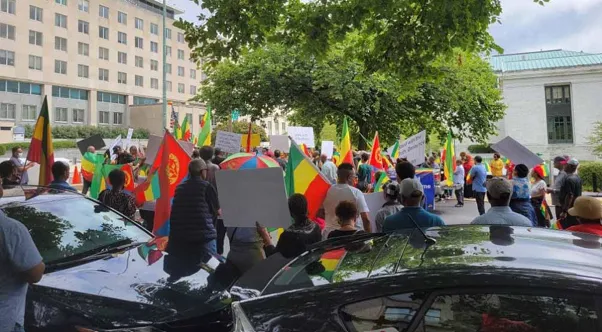
The former TPS holder says the onset of the latest conflict mirrors the 2020–22 war, which claimed over half a million lives. Rights groups, including Human Rights Watch and Amnesty International, reported that parties to the conflict , including the Ethiopian National Defense Forces, neighboring Eritrean forces, Tigrayan forces, and Amhara militias, committed war crimes and other atrocities targeting civilians. The termination of TPS means Ethiopians face “dangers that the very TPS was meant to protect them from,” notes immigration attorney Mulualem G. Adgeh.
Former Secretary of Homeland Security Kristi Noem said in December 2025 that Ethiopians no longer qualify for TPS, but a federal court stayed the termination until last week.
The former TPS holder says the termination does not reflect the current situation in Ethiopia and risks sending Ethiopians home at the worst possible time. “Some Ethiopians I know are just waiting to go home when things improve and do not want to seek asylum here in the U.S. to permanently settle here. But now they have to either leave or risk being deported, which would be devastating with what is going on back home,” the Ethiopian man told Amjambo Africa.
Immigration lawyers say the termination leaves Ethiopians who do not have another legal status with limited options to remain in the United States.
“They (TPS holders) lose their legal status unless they have another status to remain in the U.S.,” explained Adgeh, lead attorney at Mulu Law Group, which has several clients from the Ethiopian community. Adgeh, who has represented Ethiopians in various immigration cases, added that those who depended on TPS now face a dilemma: “Some are in a quagmire of leaving the U.S. to go to Ethiopia, where the country is tormented with conflicts and political upheavals.”
Because individual immigration cases differ, Adgeh said, there is no single legal option available to everyone. He advises affected Ethiopians to immediately explore whether they have other avenues to remain legally in the country. “They’ve [got to] to look for other options, though limited, to remain, and I advise them to get legal advice from lawyers and deal with it case by case,” Adgeh said.
Editor’s Note: This article originally appeared in the early August 2026 print edition of Amjambo Africa.