
By Samuel Getachew
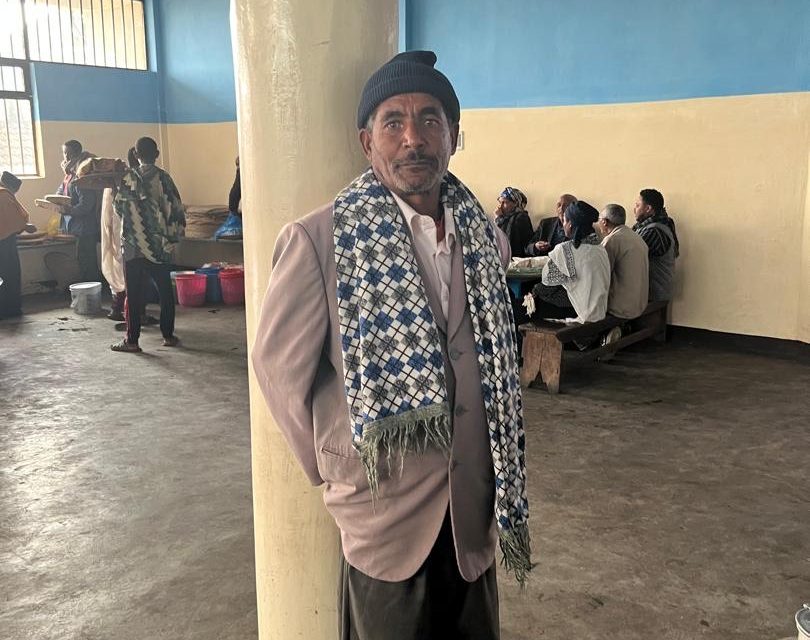
MESRAKE, OROMIA, Ethiopia – Tadesse Bulcha, age 41, lives in a small village with a population of approximately 500 near the monasteries of Debre Libanos. A father of six, Bulcha says he has endured total darkness every night of his life, but is hoping his children’s lives will be different now that Ethiopia is set to launch a huge, 5.15-gigawatt electricity project next year. The project is expected to provide electricity to millions of citizens who are currently living off the electrical power grid.
The middle-age farmer says he has donated an equivalent of $500 (USD) to the project since 2011 to help fast-track its completion. Bulcha is one of many everyday Ethiopians who have donated an estimated $4 billion to the project.
“Having electricity would allow me to be a productive citizen and help our children feel safe enough to walk and study at night, and give us the modernization that I never experienced while growing up,” Bulcha said.
His nextdoor neighbor and friend, Eshetu Tadesse, a farmer, has been waiting for electricity for a long time, and believes it would be a game changer for him and others in his ancestral village.
“Such development would help change our lives, see us produce more as farmers, feed our families, enable us to sell the rest of our farm produce in the open market, and dream big dreams, instead of small dreams for us and our children,” he said, while taking a short break from supervising his farm.
The prospect of the project’s completion has excited citizens like Bulcha and Tadessa, but comes at a sensitive period for a nation engulfed in conflicts, famine, and an economy that has experienced a sharp downturn.
ADVERTISEMENT

But the debt-ridden Horn of Africa nation is determined to finish the project and provide ample electricity for the bulk of its population despite significant obstacles. For example, Egypt, which fears the project will deprive its people of the waters of the Nile, has come out against the mega hydropower project, and negotiations have stalled. The return of President-elect Donald Trump is also a major concern.
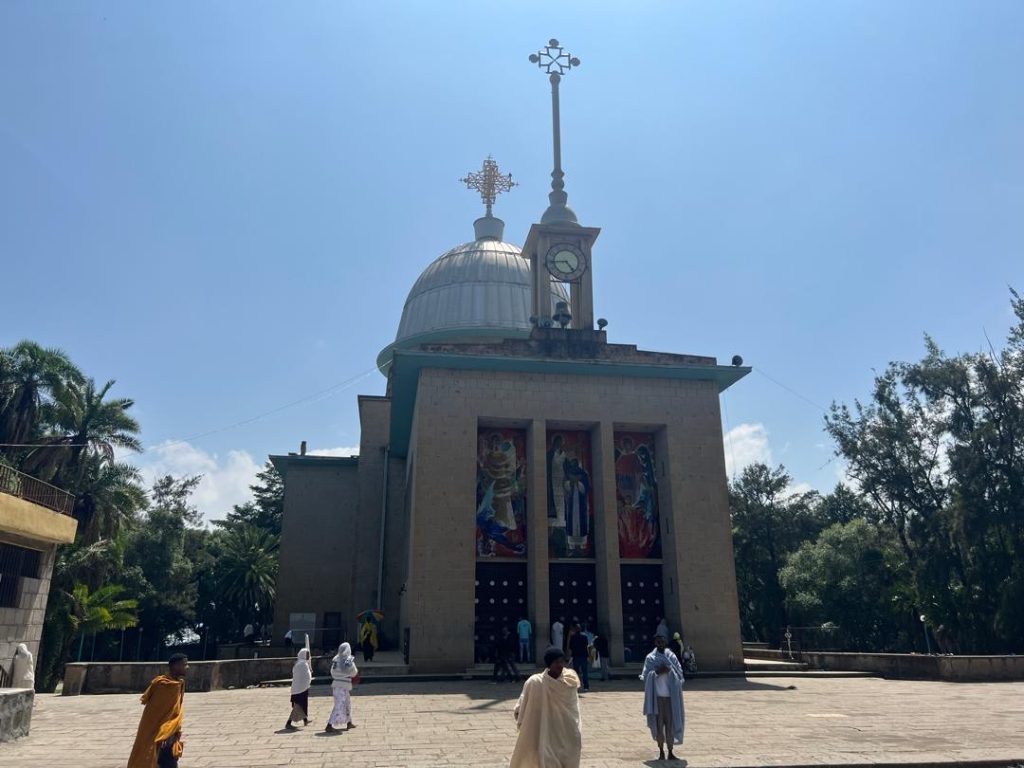
Photo: The famous Debre Libanos church near Mesrake, credit: Samuel Getachew
In 2020, in response to Egypt’s opposition to the building of the dam, then-President Trump suggested that Egypt might “blow up” the dam; further, Trump restricted aid to Ethiopia as a pressure tactic to compel Addis Ababa to do Egypt’s bidding. Egypt is an ally of the U.S.
According to a World Bank report of 2022, only 55 percent of Ethiopia’s population of approximately 130 million people has access to electricity, which means the nation has the third largest energy access deficit in sub-Saharan Africa.
Earlier this year, Ethiopian Prime Minister Abiy Ahmed announced that operation of the dam – the largest hydroelectric power plant in Africa – would begin in 2025.
Haile Tola, a resident of Mesrake, also believes electricity would allow farmers like him to be more productive than is currently possible, and would help women who currently must walk for hours to access a milling machine in the village.
“If the dam project is completed, and we are afforded the electricity that we need and deserve to have as citizens, we can strive within our village, and we would not have our children aspire to move to bigger cities to receive basic amenities that are not available in Mesrake,” Tola said while relaxing inside his hut.
Sileshi Teferra, who is from Debre Tsege, a town adjacent to Mesrake, currently has electricity, but it is rationed and only comes on intermittently, affecting the small restaurant that Teferra owns.
Frequent power cuts force him to use generators, and the cost of this has been unbearable and has compromised the growth of his business: “The mega-project has been delayed so often that I sometimes think it’s a legend that is told in order to motivate us to not give up,” he said with a smile, adding, “but, if it were to become a reality, it would empower me as an entrepreneur, and make my living arrangement much better and more productive.”
In a desperate search for foreign currency, the Ethiopian government exports electricity to neighboring nations. These countries include Kenya, Djibouti, Sudan, Somaliland and, most recently, Tanzania. Revenue amounts to more than $1 billion (USD), according to government figures.
Meanwhile, in Addis Ababa, the capital of Ethiopia and one of the most important diplomatic capitals of the world, power blackouts are frequent, and most businesses must rely on their own power generators.
At Yonas Chercher, a popular raw meat restaurant in the capital, a manager said that the eatery often must use generators. He complained that the power interruption is regular, which adds to the overall cost of operating such a busy establishment, with satellite restaurants throughout the city.
He said he worries for other restaurant entrepreneurs, who might not have the financial wherewithal to purchase and operate a generator to run their business.
“Quality generators are expensive, and they cost money to run, and use fuel. Most smaller restaurants and cafes choose to close their business rather than use [generators] – sometimes the suspension of electricity can happen most days,” said the manager.
Not far from Yonas Chercher, Roman Leuelseged has owned a cafe for the last eight years, ever since she returned from Lebanon, where she served as a domestic worker. Having exhausted most of her savings by opening her cafe, she said the lack of electricity has kept her from growing her business to meet the demands of her customers. She can’t deliver the hot coffee her customers want, and she anticipates she will need to close the cafe soon.
“When I opened my business, the first thing I did was purchase a bond in support of the dam project, and I anticipated it would be completed and operational within a few years. I believed that would support and provide electricity for entrepreneurs and citizens like myself. But the wait has been exhausting, and it now seems more like a dream than a reality,” she said.







