
By Samuel Getachew
At least six dead, dozens isolated, and healthcare workers on the frontline as Ethiopia struggles to contain a viral hemorrhagic fever with potential regional spread.
Jinka under siege: a deadly virus spreads
The southern city of Ethiopia, Jinka, is grappling with an outbreak of a viral hemorrhagic fever that has already claimed at least six lives and forced dozens into isolation. Authorities fear the virus could spread to other parts of the country and across the region as the Ethiopian government races to halt this deadly disease.
Jinka Hospital, the largest government health facility in the province, has been overwhelmed with patients, prompting transfers to nearby health centers in other regions of the Horn of Africa, raising concerns over further transmission.
The Ethiopian Health Ministry has confirmed 16 cases, and 129 individuals are under close monitoring, suspected of contact with the deceased, although experts fear the numbers could be higher.
Government reassurances and media gag
While the Ethiopian government has reassured residents of its ability to contain the outbreak, a gag order on local media has been imposed, fearing negative economic repercussions as the country promotes itself as a tourism hub.
Concerns persist over Ethiopia’s capacity to manage the virus, given internal conflicts displacing millions, a fragile economy, and a weakened healthcare system, compounded by reductions in foreign aid, including from USAID.
ADVERTISEMENT

Last week, the World Health Organization (WHO), led by former Ethiopian health minister Tedros Adhanom Ghebreyesus, pledged USD 300,000 in financial support and deployed experts, resources, and medical personnel to the affected province. “WHO has deployed experts to the affected towns, along with medicines and personal protective equipment for health workers,” Ghebreyesus said, adding that the UN agency released USD 300,000 from its contingency fund for emergencies.
Silence and fear: critics under pressure
The Ethiopian government has moved to control the narrative, suspending Biniyam Asrat, the medical director of Jinka General Hospital, who first reported the outbreak and fatalities among staff and patients.
Selamu Tadesse, another hospital official, confirmed to Amjambo Africa that casualties among patients and health workers continue, alarming those who remain on duty. Many fear a repeat of Rwanda’s 2024 Marburg outbreak, which killed 13 people, most of them healthcare practitioners.
“We lack even the most basic support, and we are doing our best,” said a nurse who requested anonymity. “Most of the dead are health practitioners. We are making heroic efforts, but at some point, we reach our limit.”
Another health worker, recently stationed in Jinka and now in Addis Ababa, warned that the virus will continue claiming lives without increased support, noting that many doctors and nurses are fleeing to avoid infection.
“Most of us lacked basic guidance on protection,” she said. “Patients arrived with sudden headaches that worsened quickly, and we struggled to diagnose them promptly. I suspect the real number of cases is higher because we lacked necessary equipment and know-how initially.”
Regional threats: a virus on the move
Ethiopian Airlines, Africa’s largest airline, has faced criticism for maintaining daily flights to Jinka during the outbreak.
The Africa Centres for Disease Control and Prevention (Africa CDC) has donated scarce medical equipment, including genome sequencing reagents and PCR detection kits, and trained laboratory personnel.
The Marburg virus, closely related to Ebola, carries a fatality rate of roughly 8 percent. Fragile healthcare systems across the region raise fears of widespread infection with devastating consequences.
South Sudan has issued public warnings and launched awareness campaigns, while Kenya’s National Public Health Institute has urged neighboring countries to prepare for potential cases.
Confirmed outbreaks in Africa (2021–2025)
- Tanzania – Kagera region (Biharamulo) – outbreak ended March 2025
- Ethiopia – South Ethiopia region (Jinka area) – first-ever confirmed outbreak
- Rwanda – Kigali and health facilities – first outbreak in 2024
- Uganda – multiple districts including Ibanda, Kamwenge, and Mubende – historical outbreaks, most recent before 2024
- Guinea – first outbreak reported in 2021 (West Africa)
- Angola – past outbreaks, notably in 2005, with high fatalities
- Democratic Republic of Congo (DRC) – historical outbreaks in 1998 and 2000
- South Africa – isolated cases reported historically
- Kenya – limited outbreaks in isolated areas reported historically
- Equatorial Guinea – sporadic cases reported
- Congo – sporadic cases reported
- Ghana – sporadic cases reported
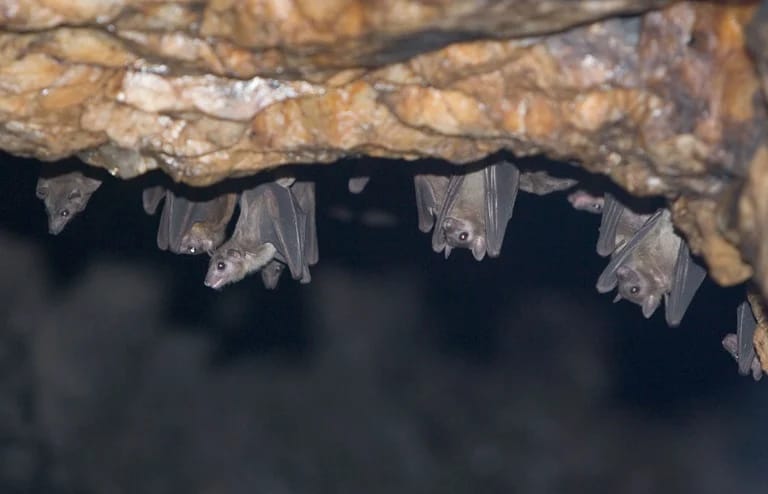
Marburg virus is sporadic and tends to emerge near fruit bat habitats. The recent outbreaks (2024–2025) are concentrated in Tanzania, Ethiopia, and Rwanda, but cross-border movement and natural reservoirs in bats require ongoing monitoring across East and Central Africa by Africa CDC and WHO.
Understanding Marburg virus
According to WHO, Marburg virus disease (MVD) symptoms include fever, muscle pains, diarrhea, vomiting, and, in severe cases, death due to extreme blood loss.
Marburg virus has a fatality rate of approximately 88 percent. Like Ebola, it belongs to the Filoviridae family and spreads to humans from fruit bats. Transmission between people occurs via contact with bodily fluids of infected individuals.
Historically, Marburg virus was first identified in 1967 after simultaneous outbreaks in Marburg and Frankfurt, Germany, and in Belgrade, Serbia. These outbreaks were linked to laboratory work involving African green monkeys imported from Uganda.
Both Marburg and Ebola viruses are part of the Filoviridae family. Though caused by different viruses, the two diseases are clinically similar, rare, and capable of causing deadly outbreaks.