By Ignatius Ssuuna and Eloge Kaneza
The security situation in eastern Democratic Republic of the Congo has deteriorated significantly in recent weeks due to fierce fighting between Congolese troops and M23 rebels, who are backed by neighboring Rwanda, according to the United Nations and the administration of Congolese President Félix Tshisekedi.
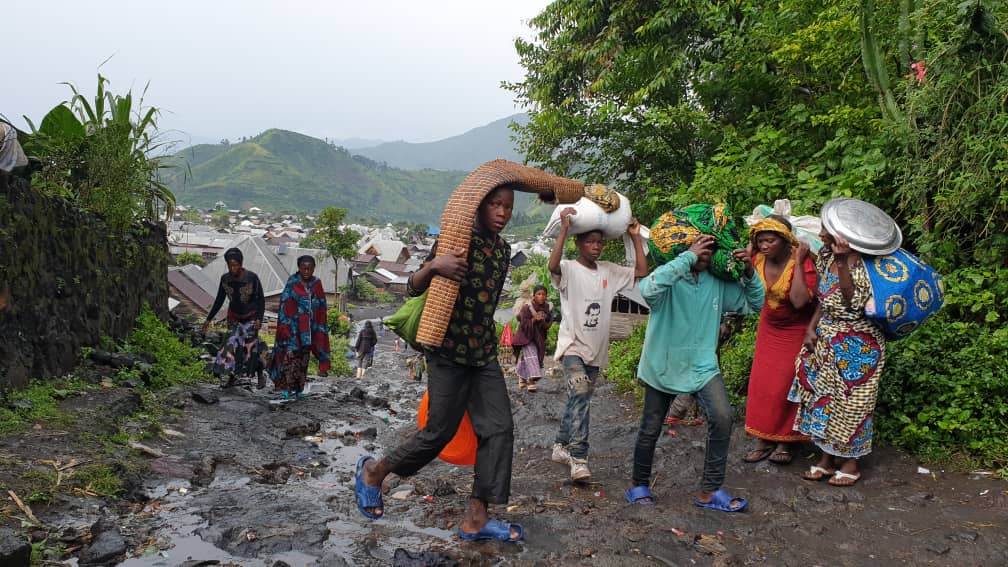
The M23’s rebellion has caused the displacement of hundreds of thousands of people in Congo’s North Kivu province.
The United Nations High Commissioner for Refugees has said at least 237,000 people have been displaced since the start of January by fighting between the Congolese army (the Armed Forces of the Democratic Republic of the Congo, or FARDC) and M23.
Speaking the week of January 20, a press statement from the Congolese army said they had fully mobilized and relaunched counter attacks against the rebels, saying this was “the right time” to recapture all towns the rebels had taken.
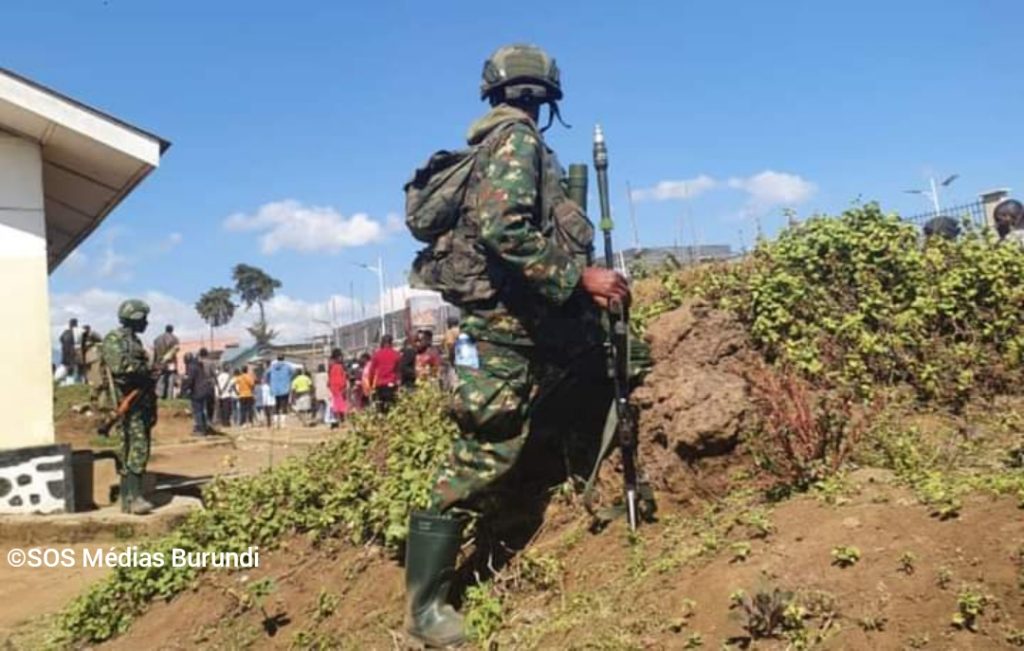
Photo: A rebel of the M23 at the scene when they seized Bunagana, June 2022
Guillaume Ndjike, spokesperson for the Congolese army in North Kivu told Amjambo Africa: “Every situation has its right time. Right now, we are recapturing towns that have been in the hands of M23, and we are ready to defend our country.”
However, as of press time, the M23 had expanded its territory in South Kivu for the first time by taking Minova, a small city of 65,000 inhabitants on January 21. Refugees were streaming toward Goma and concerns were rising among inhabitants of Goma that their food supply would be insufficient for all the refugees heading their way.
Leaders exchange barbs while refugees flee
The leaders in Kinshasa and Kigali flung bitter words back and forth, accusing each other of being the source of the problems between their two countries.
Meanwhile, fighting rages.
On January 16, President Paul Kagame of Rwanda attacked the legitimacy of Tshisekedi’s leadership in his address to the Rwandan diplomatic corps when he said, “The person who is causing problems between Rwanda and DRC … was never elected to a first or a second term. And you know it.”
Kagame went on to attack Tshisekedi’s intelligence, saying, “I know leaders when I see them, I also know idiots when I see them. You can imagine the combination of both of them, the disaster it is. If you are a leader and an idiot, it’s a disaster, an absolute disaster. It is even worse, even more dangerous, if the very people who hold the power in their hands decide that they will be manipulated and played around – for some interests, by idiots.”
Engaging in tit for tat, the Congolese leader then replied on January 18 with a remark seemingly pointed at Rwanda, “We have made the irreversible decision to banish dictatorship and to build a truly inclusive democracy unlike in other countries where elections resemble a pre-written scenario, with opponents carefully chosen in advance for unchanged results.”
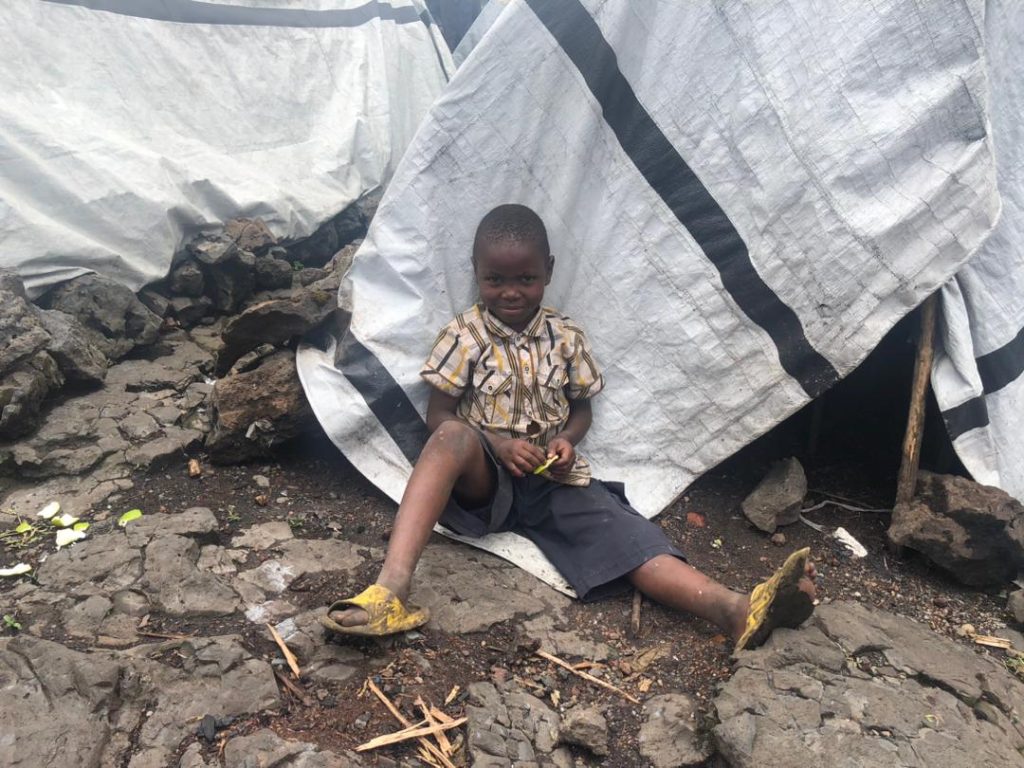
Photo: A young boy in a camp in Goma, eastern DR Congo
ADVERTISEMENT

Kagame has also criticized Tshisekedi for his refusal to negotiate with the M23 rebel group: “There has to be an effort to continue finding a solution … the solution lies in internal political process, or dialogue.
“Failure to talk directly to M23 rebels means that the Congolese government does not want to find a political solution to the conflict.”
Tshisekedi has said repeatedly that engaging in dialogue with M23 is a red line “we will never cross.”
The Congolese authorities have allowed Burundian and Ugandan armies on Congolese soil so they can help combat local and foreign armed groups. The Burundian military is based in the provinces of North Kivu and South Kivu, while the Ugandans are in areas of North Kivu and Ituri.
On January 9, during his first press conference of 2025 in Kigali, Kagame shared a plan that had previously been refused by the Congolese authorities:
“We used to approach these people; we even approached the current administration. We said, ‘Let’s work together to resolve this problem and to support you with whatever you think you need. And we are very serious [about using our resources] to help you fight. … And they refused.
“I had even given them advice. You see, Uganda has a problem of ADF [Allied democratic forces] and others based in Congo. We have a problem of FDLR [Forces de libération du Rwanda] based in Congo. Burundi also says they have a problem based in Congo. I said, ‘Why can’t we all of us work together? Uganda works with DRC, Rwanda works with DRC, Burundi works with DRC – to eliminate the threat to security along our borders. I suggested [this] to the current administration in 2019.
“Now what they did – they allowed Uganda to go and send their troops to fight the ADF; they allowed Burundi to quietly go into DRC to fight whichever groups they are fighting. When it came to Rwanda, they refused. Of course that means something.”
And during the diplomatic luncheon on January 16, Kagame once again accused Burundi of collaborating with the FDLR (Forces Democratiques de Liberation du Rwanda).
In fact, many reports from sources such as U.N. experts state that members of the FDLR are helping the Congolese army in association with other local militias maintained by the Congolese authorities and the Burundian military. At least 272 Burundian soldiers who refused to participate in the war are currently serving long sentences of up to life in prison. The Burundian military court imposed the sentences.
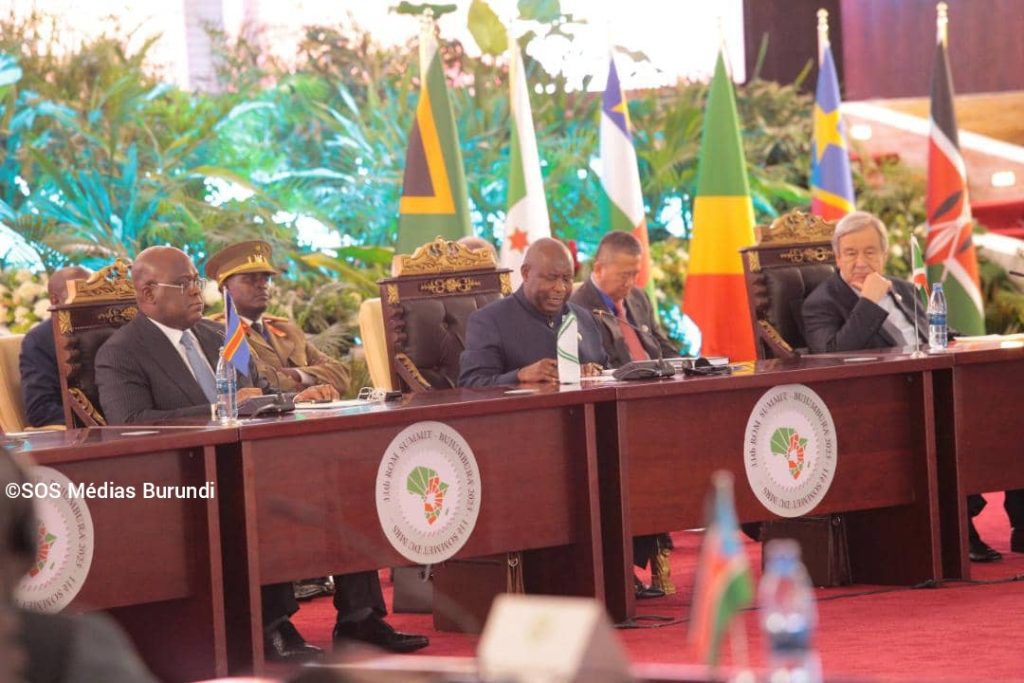
Photo: António Guterres participating into a Summit on the Congolese crisis in Bujumbura, May 2023
On several occasions, the Rwandan government has accused the Burundian authorities of “collaborating with the genocidal Hutus – the FDLR.” And during the January diplomatic luncheon, the president of Rwanda pressed the question. “Can you explain to me why FDLR is in Congo, and being supported by the government of Congo, and they have brought in Burundi, under the same ideology and supposedly to fight the M23, which is of Tutsi ethnicity, and therefore related to Kagame – and then you come to complain about Rwanda possibly having a force in eastern Congo. What do you think you’re really talking about?” Kagame asked the ambassadors.
The previous week, Révérien Ndikuriyo, the secretary general of the CNDD-FDD (Conseil National Pour la Défense de la Démocratie-Forces pour la Défense de la Démocratie), the party of the former Hutu rebellion currently in power in Burundi, made a statement at a conference held in his native province of Makamba, in southern Burundi, that shocked more than one listener:
“Why is Rwanda interfering in Congo’s affairs? That’s my question. Congo and Burundi, we have bilateral agreements even in military affairs, how does Rwanda invite itself to them? And these groups that Rwanda accuses of having committed genocide – it has been 30 years since 1994 that the Rwandan military has been hunting them down. If they have not been able to eradicate them, it is their business. They are troublemakers. Why do they cause trouble? Haven’t they attacked the Congo since the years 1994 and 1995, killing people under the pretext of pursuing these groups? Don’t think I’m going to be indulgent because they talk about genocide. I don’t give a damn about all that. What worries me is the security of our country, the security of Burundi. Let everyone mind their own business.”
In South Kivu province, the Burundian army is working with local militias and the FARDC to fight two Burundian armed groups and fighters from the Kinyarwanda-speaking minority community, the Banyamulenge. In December, several villages of the Banyamulenge were attacked, and tens of thousands of residents were forced to leave their homes. A 16-year-old girl was killed.
On January 21, in a message to Amjambo Africa, Lawrence Kanyuka, the M23 spokesperson, denied responsibility for anti-Tutsi violence, saying, “It is dreadful that the Kinshasa regime is going against the International Community, which is calling for direct dialogue. Instead, the Kinshasa regime continues to arm FDLR, a genocidal group, and calls on Burundi National Defence Forces and Mai-Mai/Wazalendo Militias to eliminate one section of Congolese – mainly the Tutsi – and now that politics of hate are being applied to our compatriots the Banyamulenge, who are being slaughtered – [and met with] total silence by both the international and national community.”
Delphin Rukumbuzi Ntanyoma, a visiting researcher at the University of Leeds in the U.K. and also Banyamulenge, is among the scholars who believe that Rwanda supports the M23 and has sent troops to DR Congo.
In an interview with Amjambo Africa, he warned, “We are moving into a phase where there will be a direct confrontation, much more direct, between the countries of the region. In fact this confrontation is already underway. … It would have been better for Kinshasa to say, ‘You all stop, whether it is Uganda [that stops], whether Rwanda stops, whether Burundi stops. I will find other forces that will help me stabilize eastern Congo.’
“Or, at least, just say, ‘As you have accepted that Uganda will come, as you have accepted that Burundi will come, you must inevitably accept that Rwanda will also come,’ ” Ntanyoma said. “Kinshasa has adopted a policy that is setting the region on fire.”
Traumatized civilians as peace eludes the region
On December 15, a planned summit aimed in Luanda, Angola, aimed at stopping the fighting was canceled at the last hour when Kigali and Kinshasa could not agree on terms for the talks.
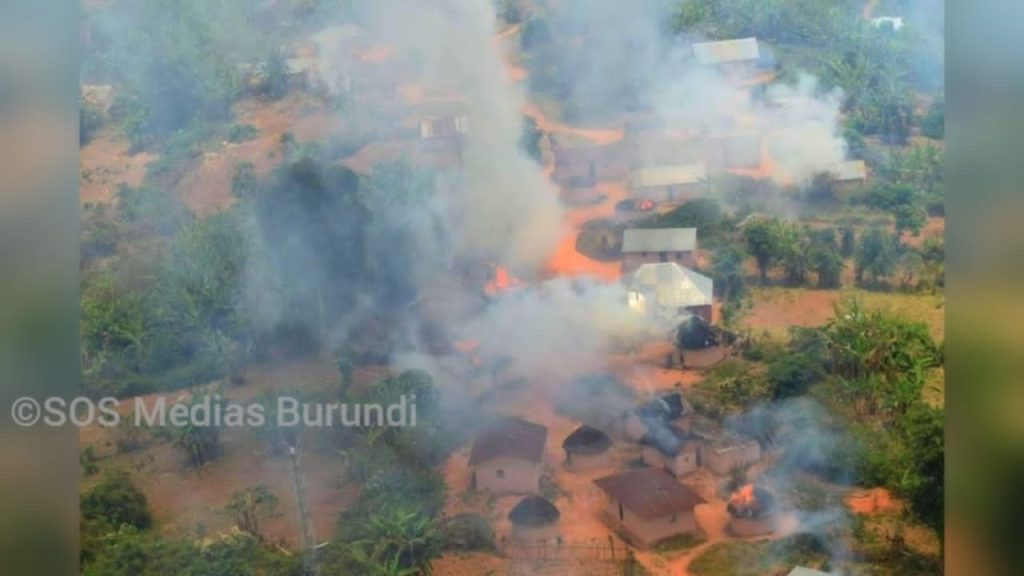
Photo: A village inhabited by the Banyamulenge burned by Maï Maï militiamen in the territory of Fizi, South Kivu
Tshisekedi indicated he was ready for dialogue – but without M23 present – and said he would participate in the negotiating process endorsed by the African Union, with mediation by Angolan President João Lourenço, aimed at forging a lasting peace.
The Luanda process would ask the Congolese government to disarm members of FDLR, composed of remnants of the 1994 Genocide Against the Tutsi in Rwanda, in which more than 800,000 Tutis and the Hutus who tried to protect them were killed, and would also ask Rwanda to halt its support for M23.
United Nations experts estimate there are up to 4,000 Rwandan forces in Congo. In Rwanda, FDLR remains a threat, authorities there have emphasized.
“The FDLR question has to be answered,” Kagame said.
In July, Congo signed a ceasefire with the M23 that came into effect last August, but it collapsed last December when the peace talks between Rwanda and DR Congo in Luanda failed.
In 2024, the U.S. State Department publicly described the M23 as a Rwanda-backed armed group for the first time, and urged Rwanda “to immediately withdraw all Rwanda Defense Force personnel from the [Congo] and remove its surface-to-air missile systems.”
The rebel group rose to prominence a decade ago when its fighters seized Goma and resurfaced again in late 2021 after accusing Congolese authorities of not implementing a peace deal it signed with Kinshasa regime more than 10 years ago.
At the January 16 press conference, Kagame accused the Congolese government of blaming Rwanda for Congo’s woes, saying “Let’s blame Rwanda for everything.” Kagame said, “They make statements saying that Rwanda should remove their forces. … Why would Rwanda be in DRC? They should ask themselves that question. … In all conscience, you also want me to go and tell people that they should accept that their rights are denied, and remain silent because some powers are not happy! Maybe that’s what they want me to tell these people. I can’t! I never will.”
Meanwhile, as the leaders toss accusations back and forth, on the ground, families continue to flee combat zones in North Kivu, while in the neighboring province of South Kivu, residents – especially members of the Banyamulenge community – are torn between flight and returning to their villages, tormented by ongoing feelings of insecurity.