By Eloge Willy Kaneza
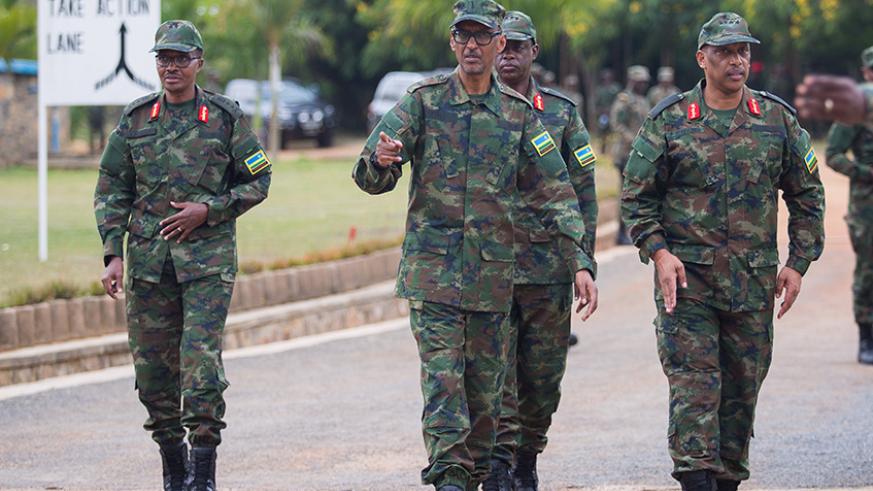
On March 2, 2026, the conflict in eastern Democratic Republic of the Congo entered a new and volatile phase. The U.S. Department of the Treasury’s Office of Foreign Assets Control (OFAC) announced sanctions against the Rwanda Defence Force (RDF) and four of its senior commanders: Lieutenant General Mubarakh Muganga, chief of defence staff; Major General Vincent Nyakarundi, army chief of staff; Major General Ruki Karusisi, commander of the 5th Infantry Division; and Major General Stanislas Gashugi, commander of the Special Operations Force.
In Washington, the move was framed as enforcement of the Washington accord. “We expect the immediate withdrawal of Rwanda Defence Force troops, weapons, and equipment,” U.S. Treasury Secretary Scott Bessent said. “The parties to the Washington accord must uphold their obligations.”
The Washington accord, signed on December 4, 2025, calls for the withdrawal of Rwandan troops from Congolese territory and for President Félix Tshisekedi’s government to cease alleged support for the Democratic Forces for the Liberation of Rwanda (FDLR), a group whose members include individuals accused of participating in the 1994 genocide against the Tutsi.
Rwanda rejected the sanctions, describing them as “unjust and unfounded,” and reiterated that its security posture is defensive. “Protecting our country is a badge of honour which the Rwanda Defence Force carries very proudly,” the government said in a statement.
Despite diplomatic pressure from Washington and mediation efforts by Doha, fighting has continued, displacing thousands of civilians, including women and children.
Minerals and territorial consolidation
Beyond ceasefire violations and diplomatic accusations lies a deeper driver of the conflict: control of territory and resources.
ADVERTISEMENT

The March 23 Movement (M23), currently affiliated with the Alliance Fleuve Congo (AFC) led by former Congolese electoral chief Corneille Nangaa, has consolidated its presence in parts of North and South Kivu, including Goma, chef-lieu of North Kivu and the largest city of eastern Congo, and Bukavu, capital of South Kivu.
The coalition also controls Rubaya, home to one of the world’s largest coltan deposits. Rubaya supplies a significant share of the tantalum used in electronics and advanced technologies. Tantalum is essential in the manufacture of mobile phones, computers, military equipment, and digital infrastructure. Control of Rubaya therefore represents not only a military advantage but a strategic economic lever in global supply chains.
Colonel Willy Ngoma, the M23 military spokesperson, was killed on February 24 in the Rubaya operational zone during a drone strike attributed to the Armed Forces of the Democratic Republic of the Congo (FARDC). M23 military spokesperson killed in DR Congo army drone strike – Amjambo Africa
Kisangani, located in northeastern DRC, remains a strategic hub. Though not under M23 control, its military infrastructure has been central to FARDC operations, including drone deployments.
Earlier last month, U.S. Senior Adviser for Africa Massad Boulos blamed M23 and Rwanda for the latest surge in violence, describing their actions as a “serious breach” of the Washington accord.
The death of Colonel Ngoma and hardened rhetoric
The killing of Colonel Ngoma has fueled heightened rhetoric from M23. On March 2, AFC spokesperson Lawrence Kanyuka condemned the strike. “The blood of our compatriots who were brutally murdered, as well as that of several of our soldiers, including our military spokesperson comrade Colonel Willy Ngoma, will neither be forgotten nor passed over in silence,” he said. “The Kinshasa regime and its criminal coalition bear full responsibility for these heinous crimes.”
Kanyuka also defended M23’s military posture near Kisangani. “Our forces carried out a targeted operation to neutralize and destroy drones that were about to be launched to massacre civilians and attack our positions,” he stated. “This action falls within our patriotic duty to protect innocent populations.”
Risk of regional spillover
As the conflict continues, regional risks intensify. The temporary capture of Uvira by M23 rebels, a strategic town near the Burundian border, highlighted the fragility of the security balance in the Great Lakes region. Though M23 later withdrew under international pressure, the episode raised fears of wider confrontation.
The deployments of Burundian and Rwandan soldiers to their respective borders — confirmed by Amjambo Africa — have further heightened concerns. According to an internal report from the Congolese ministry in charge of security seen by Amjambo Africa, Burundi has deployed more than 29,000 soldiers to fight alongside the FARDC and the Wazalendo militias against M23.
Rwanda continues to deny direct support to M23, insisting that it faces a persistent threat from the FDLR. Yet a December 2025 report by the UN Group of Experts documented between 5,000 and 7,000 Rwandan troops operating alongside M23 fighters inside Congolese territory.
Fragile diplomacy and uncertain trajectory
The Washington accord was designed as a roadmap for de-escalation: Rwanda would withdraw, Kinshasa would address the FDLR question, and both sides would implement confidence-building measures. Instead, accusations of non-compliance dominate the narrative.
For Washington, sanctions represent leverage. For Kigali, they signal bias. For Kinshasa, they validate long-standing allegations of external interference. For M23, they reinforce a narrative of resistance.
Meanwhile, civilians continue to bear the brunt of the fighting. Camps swell, families flee, and mineral-rich hills that power the global digital economy remain contested battlegrounds.
Whether the Washington accord becomes a turning point or another failed diplomatic attempt will depend on concrete steps: verifiable troop withdrawals, credible security guarantees, and sustained regional dialogue.
In eastern Congo, the boundary between insurgency and interstate confrontation is narrowing — and the stakes are rising.