
By Violet Ikong
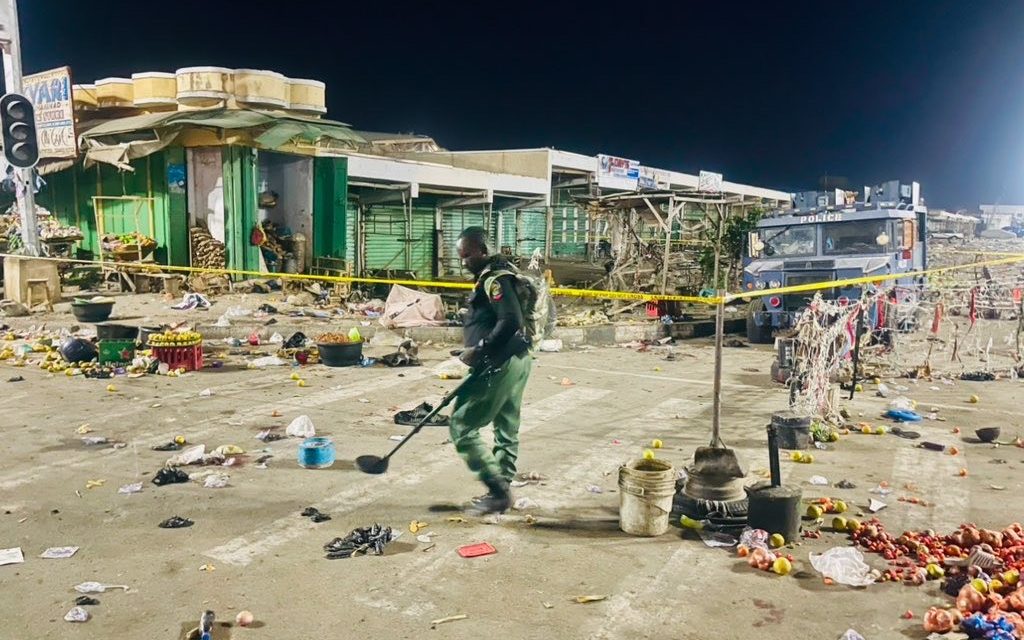
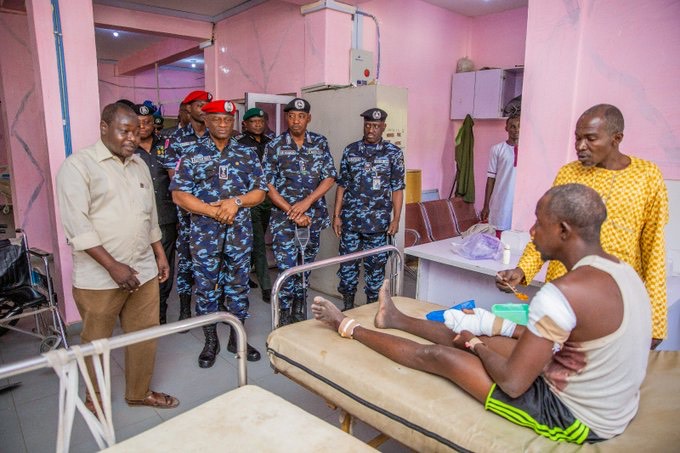
On the evening of March 16, more than 20 people were killed in multiple bomb attacks in Maiduguri, the capital of Nigeria’s northeastern Borno State. At least 108 others sustained severe injuries.
The Borno State Police Command said suspected suicide bombers carried out a triple improvised explosive device (IED) attack at about 7:24 p.m. local time. The bombs, according to police spokesperson Nahum Daso, hit a hospital, a post office flyover, and a main market.
“Following the incidents, a combined team of Police Tactical Units, the Military, and other Joint Security Operatives was swiftly deployed to the affected areas,” Daso said in a statement.
Security analysts have described the attacks as among the deadliest in recent times, with the Nigerian Army blaming Islamist militants from Boko Haram.
“The cowardly attacks targeted crowded public areas in an attempt by the terrorists to inflict mass casualties and create panic within the metropolis,” Sani Uba, the army spokesperson for the Joint Task Force Operation in the Northeast, said.
A troubled north
Since 2009, Nigeria’s northern region has been engulfed by insecurity, with several terrorist groups linked to the Islamic State (ISIS) launching violent attacks across communities and forcing many residents to flee their homes.
ADVERTISEMENT

By the end of 2025, more than 3.5 million people had been displaced within the country, largely due to terrorist activity in the north. At the same time, close to 500,000 Nigerians were living as refugees in camps and settlements across neighboring countries such as Niger, Cameroon, and Chad, according to data from the United Nations Refugee Agency (UNHCR).
Borno, which borders these three countries, has suffered at least eight suicide bomb attacks since 2021, resulting in scores of deaths and injuries. Most of the attacks have been attributed to Boko Haram militants.
Boko Haram was formed in Maiduguri in 2002 by Mohamed Yusuf, a Nigerian, with the aim of enforcing widespread Sharia law. The group initially carried out attacks in the states of Bauchi, Borno, Kano, and Yobe. Its name, “Boko Haram,” translates to “Western education is a sin.” Since its founding, the group has spread terror across the Lake Chad Basin, devastating lives, disrupting economies, and undermining public health in Nigeria, Chad, Cameroon, and Niger. Communities in these countries have suffered the loss of property and loved ones, and residents live in a constant state of fear, never knowing when Boko Haram militants might strike.
Months after President Donald Trump took office for a second term, he declared Nigeria a “country of particular concern,” citing the activities of terrorist groups across the country and framing the conflict as one involving radical Islamist violence targeting Christians.
On Christmas Day last year, the United States, through its Africa Command (AFRICOM), carried out airstrikes in Sokoto in northwestern Nigeria, reportedly killing many terrorists. In the weeks that followed, the two countries entered into a security partnership, with the United States deploying troops to Nigeria and donating military equipment to support the West African country.
“We will locate them”
Speaking on the Borno attacks, Nigeria’s president, Bola Ahmed Tinubu, said criminal and terrorist elements are under constant pressure from the military and security agencies and are resorting to desperate attempts to spread fear.
Tinubu, who left for a two-day state visit to London a day after the bomb attacks, said the country would continue to intensify efforts against criminal groups.
“I have directed security chiefs to move to Maiduguri to take charge of the situation. I have also directed emergency agencies to provide proper care for the injured,” he said in an official release.
“There is no place in Nigeria where terrorists will find safety. We will locate them, confront them, and completely defeat them.”
A day after the incidents, the Nigerian Army announced that it had foiled coordinated terrorist attacks by the Islamic State West Africa Province (ISWAP) across four locations in Borno.
In a statement signed by Uba, the army said the terrorists began the attacks in the early hours of March 16, attempting to gain propaganda advantage and overrun military positions.
While several pieces of equipment were destroyed and some troops were injured during the clashes, the army said its forces maintained control of all locations.
“During the engagements, several terrorists were neutralised, including a key leader,” Uba said, adding that “many others sustained injuries as they fled along their withdrawal routes.”
Items recovered from the militants included AK-47 rifles, rounds of PKT ammunition, anti-aircraft ammunition, AK-47 magazines, AK-74 magazines, and three RPG bombs.
Meanwhile, Borno police said emergency responders evacuated the victims of the bomb attacks and took them to medical facilities where they are currently receiving treatment.









