By Eloge Willy Kaneza
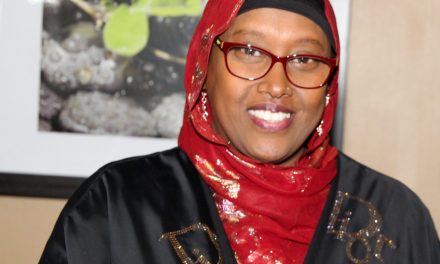
In an exclusive interview with Amjambo Africa, Cassius Shirambere, former president of the Burundian Community in Maine, shared a harrowing story that captures both the fear and resilience within immigrant communities in the U.S. The story centers on a young Burundian man, a family member of Shirambere’s, whose journey through the U.S. immigration system exposes systemic flaws, the vulnerability of asylum seekers, and the courage of some professional judges.
The young man’s ordeal began with a simple traffic violation in Maine.

“When people are arrested and put in detention, it affects all of us, even those immigrants who are now naturalized and have U.S. citizenship,” Shirambere explained. “When it happens, it is the community that must step in to help because many do not have lawyers.”
After the traffic stop, the young man was taken to the local police station and subsequently handed over to U.S. Immigration and Customs Enforcement (ICE). He was transferred to a detention center in New Hampshire. Initially, a court date had been scheduled, and his lawyer was preparing to represent him. But before the hearing could take place, the young man was deported to Burundi without notice, an act that even his lawyer learned about only through Shirambere and the family.
“There was little hope that he would be returned to the United States,” Shirambere said. “But the lawyer remained patient and presented himself before the judge on the scheduled hearing date. He demonstrated how the law had been violated, how the young man had been deported illegally, and how he had been sent back to the very country he had fled.” The young man was able to participate in the hearing online from Burundi.
ADVERTISEMENT

The judge ultimately ruled in favor of the young man, recognizing the procedural violations and ordering his return to the U.S. The U.S. Embassy in Burundi issued a new visa and covered his flight costs. Today, he is back in New Hampshire, in the same detention facility where he had been held before deportation.
Shirambere emphasized that this case illustrates both the fragility of protections for asylum seekers and the importance of legal representation. “It is crucial for all asylum seekers to have lawyers,” he said. “In this case, the young man would not have reestablished his rights without one. All the procedures were violated: when he was deported, the Burundian authorities did not even receive him properly, his family was not notified, and he had no money for transportation. Someone had to give him a ride to reach his parents’ home.”
The challenges faced by the young man are not isolated. Shirambere highlighted a broader pattern affecting immigrant communities across the U.S. Many people, he explained, first encounter law enforcement through minor issues, such as traffic violations, only to end up in ICE custody because of their immigration status. “This is a sign that the police are collaborating with ICE,” he said. “How do they know someone has been arrested and their immigration status?”
He further noted that asylum seekers face unique vulnerabilities. “They are not even allowed to be bailed out, unlike U.S. citizens or naturalized individuals,” he said. “It doesn’t make sense to accuse someone of overstaying when they have submitted their asylum application.”
Shirambere also shed light on the psychological impact these practices have on communities. “People now live in the same fear they experienced in the countries they fled,” he said. “Many are depressed, thinking they may be killed if deported to their countries of origin, while being targeted in a country that is supposed to protect human rights.”
Family separation is another devastating consequence. In many households, some members are naturalized citizens while others are still seeking asylum. Arrests can split families, creating instability and hardship. “Some avoid going to work when ICE is in the neighborhood, yet they must pay rent and send children to school. In a country like this, ICE should protect those who came legally instead of persecuting them.”
The system, Shirambere noted, also undermines trust in law enforcement. “Some people are taken when they go out to perform everyday tasks, like taking out the trash. ICE agents ambush them. It’s persecution against immigrants.”
Despite these challenges, the young man’s story also highlights the resilience of the U.S. legal system. “It is something I shared with other communities because it shows that there are still courageous judges, and the law still works here,” Shirambere said. “The judge ordered he be taken back because he was deported illegally and gave him a new appointment.”
He stresses the importance of community support, proper legal guidance, and awareness. “Communities help when people are arrested, but there must be an organized assistance framework so people have access to legal aid on time. We must find durable solutions because we are facing many such cases.”
Shirambere also offered advice to asylum seekers navigating these difficult circumstances: “Overcome fear and go out, but avoid unnecessary mistakes. Above all, find a lawyer and avoid traffic violations, because you can easily be labeled as a criminal or dangerous for society. It is hard to represent yourself without a lawyer, especially when detained. People are handcuffed and shackled in court, making it difficult to explain why they fled their countries.”
He added a cultural dimension, noting that some communities discourage sharing personal struggles. “In these difficult times, people must come together, open up to each other, and support one another, even though in some cultures, personal matters are kept private.”
Shirambere’s account is a stark reminder of both the vulnerability and resilience of immigrant communities in the U.S. It underscores the critical need for legal representation, community solidarity, and vigilance in protecting human rights-principles that the United States pledged to uphold when it ratified the United Nations 1967 Protocol relating to the Status of Refugees.
“This case shows that even in these difficult times, there are judges and lawyers willing to uphold justice,” Shirambere concluded. “That gives us hope, even as fear persists. But I also want senators and representatives to take this matter seriously. We need legislation and policies that protect immigrant communities, ensure access to legal counsel, and prevent arbitrary deportations. Our communities cannot continue living in fear while following the law. It is their responsibility to safeguard human rights for everyone, including asylum seekers.”