By Honorine Uwishema, cPort Credit Union
In the September issue, we explained why good credit matters in the United States. A good credit score shows lenders that you are likely to repay borrowed money on time. A higher score can help you qualify for better borrowing options, such as lower monthly payments, longer loan terms, and larger loan amounts. One way to build credit is to borrow a small, affordable amount and pay it back on time using a credit card or taking out a small loan.
Before you apply for a credit card or loan, it is important to understand the terms you are agreeing to. This article explains common types of loans and credit cards and defines words that banks and credit unions often use. These terms may feel unfamiliar at first, but learning them can help you make financial decisions with more confidence.
There are two common ways to borrow money: revolving credit and nonrevolving credit. Revolving credit lets you borrow, repay, and borrow again. Nonrevolving credit gives you one amount of money that you repay over time. Both types can help you build credit when you use them responsibly.
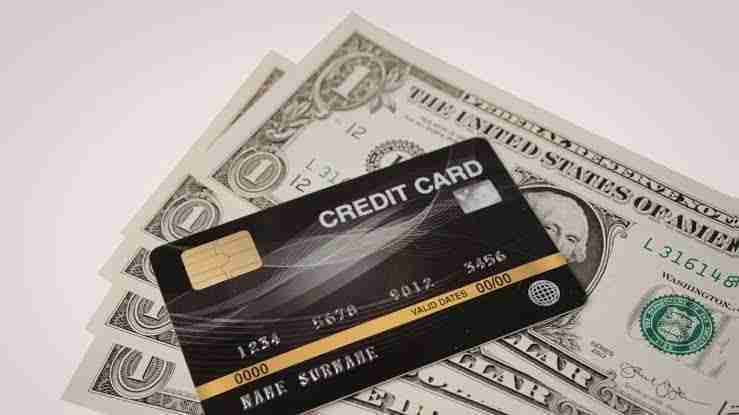
Revolving credit lets you borrow money up to a set limit, pay it back, and borrow again. Credit cards and lines of credit are common examples. If you have a credit card with a $500 limit, you can charge up to $500. After you pay the balance back down to $0, that credit becomes available again.
A credit card with a small limit, such as $500, can be a helpful first step in building credit. To protect your score, try to keep your balance low, use the card only for purchases you can already afford, and make payments on time. If you miss payments or carry a high balance, your credit score may go down.
ADVERTISEMENT

Credit utilization means the percentage of your available credit that you are using. For example, if your credit card limit is $500, your available credit is $500. Many experts recommend using no more than 30% of your limit. In this example, 30% of $500 is $150, so it is best to keep your balance at $150 or less before paying it back down to $0.
To avoid credit card debt, use your credit card only for purchases you can already afford. For example, if you buy a $150 item with your credit card, you should already have $150 in your bank account to pay the balance. Paying on time and in full can help you avoid interest charges, growing debt, and damage to your credit score.
A line of credit is similar to a credit card, but you can access the money in different ways. Instead of using a card, you can write a check from the line of credit or transfer money from the line of credit into your checking account. You may also be able to use the line of credit account and routing number as a form of payment.
Nonrevolving credit, also called installment credit, is money you borrow once and repay in scheduled payments over a set period of time, usually with interest. Common types of non-revolving credit include personal loans, auto loans, student loans, and mortgages.
If you are building credit for the first time, you may want to start with a small personal loan before applying for a larger auto loan or mortgage. For example, you might borrow $1,000 to buy a sofa and agree to repay the loan over 24 months with interest. Your monthly payment would include part of the original amount you borrowed, called the principal, plus interest.
Some larger loans, such as auto loans and mortgages, are secured by collateral. Collateral is something valuable that the lender can take if the borrower does not repay the loan. For an auto loan, the car is the collateral. This is why the lender may hold the car title until the loan is fully paid.
Personal loans are often unsecured, which means there is no collateral, such as a car or house, for the lender to take if the borrower does not make payments. Most credit cards and lines of credit are also unsecured.
Some institutions offer secured credit cards for people who are just starting to build credit. A secured credit card requires a deposit of your own money. That deposit often becomes your credit limit. For example, if you open a secured credit card with a $300 deposit, your credit limit may be $300.
Before signing for any loan or credit card, ask about the interest rate, fees, payment due date, and what happens if you miss a payment. If you do not understand a term, ask the lender to explain it before you agree.
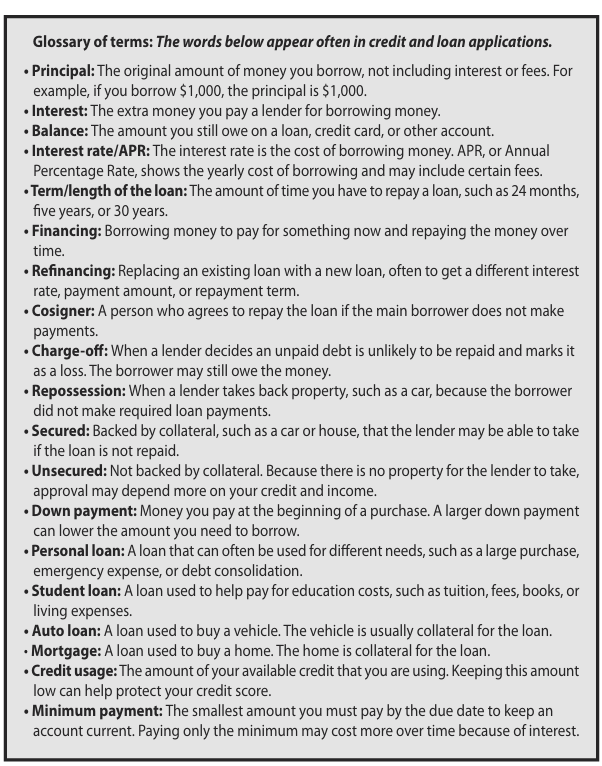
Now that we have covered basic types of credit, let’s review common words and phrases you may see when applying for credit or talking with a financial institution.
Glossary of terms:
Editor’s Note: This article originally appeared in the October 2026 print edition of Amjambo Africa.