On August 2, Congolese nationals around the world observed an annual memorial called Genocost Day, honoring lives lost to decades of armed conflicts in the Democratic Republic of the Congo (DRC). Organized since 2013 by the Congolese Action Youth Platform (CAYP), Genocost combines the words “genocide” and “cost” to describe what organizers say are killings driven by economic interests in the DRC spanning more than three decades.
“The Congolese people have endured one of the world’s deadliest and most neglected humanitarian crises,” read a CAYP statement shared with Amjambo Africa. “Despite this immense human suffering, the DR Congo continues to supply around 70% of the world’s cobalt, a critical mineral powering smartphones, computers, batteries, and electric vehicles.”
Duc M’buyi, a CAYP member and civil society activist based in Lubumbashi, said the pursuit of Congo’s natural resources has come at the cost of Congolese lives. “Those who kill us and attack us want to seize our minerals and our natural resources. They seek to eliminate the Congolese population so they can take control of the country and exploit its wealth,” M’buyi said.
According to Genocide Watch, more than 6 million people have died in the DRC since 1996, due to the conflict. By the end of 2025, close to 6 million Congolese were internally displaced, while more than a million were found living across international borders as refugees and asylum seekers.
Amid fighting between government troops and armed groups, human rights violations have been recorded by the United Nations and human rights groups. Reports describe children conscripted as child soldiers and being forced to work in mines, as well as the rape and abuse of women and girls. For many Congolese, Genocost reminds them of individual losses and pain caused by instability.
“I had a cousin who was a queen. She was killed during the Kasika Massacre of 1998, while pregnant with twins. They opened her stomach, and they did the most to her and her family. Just her own compound, 37 members of the royal family were killed,” Mimie Wite-Nkate, a founding member of the CAYP, told Amjambo Africa.
According to Wite-Nkate, who is based in the United Kingdom, the choice of August 2 to commemorate Genocost is symbolic. The second Congo Civil War began on that day in 1998 and lasted for about five years. After the civil war, the Kivu conflict broke out in the country’s eastern region in late 2003 and continues to this day.
ADVERTISEMENT

“We remember not statistics, but sons and daughters”
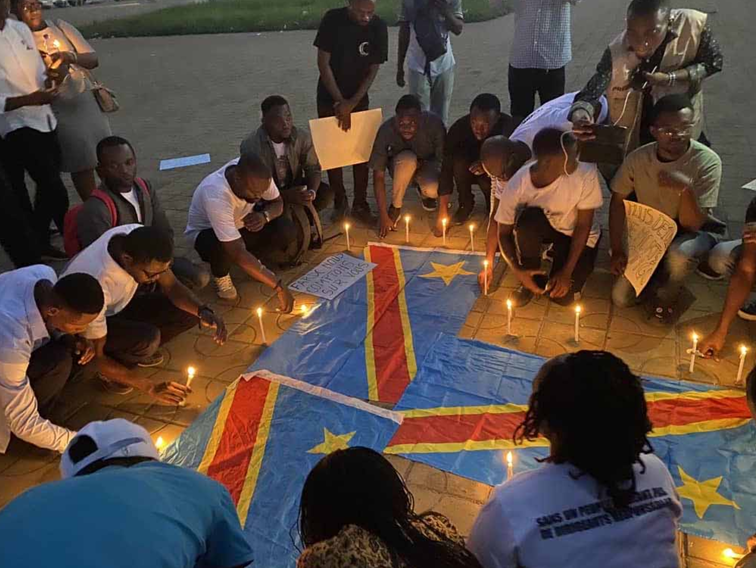
Genocost 2026 was commemorated in the DRC and cities across Africa, North America, and Europe under the theme “Justice, memory, and dignity.” The day featured visits to cemeteries of genocide victims, testimony sessions with survivors of atrocities, prayers for victims and survivors, solidarity marches, and the lighting of memorial candles.
While the Congolese government observes and recognizes the day, the CAYP team emphasized that getting justice for victims demands more. CAYP’s demands include the establishment of an international criminal tribunal for the DRC, similar to those created for Rwanda and the former Yugoslavia, as well as “justice, accountability, and reparations for victims and survivors,” according to a CAYP statement.
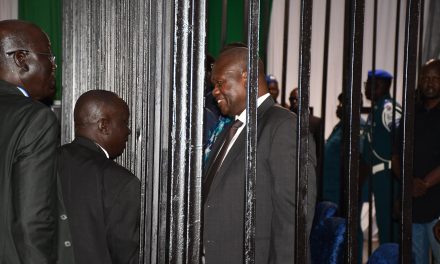
Speaking at this year’s memorial, Congolese President Félix Tshisekedi visited the Genocost Memorial in Kinshasa, where he laid a wreath in remembrance of the victims. “No life can be reduced to a number,” Tshisekedi said. “The Republic stands tall, in silence, in contemplation, and in dignity to honor the memory of the victims.”
Tshisekedi again accused Rwanda of supporting the AFC-M23 armed group in eastern Congo, allegations Kigali has rejected. He also ordered the Genocost National Museum to move into its operational phase. The museum is intended to centralize archives and testimonies about the conflict and preserve the history of Genocost for younger generations.
In Washington, the embassy of the DRC held a commemorative mass at Saint Louis Parish, where Congolese nationals and friends of Congo gathered to pray for victims and survivors of Genocost.
In a video shared on X, Senior Advisor to the White House Faith Office Paula White-Cain, gave a message of hope and solidarity with the DRC. “We remember not statistics, but sons and daughters, mothers and fathers, brothers and sisters,” White-Cain said. “We honor those who have perished, we mourn with those who are grieving, and we stand in solidarity with every survivor whose life has been forever marked by conflict.”
Pursuit of peace
Speaking about the significance of Genocost Day, Ramazani Lawamo, a lawyer and activist based in Kindu, DRC, described himself as belonging to a generation that has never known peace since birth.
“Commemorating Genocost means honouring the dead, telling the truth to the world, and demanding justice and reparations. As long as we do not name the crime, we cannot stop it,” Lawamo said.
For Congolese activists in the diaspora, however, the responsibility extends beyond those directly involved in the conflict. Gaetan-Dauphin Nzowo, a Congolese activist based in the United States, called on Americans and other consumers to examine how the minerals used in everyday technology are sourced.
“I want the international community to think critically about the supply chain to those minerals and how, as citizens in the United States or even in Europe, they can push their own governments to create policies and laws that will not tolerate that 40,000 children have to work in mines for us to have the new iPhones and the new PlayStations,” Nzowo said.
According to Lawamo, African countries and the international community have to move beyond expressions of solidarity and take concrete action to end the violence. “Congo is the heart of Africa, and if the heart bleeds, the whole body suffers,” he said. “Solidarity must not be limited to speeches at the African Union or meetings at the United Nations. It must be demonstrated through action.”
Editor’s Note: This article originally appeared in the early August 2026 print edition of Amjambo Africa.