By Éloge Willy Kaneza
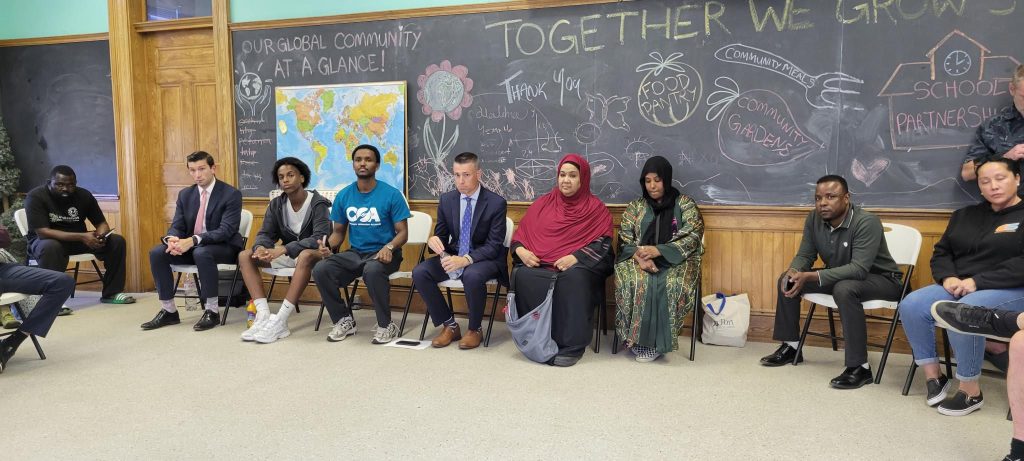
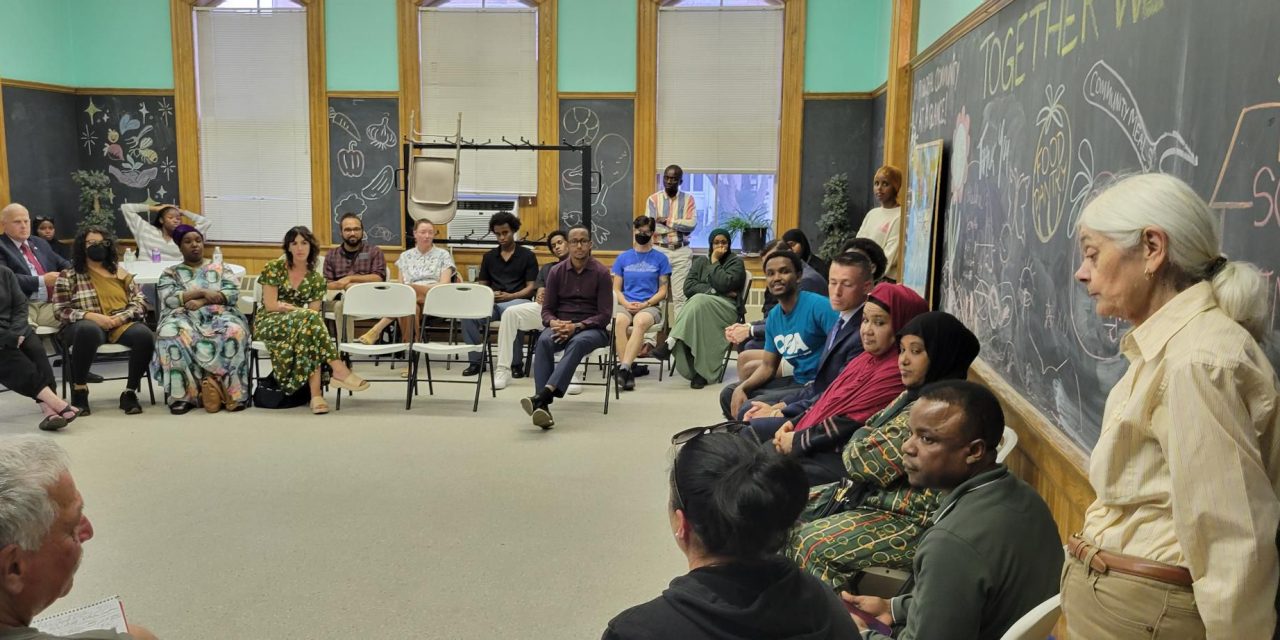
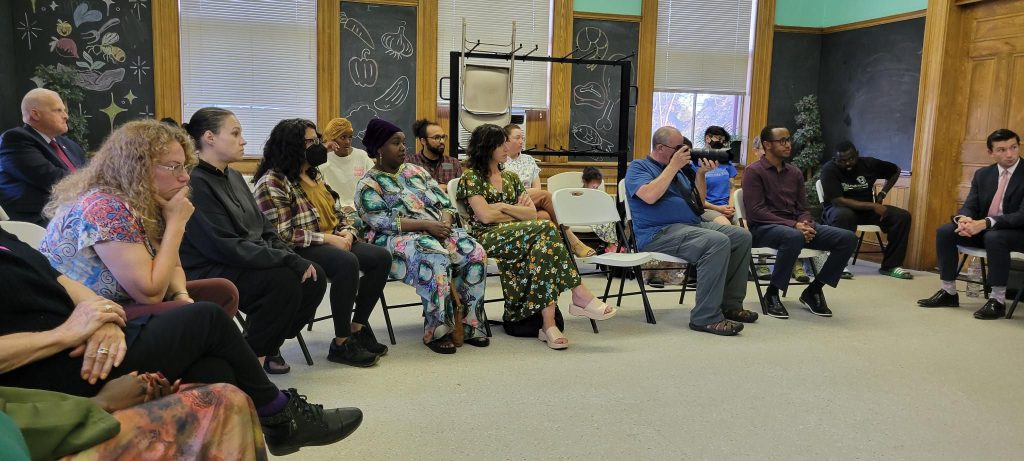
Lewiston City Administrator Bryan Kaenrath convened a community listening session on October 6 at Gather to Grow – formerly the St. Mary’s Nutrition Center – a nonprofit organization focused on food justice and community food access. The meeting brought together residents, youth, community leaders, and local stakeholders to discuss public safety, youth engagement, and the selection of Lewiston’s next police chief following the September retirement of former Police Chief David St. Pierre.
“This is a challenging time for our community,” Kaenrath said as he opened the session. “We need a police chief who understands that policing is only one part of public safety. We need someone who collaborates with social services, youth programs, housing organizations, and mental health providers to truly make a difference.”
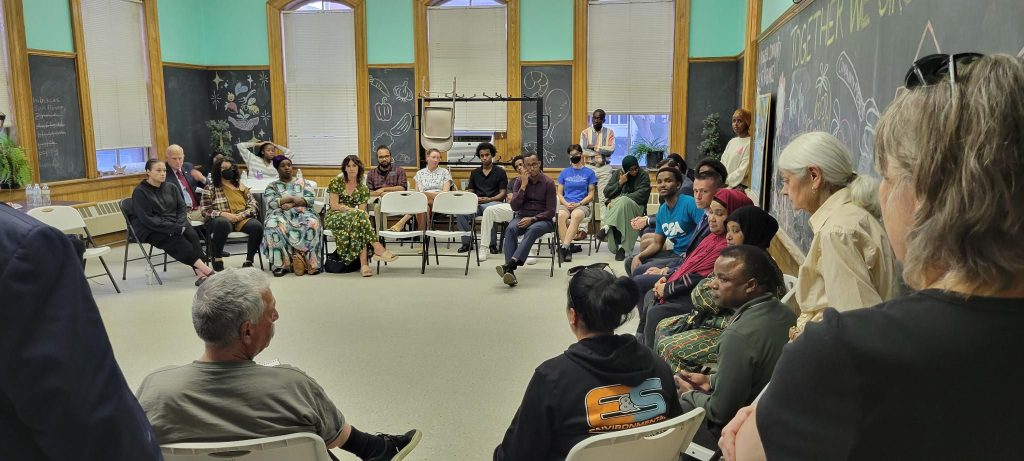
Diverse audience, shared goal
The audience was diverse, reflecting the multicultural makeup of Lewiston. Local teens, members of immigrant families, faith-based groups, and business owners attended to share their experiences, concerns, and hopes for the city’s law enforcement future. For many, the departure of St. Pierre, who worked for the city for decades, provides a unique opportunity for reflection.
“Chief St. Pierre served this city for years, and we thank him for that,” said one resident. “But we need someone who listens more, communicates better, and understands the challenges facing the younger and more diverse members of our community.”
Youth participants were particularly vocal, sharing candid reflections on their interactions – or lack thereof – with police.
“I don’t see police around that much,” said one local teen. “When we do, they’re not really engaging with us. I’d love to see officers at community events, talking with kids, and not just driving by in patrol cars.”
Representatives from local youth centers echoed this sentiment.
“Young people need to feel they have a place here – that their voices matter,” said a youth center representative. “We want to be part of building the future of this city, and that starts with a police chief who understands our perspective.”
ADVERTISEMENT

Cultural competency, language access
Community members stressed that the next police chief must have strong cultural competency and language access skills. Several attendees shared experiences in which immigrant families had struggled to communicate with law enforcement during critical situations.
“Once, a SWAT team entered a home late at night, and children were terrified because no one explained what was happening in a language they understood,” recounted a community liaison. “Situations like this can be prevented. Our next chief must prioritize training officers in cross-cultural communication.”
Innovative ideas for police-community relations
Attendees brainstormed how to strengthen police-community relations. One idea was to create community officer positions, which would allow officers to focus on relationship-building rather than traditional policing.
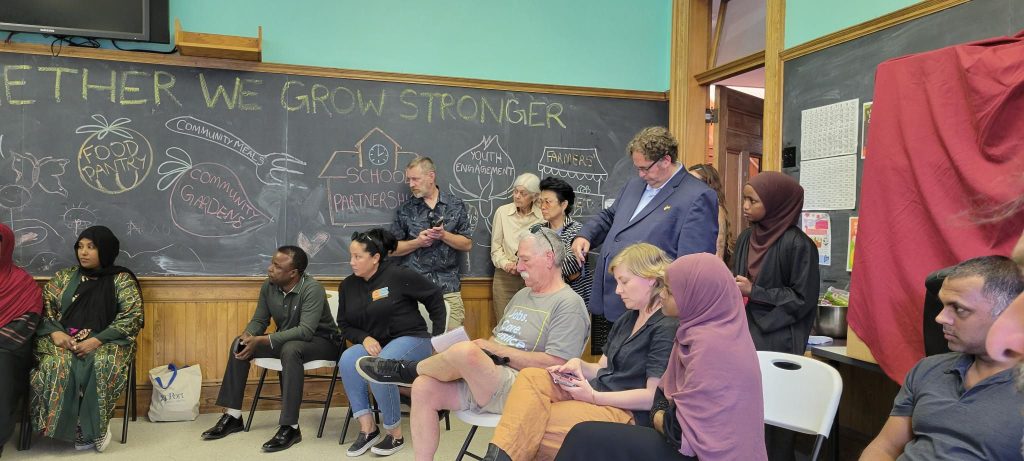
“These officers could attend youth events, check on families, and act as approachable points of contact for the community,” said a resident. “This would change the way people see the police – from authority figures to allies.”
Another idea emphasized accountability and strong management.
“A police chief, like any manager, must prioritize solving problems and ensuring their team is effective,” said a local business owner. “We need leadership that organizes the department efficiently, addresses long-standing issues, and is held accountable for results.”
Public safety challenges
Many at the meeting expressed overall confidence in the city’s law enforcement, but also noted concerns, such as with traffic law enforcement and rising youth involvement in risky behaviors. Proactive engagement by law enforcement and communication with residents are vital, they emphasized.
“Our community is changing,” said a faith leader. “Families from different backgrounds are settling here. We need a police chief who can embrace that diversity, connect with people on a personal level, and understand our unique needs.”
Kaenrath assured participants that their input will directly influence the selection of the next chief.
“I personally need to hear this input,” he said. “Your stories, your concerns, and your experiences will guide our decision. We need someone ready to step in on day one and work tirelessly to build trust and safety in our community.”
Selection process transparency
Several residents highlighted the importance of transparency in the selection process.
“We want to know what the city is looking for in the next chief,” said a youth advocate. “It’s not just about qualifications on paper – it’s about attitude, approachability, and a willingness to be part of the community, not just oversee it.”
By the end of the evening, the atmosphere among attendees was one of cautious optimism. Many expressed appreciation for the city’s openness and the chance to be heard.
“It feels good to finally have a platform to voice our concerns,” said a local teen. “I hope the next chief really listens and takes our ideas seriously.”
Building long-term relationships
In addition to community engagement, attendees highlighted the need for long-term programs that would foster relationships between police officers and young residents. Ideas included mentorship programs, school partnerships, and collaborative community events.
“If the next chief invests in kids today, we prevent bigger problems tomorrow,” said a resident. “It’s simple: relationships save lives.”
Participants also raised concerns about procedural accountability within the police department.
“We need policies that make it clear that officers are responsible for their actions,” said a youth advocate. “Trust is built on transparency and fairness, not just enforcement.”
Looking ahead: monthly community gatherings
At the close of the session, Kaenrath promised to organize a community gathering at least once a month, providing residents with a consistent platform to share their ideas and concerns. He emphasized that everyone is welcome to invite him personally to meetings and events, ensuring open lines of communication between the administration and the people of Lewiston.