By Amy Harris
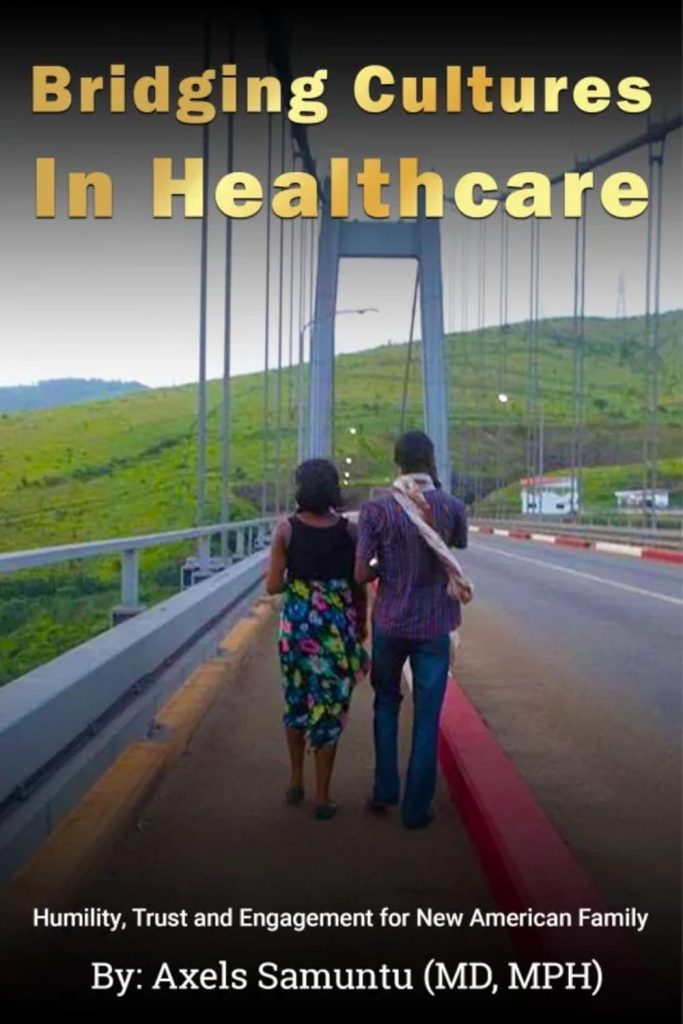
Dr. Axels Samuntu’s recently self-published book, Bridging Cultures in Healthcare, opens with a powerful photograph: an African man and woman walking across a bridge with their backs to the camera. The image reflects the book’s title and also carries a deeply personal meaning. It is a photo of Dr. Samuntu and his sister, who still lives in the Democratic Republic of the Congo.
Across 54 pages, the book weaves Dr. Samuntu’s personal experiences of “living between two worlds” together with clear guidance for health care providers and systems in Maine and other Western countries. He draws on his own life, as well as his work as a community health worker, to offer practical ways to improve cross-cultural care. His storytelling earns readers’ trust early, as he demonstrates both lived experience and professional insight.
A strong endorsement from a colleague
As Bridgette Dairyko (Gemelli), his colleague at Maine Community Health Workers (MECHW) , explained: “Dr. Samuntu is the right person to write a book about bridging cultures in health care because he brings a rare combination of lived experience, cultural humility, and deep understanding of the complexities within community-based health care.”
Inspiration from the classroom
Dr. Samuntu says the idea for the book began eight years ago in Portland Adult Education’s English classes. When he started in 2018, he was joined by students from 42 countries. He quickly realized that despite their diverse backgrounds, the students faced common challenges, including language barriers and difficulty accessing health care.
“They all wanted to be healthy and for their families to be healthy,” he writes. “Learning English was necessary for them to access health care. This was their shared common ground.”
Finding common ground in health care
Dr. Samuntu argues that health care providers must seek this kind of common ground with patients. Cultural humility, he writes, means recognizing that patients are experts in their own lives and cultures. It requires providers to admit they do not have all the answers and to be willing to learn.
His own education and work across urban, suburban, and rural communities—both in developed and developing countries—taught him how much he still had to learn. “The most important lesson I have learned was the ability to recognize my own limitations and to understand what I didn’t know,” he said.
ADVERTISEMENT

Asking the right questions
To learn from patients, providers must ask the right questions and listen carefully to the answers. Dr. Samuntu recommends using the questions developed by medical anthropologist Arthur Kleinman to improve cross-cultural communication. These include:
—What do you call your illness?
—What do you think caused it?
—What do you think will happen to you because of it?
—What do you think might help cure it?
Improved communication—supported by interpreters and translators—builds trust and engagement, he writes.
Cultural brokers as a sign of humility
Dr. Samuntu emphasizes that using cultural brokers such as interpreters, cultural doulas, community health workers, and community liaisons is an act of cultural humility. Their involvement sends a clear message: “We don’t have all of the answers; we need others to help us understand.”
A community health worker at the center of the solution
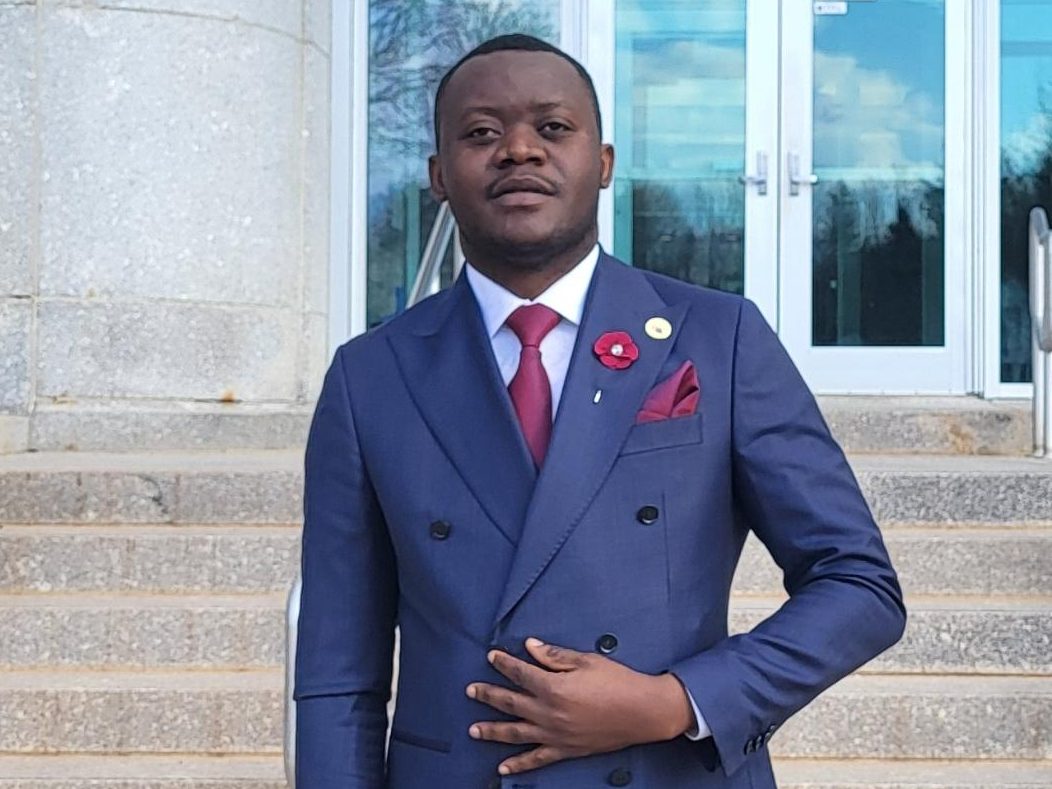
Dr. Samuntu knows the pivotal role community health workers (CHWs) play because he has lived it. He worked as a CHW for the city of Portland and later trained CHWs as a project coordinator for Medical Care Development (MCD)’s community health worker initiatives. His work earned him the Maine Public Health Association President’s Award in 2022.
In 2023, he became the first CHW admitted to the University of New England’s Maine Care for the Underserved Pathways AHEC Scholars Program. Two years later, he earned the Scholars Honors Distinction from the University of New England’s Center for Excellence in Public Health.
Preventing “cross-cultural collisions”
Bridging Cultures in Healthcare highlights sensitive topics where cultural brokers and interpreters can help prevent what Dr. Samuntu calls “cross-cultural collisions.” He has seen these collisions in conversations about mental health, puberty and sexuality, reproductive health, and death and dying.
Cross-cultural collisions, he explains, are “misunderstandings that arise not from ill intent, but from differing expectations, communication styles, and cultural values.” Using stories “from the field,” Dr. Samuntu offers strategies for effective cross-cultural communication.
Personal and professional collisions
He describes collisions he experienced both with his own children and while working as a CHW in Maine. Examples include parents’ decisions to vaccinate their children, public health advice not to sleep in the same bed with babies and toddlers, and resistance he faced when his 18-year-old daughter’s pediatrician told him he could no longer sign consent forms or make appointments for her because she was an adult under U.S. law.
He explains that in his culture, parents remain responsible for their children’s well-being even into adulthood as a way to show love, protection, and guidance.
A rare talent for translating experience into insight
“It is this talent for translating community experiences into insights that health professionals, policy makers, and educators can learn from,” said Dairyko (Gemelli), “that makes Dr. Axels Samuntu so successful in his first book-writing venture and in his Maine-based public health career.”
The challenge of licensing restrictions
State licensing restrictions forced Dr. Samuntu to reinvent his professional identity. Despite his medical degree and years of training and practice in the Democratic Republic of the Congo, Gabon, and Niger, he is unable to practice medicine in the United States or Maine.
To work as a medical doctor (MD) in the United States, he would need to spend two years to three years studying full time to take the United States Medical Licensing Examination (USMLE). If he passed, he would then need to complete a medical residency, which could take another three years to four years, according to a reference guide produced by the New Mainers Resource Center and Portland Adult Education.
A bill that could change the future
Maine is one of 20 states with pending or proposed legislation that would allow qualifying internationally trained physicians (ITPs) like Dr. Samuntu to obtain full licensure without the time-consuming and expensive process, according to the Federation of State Medical Boards.
Maine legislators introduced LD 105 in the 132nd session, and the bill will carry over to the following session. The legislation aims to establish a sponsorship program to integrate internationally trained physicians into Maine’s healthcare systems. It includes provisions for temporary educational licenses and allocates $2.5 million annually to fund 10 training positions at sponsoring institutions. Dr. Samuntu was involved in the development of this bill and provided testimony.
A wasted resource and a missed opportunity
Legal and systemic obstacles waste valuable resources by preventing internationally trained physicians from working in the U.S. health care system, Dr. Samuntu argues.. These physicians are natural cultural bridges, bringing language, cultural knowledge, and health care access to communities in need.
In largely rural states like Maine, health care provider shortages can leave families navigating an unfamiliar and complex system of appointment scheduling and insurance coverage, often waiting and worrying for months.
The triad of cultural care
In Dr. Samuntu’s view, health care providers, interpreters, and community health workers who have lived “between two worlds” are the best providers of the triad of cultural care: curiosity, empathy, and respect. This framework, outlined in Bridging Cultures in Healthcare, forms the foundation of better health care for all.