By Eloge Willy Kaneza
When Lika Kakunze, a 40-year-old mother of autistic twins, first arrived in the United States in 2017, autism was not part of her vocabulary.
Like many immigrant parents navigating a new country, she was focused on survival, stability, and building a future for her family. But shortly after her twins turned one, doctors began raising concerns during routine checkups. At first, the word “autism” meant very little to her. “I had never heard of autism,” she recalled. “I didn’t fully understand what it meant.”
What followed was not a single moment of clarity, but a gradual unfolding — a slow, emotional, and often painful journey through denial, grief, guilt, and eventually acceptance.
“Receiving the diagnosis is a journey in itself,” Kakunze said. “First came denial … then grief … then guilt. But then came the warrior phase.” Today, she describes herself as not only a mother, but an advocate.
Her journey — from confusion to activism — reflects a broader reality facing many immigrant families in the United States and African communities across the world. Autism is still widely misunderstood, often hidden, and sometimes surrounded by stigma.
As autism diagnoses continue to rise across the United States, the experiences of families like Kakunze’s are becoming increasingly visible. According to the Centers for Disease Control and Prevention (CDC), about one in 31 children in the United States is now diagnosed with autism spectrum disorder (ASD), the highest rate ever recorded.
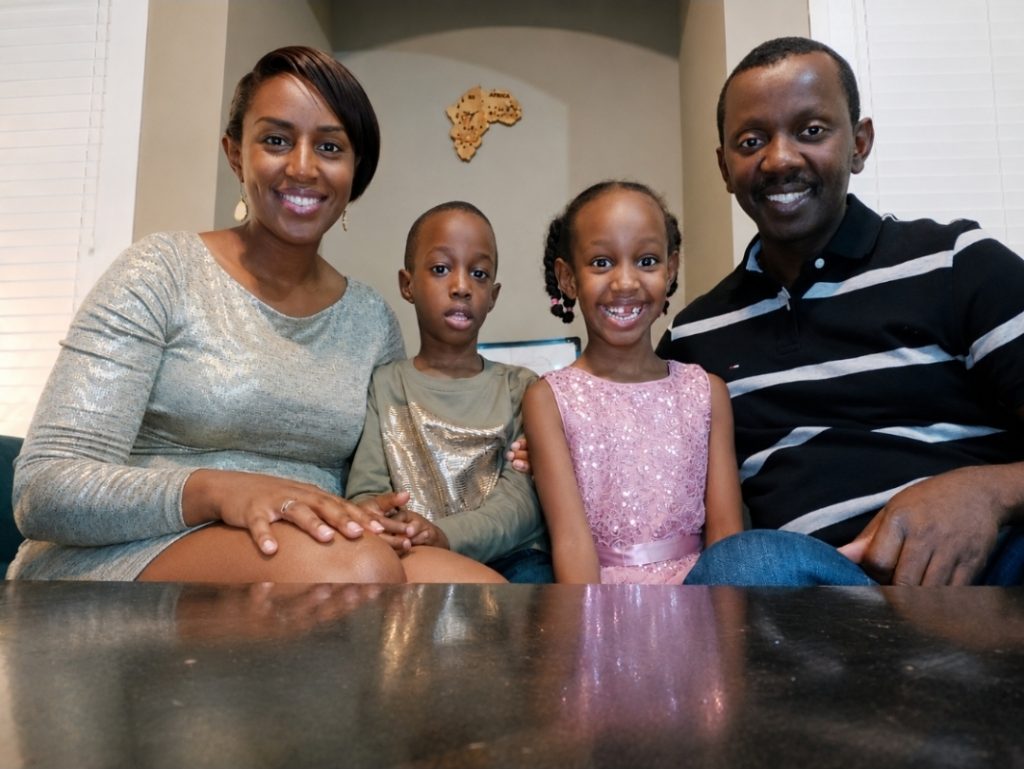
Photo courtesy of Lika Kakunze
Yet for many families, especially within African diaspora communities, understanding autism goes beyond medical definitions. It intersects with culture, silence, faith, fear, and the struggle to be understood.
A mother’s awakening
For Kakunze, the early years of diagnosis were marked by emotional turbulence.
“I kept asking myself if I had done something wrong,” she said. “As a parent, deep down you hold on to hope that maybe things will improve with time.” That hope, she explained, is often the first response many parents experience — a refusal to immediately accept a diagnosis that reshapes expectations for their child’s future.
But over time, hope gave way to something more complex. “I grieved the dreams I had for my children,” she said. “And I feared what their future would look like.”
Then came a turning point. “I became a warrior,” Kakunze said. “I started researching, learning, advocating, fighting for my children.” Her twins, she emphasizes, are not defined by a single diagnosis. Each child has distinct needs, strengths, and challenges. “My daughter has Level 1 autism. My son has Level 3 autism,” she said. “Even though they share the same diagnosis, their needs are completely different.”
That realization reshaped her understanding of autism itself. “Autism is simply a different way the brain works,” she said. “It does not mean less.”
Between misunderstanding and stigma
Kakunze’s story resonates deeply within many African immigrant families, where autism is still frequently misunderstood.
In both Africa and diaspora communities, autism is sometimes associated with spiritual explanations, curses, or parenting failures. While awareness is growing, stigma remains a powerful barrier to diagnosis, acceptance, and care.
“Some people believe autism is caused by curses, bad parenting, or spiritual issues,” Kakunze said. “That is still something many families struggle with.”
Even in the United States — where awareness is significantly higher — misconceptions persist. “People sometimes assume autistic children are misbehaved or not intelligent,” she said. “But that is far from the truth.”
ADVERTISEMENT

One of the most painful misconceptions, she added, is invisibility. “If a child looks physically normal, people assume nothing is wrong,” she said. “But autism is not something you always see.”
These misunderstandings often lead families to silence — not necessarily out of shame, but out of exhaustion, fear, and the need to protect their children from judgment. “Sometimes silence is not shame,” Kakunze said. “It’s survival.”
The cost of silence
That silence, however, comes at a cost. “The emotional impact can be very heavy,” Kakunze explained. “Parents feel isolated, misunderstood, and overwhelmed.”
Children, she added, are not immune to that emotional environment. “They can sense when they are being excluded or judged,” she said.
Over time, silence can deepen isolation rather than protect families from it. For Kakunze, breaking that silence became a turning point — not only for her children, but for other families who began reaching out after hearing her story. “When I started speaking openly, people came to me privately,” she said. “They were afraid before. But my story gave them courage.”
Some parents, she said, began seeking services for their children for the first time. Others simply wanted to feel less alone. “That’s when I realized how powerful representation is,” she said.
Autism in Maine: systems of support and ongoing gaps
In Maine, autism affects a growing number of children. Recent estimates suggest about one in 30 youth are on the autism spectrum, reflecting both increased awareness and improved early screening. The state responds through a structured system of support that begins in early childhood, primarily through Child Development Services , which provides developmental evaluations, early intervention, and special education for children from birth to age five.
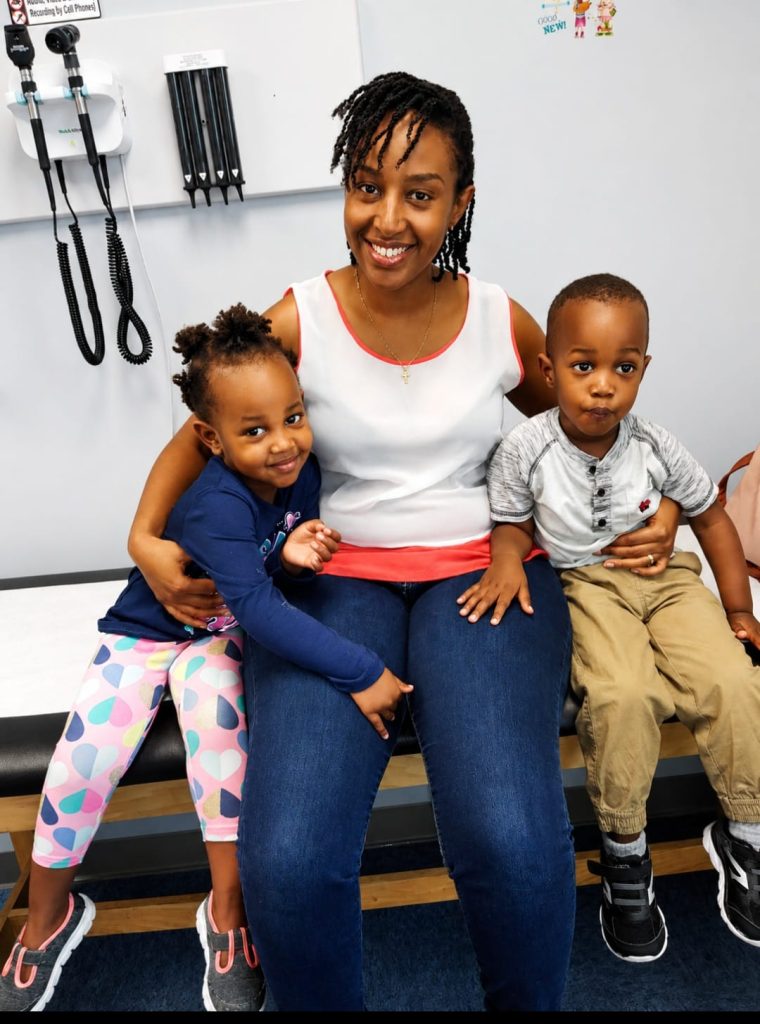
Photo courtesy of Lika Kakunze
Programs such as Early Start Maine use evidence-based approaches, like the Early Start Denver Model, to support toddlers with autism. These programs use parent coaching and home-based therapy focused on communication and social development. Once children enter school, individualized education plans , speech and occupational therapy, and behavioral supports help guide their learning in inclusive or specialized classroom settings.
Despite these services, families in Maine — particularly in rural areas — often face challenges such as long waitlists, workforce shortages, and uneven access to therapies like Applied Behavior Analysis . Challenges make early diagnosis and intervention especially critical.
Autism through a scientific and cultural lens
While personal stories help humanize autism, experts argue that education remains essential in dismantling stigma.
Charles Nditije, a psychologist and academic based in Maine, has spent years studying how cultural beliefs shape perceptions of autism, particularly within African communities. “The most common prejudices are linked to false beliefs or ignorance about the real causes of autism,” Nditije said in an interview with Amjambo Africa. “Some people believe autism is a family curse.”
In some communities, he explained, autism is linked to witchcraft, evil spirits, or spiritual punishment — beliefs that can have devastating consequences. “These beliefs push families to hide or isolate their children out of fear of judgment,” he said.
But Nditije was careful to emphasize that such misconceptions are not limited to Africa. “They exist in many societies,” he said. “But their impact is more severe where access to information and services is limited.”
Autism is not a curse
For Nditije, one of the most important messages is clarity about what autism is — and what it is not.
“Autism is not a contagious disease, and it is not a punishment,” he said. “It is a neurodevelopmental condition that affects communication and social interaction.”
He stressed that autism exists on a spectrum, meaning that no two autistic individuals are alike. “Some require significant support, while others live independently,” he said. “That diversity is often misunderstood.”
Genetics, he explained, play a significant role. “Approximately 80 percent of cases are linked to genetic factors,” he said. “But environmental factors may also contribute during pregnancy or birth.”
He also rejected outdated theories that blame parents. “The ‘refrigerator mother’ theory has long been scientifically discredited,” he said. “It caused unnecessary suffering for generations of mothers.”
The burden on parents
Both Kakunze and Nditije highlighted the emotional toll on families — particularly mothers, who are often at the center of caregiving. “Parents experience stress, anxiety, depression, and guilt,” Nditije said.
Kakunze described a similar reality, shaped by constant responsibility and emotional exhaustion. “Raising autistic twins is overwhelming,” she said. “You don’t always have the luxury of rest.”
Yet she also spoke about transformation. “My faith strengthened me,” she said. “It made me stronger, more patient, more compassionate.”
Education, inclusion, and the role of institutions
Experts argue that schools, religious institutions, and governments must play a stronger role in addressing autism.
Nditije emphasized inclusive education systems, trained teachers, and individualized support plans. “Schools must create environments that reduce sensory overload and support learning diversity,” he said. He also called for stronger partnerships between families and institutions.
“Inclusion requires collaboration between parents, teachers, and specialists.” Kakunze agreed, noting that support systems in the United States, though imperfect, can make a significant difference. “In the U.S., there are therapies and services,” she said. “But they are often expensive and difficult to navigate.”
Breaking silence across communities
Despite challenges, both Kakunze and Nditije point to gradual change.
“In my own community, things are changing because people are talking more openly,” Kakunze said. For her, visibility is key. “The more we speak, the more we reduce stigma.”
Nditije echoed that sentiment, calling for broader awareness campaigns led by trusted community actors. “Religious leaders, educators, and the media all have a role to play,” he said.
A shared message
At the heart of both stories is a simple but powerful message: autism is not a tragedy, and families should not face it alone. Kakunze’s journey — from confusion to advocacy — reflects a growing movement of parents refusing silence. “You are seen,” she said to other parents. “You are understood. You are not alone.”
And for Nditije, the goal is broader societal transformation rooted in knowledge, empathy, and inclusion. “Autism is not a condition to fear,” he said. “It is a difference to understand.”
Between a mother’s lived experience and an academic’s analysis, a shared truth emerges: changing perceptions begins not only with science or policy, but with conversation and the courage to break silence.